
To plan a backyard orchard that feeds your family, start with soil testing to choose the best fruit varieties and amend the soil for healthy growth. Select resistant trees and space them properly for airflow and ease of harvest while ensuring ongoing care, including pest management and soil health practices. Consistently monitor and adjust nutrients to maintain productivity. With thoughtful planning and regular maintenance, you’ll enjoy a sustainable supply of fresh fruit—keep exploring to learn more.

Get furniture and decor delivered free with Prime
- Fast, free delivery on millions of items
- Prime Video, Amazon Music and more included
- Member-only deals all year
Key Takeaways
- Select a variety of fruit trees suited to your climate and family preferences for continuous harvest.
- Conduct soil testing and amend soil to ensure optimal growing conditions for healthy trees.
- Space trees properly to promote airflow, prevent disease, and facilitate easy harvesting.
- Implement integrated pest management to protect trees naturally and reduce chemical use.
- Plan for ongoing soil health and fertilization to sustain productivity and long-term orchard success.
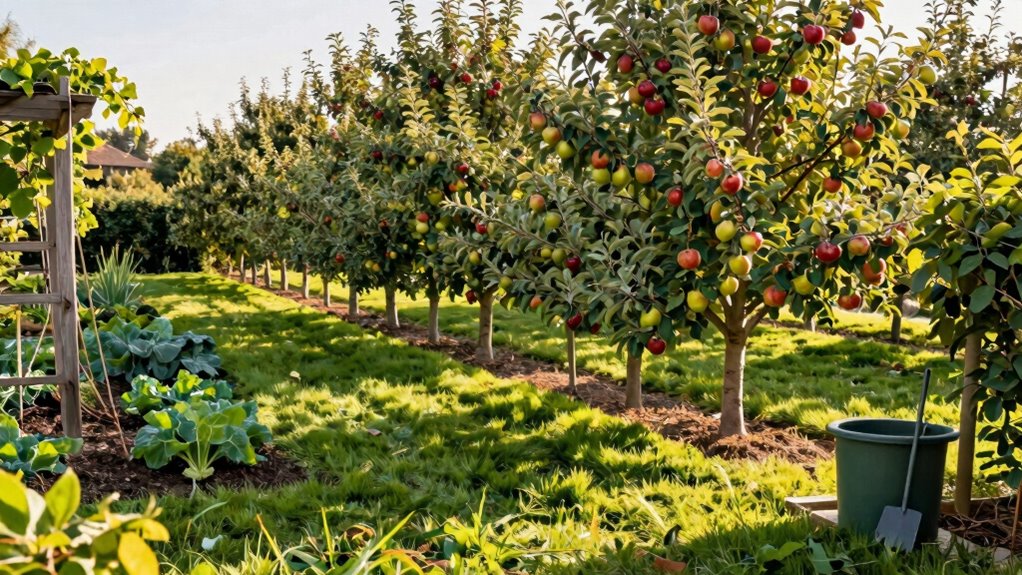
Creating a backyard orchard can be a rewarding way to enjoy fresh fruit right at home, but it requires careful planning from the start. Before planting, you need to understand your land’s unique characteristics and how they’ll influence your fruit trees’ growth. One of the first steps is soil testing. This process reveals essential information about your soil’s pH, nutrients, and drainage capabilities. Knowing this helps you select the right fruit varieties and amend the soil if necessary. Proper soil preparation ensures your trees will establish strong roots and produce abundant fruit, making the effort worthwhile.
As you plan your orchard, consider how pest management will play a key role in maintaining healthy trees. Pests like aphids, caterpillars, and fruit borers can quickly damage your harvest if not controlled early. Implementing integrated pest management (IPM) strategies helps keep pest populations in check without relying heavily on chemicals. You can start by choosing resistant varieties and encouraging natural predators like ladybugs and birds. Regular monitoring is essential; inspect your trees frequently for signs of pests or disease. Keeping the area clean by removing fallen fruit and pruning dead branches reduces hiding spots for pests. Using organic sprays or barriers can also provide protection without harming beneficial insects. Planning for pest management from the beginning minimizes the risk of infestations that could wipe out your crop.
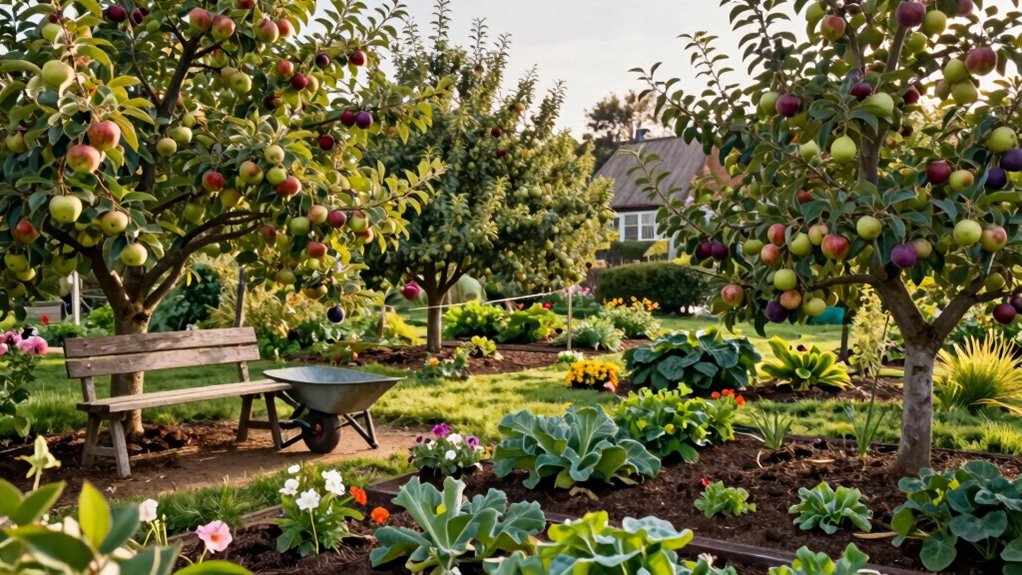
When selecting fruit trees, think about your family’s preferences and how much fruit you’ll realistically consume. Plant a variety of trees to ensure a steady harvest throughout the season and to diversify your orchard’s resilience. Space the trees appropriately to allow growth, airflow, and ease of harvest, which also helps prevent disease. As your trees grow, continue soil testing periodically to catch any nutrient deficiencies early and adjust fertilization accordingly. Proper nutrition combined with vigilant pest management will promote healthy growth and maximize fruit production, making your backyard orchard a dependable food source.
Additionally, understanding projector technology and how it impacts image quality can be beneficial if you plan to incorporate outdoor entertainment or relaxation areas into your backyard oasis. Properly caring for your trees and maintaining healthy soil and pest control will ensure your orchard’s success, providing fresh fruit for years to come. Ultimately, your success depends on thoughtful planning and ongoing care. Starting with soil testing and understanding pest management strategies gives you a strong foundation. Incorporating soil health practices can further improve your orchard’s productivity and sustainability. When you combine these with selecting the right varieties and maintaining your trees, you’ll create an orchard that not only feeds your family but also provides satisfaction and connection to your land. With patience and attention to detail, your backyard orchard can become a sustainable, fruitful haven for years to come.
As an affiliate, we earn on qualifying purchases.
Frequently Asked Questions
What Is the Ideal Size for a Backyard Orchard?
The ideal size for your backyard orchard depends on your space and goals, but generally, a 20×30 foot area works well for a family. You should regularly prune trees to keep them healthy and productive, and perform soil testing to guarantee proper nutrients. This way, your orchard remains manageable and productive, providing enough fruit without overwhelming your yard or resources. Adjust size based on your planting plans and available space.
How Long Does It Take for Trees to Produce Fruit?
Waiting for fruit feels like planting a seed and watching it sprout. Typically, fruit trees take 2-5 years to produce, depending on the variety. During this time, you should prune your trees to encourage healthy growth and test your soil to make certain it’s nutrient-rich. Proper tree pruning and soil testing help your trees develop strong branches and roots, speeding up fruit production and ensuring a fruitful harvest sooner.
What Are the Best Fruit Varieties for Beginners?
As a beginner, start with easy-to-prune fruit varieties like apple, pear, and plum trees, which respond well to simple fruit tree pruning. Choose disease-resistant types to minimize pest issues, and use organic pest control methods to keep your orchard healthy. These varieties typically require less maintenance and are forgiving for newcomers, helping you gain confidence and enjoy fresh, homegrown fruit faster.
How Often Should I Water and Fertilize My Orchard?
Imagine your orchard as a lively conversation, with each plant needing just the right attention. Water your trees deeply once a week, especially during dry spells, and follow soil testing results to tailor fertilization. Pruning techniques help maintain health and vigor, ensuring nutrients reach the roots. Adjust watering and feeding based on seasonal needs, always observing your trees’ response, so they grow strong and fruitful, like a well-tuned symphony.
What Pests and Diseases Should I Watch For?
You should regularly monitor your orchard for pests like aphids, fruit borers, and codling moths, and watch for signs of diseases such as apple scab or fire blight. Pest identification helps you target treatments effectively, while disease prevention involves proper pruning, sanitation, and choosing resistant varieties. Keep a close eye on your trees, and act quickly to manage issues before they spread, ensuring a healthy, productive orchard.
Conclusion
Planning your backyard orchard is like planting a garden of abundance—you’ll nurture it, and it will reward you with fresh fruit all season long. By choosing the right trees, considering space, and planting with purpose, you create a sustainable food source that feeds your family and brings joy. Stay patient and attentive, and soon your backyard will be a fruitful oasis, just like a well-tended treasure chest, waiting to be uncovered with each harvest.
Halloween Picks
halloween
As an affiliate, we earn on qualifying purchases.