
To rotate garden beds for healthier soil, start by changing the types of plants you grow each season, avoiding planting the same plant family in the same spot. Incorporate crop rotation, pairing plants like beans with nutrient-demanding crops, and use companion planting to repel pests naturally. Add compost regularly to restore nutrients and improve soil structure. Combining these strategies helps maintain soil robustness and reduces pest problems. Keep exploring these methods to develop a resilient, thriving garden over time.
Open a free Amazon Business account
Business pricing, bulk buying and tax-exempt orders.
As an affiliate, we earn on qualifying purchases.
Key Takeaways
- Rotate crops annually among different plant families to prevent nutrient depletion and reduce pest buildup.
- Incorporate cover crops like clover or vetch during off-seasons to add organic matter and improve soil fertility.
- Use companion planting to naturally repel pests and enhance plant growth, supporting soil health.
- Add compost regularly to replenish nutrients and improve soil structure in each bed.
- Plan crop sequences to avoid planting the same family or crop in the same spot consecutively.
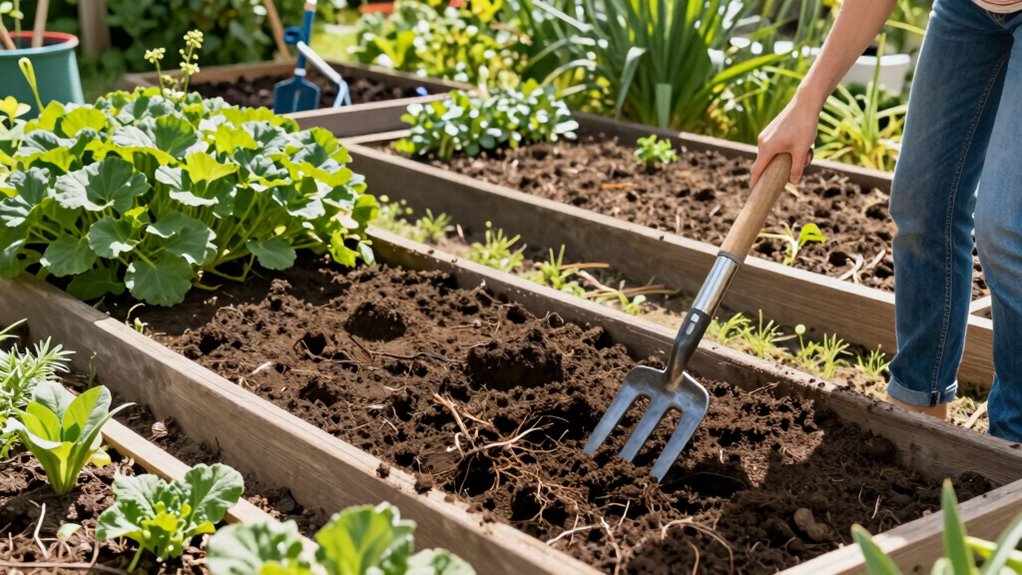
Rotating your garden beds is an effective way to improve soil health and boost crop yields. When you change what you plant in each bed from year to year, you prevent soil depletion and reduce the buildup of pests and diseases. This practice keeps your soil balanced, guaranteeing plants get the nutrients they need to thrive. To make the most of this rotation, consider incorporating companion planting strategies. By pairing certain plants together, you can naturally repel pests, enhance growth, and improve soil fertility. For example, planting beans alongside corn not only maximizes space but also allows the beans to fix nitrogen in the soil, benefiting neighboring plants. Combining this with thoughtful crop rotation helps sustain your garden’s health over multiple seasons.
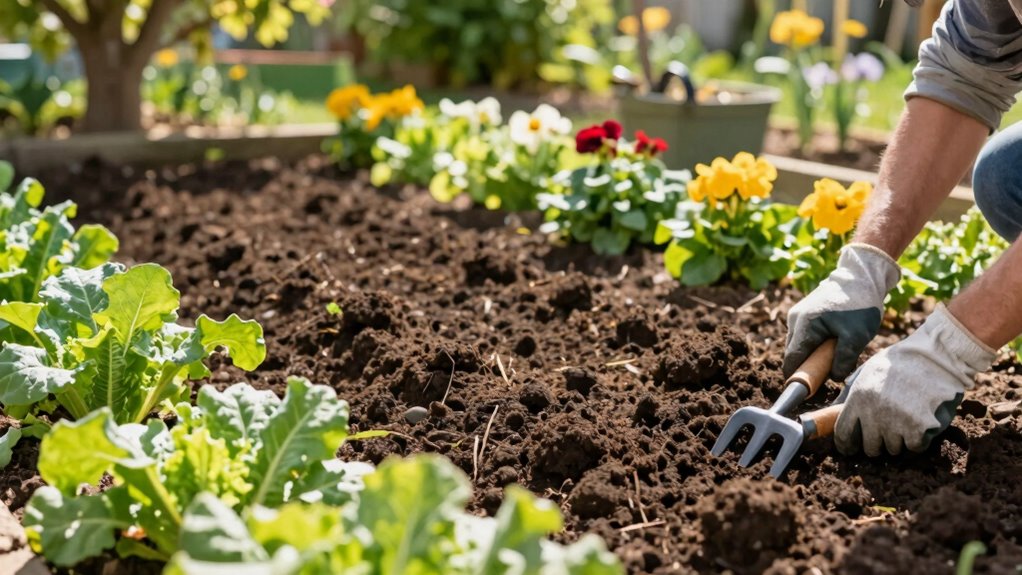
In addition to strategic plant placement, your composting techniques play a crucial role in maintaining fertile soil. When you compost organic waste like vegetable scraps, grass clippings, and leaves, you create a rich, natural fertilizer that replenishes nutrients lost during cropping cycles. Regularly adding compost to your beds before planting helps restore essential minerals and improves soil structure. This makes your garden more resilient and reduces dependence on chemical fertilizers, which can harm soil microbes over time. As part of your rotation plan, think about how composting complements companion planting. For instance, planting cover crops such as clover or vetch during off-season periods not only suppresses weeds but also adds organic matter that can be turned into compost later. This cycle of planting, composting, and rotating maintains a dynamic, healthy soil ecosystem.
When you plan your crop rotation, keep in mind the needs of different plant families. Avoid planting members of the same family in the same bed repeatedly, as this can lead to nutrient depletion and pest problems. Instead, rotate crops based on their family groupings, such as nightshades, cucurbits, or legumes. This approach balances nutrient extraction and pest control, while your composting techniques ensure the soil remains rich and well-structured. The combination of crop rotation, companion planting, and composting creates a sustainable cycle that enhances soil vitality and encourages vigorous plant growth. Over time, you’ll notice healthier plants, increased yields, and a more resilient garden that requires fewer interventions.
As an affiliate, we earn on qualifying purchases.
Frequently Asked Questions
How Often Should I Rotate My Garden Beds?
You should rotate your garden beds every season or at least once a year to maintain healthy soil. Incorporate compost addition to replenish nutrients, and use cover cropping in off-seasons to improve soil structure and prevent erosion. Rotating crops helps break pest cycles and reduces disease risk. By following this schedule, you’ll keep your soil fertile and productive, ensuring healthy growth year after year.
Can I Rotate Beds With Perennial Plants?
Yes, you can rotate beds with perennial plants, but it requires careful perennial management. About 70% of gardeners find that reshaping beds helps reduce disease and pest buildup. When rotating, consider bed reshaping to prevent overcrowding and improve soil health. You might move perennials to different spots or adjust their placement within the same bed, ensuring you maintain their health while promoting soil robustness and avoiding soil depletion.
What Signs Indicate It’s Time to Rotate a Bed?
You should rotate your garden bed when you notice a decline in plant health, reduced yields, or an increase in pests and diseases. These signs suggest nutrient depletion or soil imbalance. Incorporate companion planting and soil amendments during rotation to improve soil health. Rotating helps break pest cycles and promotes nutrient diversity, ensuring your plants thrive. Pay attention to plant performance and soil conditions to determine the best timing for rotation.
How Does Crop Rotation Prevent Pests?
Imagine planting tomatoes in one bed this year, then switching to beans next season. Crop rotation prevents pests by breaking their life cycles, making it harder for them to establish. You can boost this approach with companion planting and soil amendments, which enhance soil health and deter pests naturally. By rotating crops, you disrupt pest habitats, reducing infestations and promoting healthier plants without relying on chemicals.
Is Soil Testing Necessary Before Rotating Beds?
Yes, soil testing is necessary before rotating beds. It helps you identify soil nutrient imbalances, ensuring you know which nutrients need replenishing. Testing also reveals pH levels and soil health, guiding your crop choices. Using cover crop benefits, like fixing nitrogen, becomes more effective when you understand your soil’s condition. This way, you can plan rotations that improve soil fertility, reduce pests, and promote healthier plant growth.
Conclusion
So, now that you’re a garden rotation pro, imagine your soil throwing a little party each year—no more tired, depleted dirt, just happy, thriving beds ready to produce. Think of it as giving your garden a spa day, swapping out the old for the fresh, and keeping pests and diseases at bay. With a bit of planning, your garden will be so healthy, even your neighbor’s jealous. Cheers to soil that’s always in the best shape!
NFL season / tailgating Picks
team gear
As an affiliate, we earn on qualifying purchases.