Avoid common mistakes like improper ventilation, which causes humidity and mold, or poor water management that stresses plants. Make sure your greenhouse is correctly assembled, with all parts securely fitted, to prevent structural issues. Choose a site with proper sunlight and drainage to support plant health and durability. Regularly inspect and maintain your setup to catch problems early. Keep these tips in mind to protect your greenhouse’s lifespan, and you’ll find more helpful strategies ahead.
Key Takeaways
- Improper ventilation setup leads to humidity buildup, promoting mold and reducing greenhouse lifespan.
- Incorrect assembly or loose fittings compromise structural integrity and increase weather damage risk.
- Poor site placement, such as low sunlight or poor drainage, stresses the structure and shortens durability.
- Overlooking routine maintenance and inspections allows minor issues to escalate into costly damage.
- Inadequate watering system installation causes plant stress and potential structural problems from excess moisture.
Setting up your greenhouse kit correctly is vital to guaranteeing it lasts for years to come. If you neglect proper setup, you risk shortening its lifespan and compromising the health of your plants. One of the most common mistakes is overlooking the importance of proper ventilation. Without adequate airflow, your greenhouse can quickly become stuffy and humid, creating the perfect environment for mold, mildew, and plant diseases. Improper ventilation also hampers temperature regulation, making it harder to maintain ideal growing conditions. When you set up your greenhouse, make sure vents, windows, or exhaust fans are positioned correctly to promote air circulation. This simple step can prevent many issues down the line. Ensuring proper airflow management can significantly extend your greenhouse’s durability and plant health. Additionally, understanding digital content and how to implement it effectively can help you monitor and optimize ventilation systems for long-term success.
Watering problems are another frequent mistake that can severely damage your greenhouse’s longevity. Overwatering or underwatering can lead to stressed plants, which are more susceptible to pests and diseases. If you don’t establish a good watering routine from the start, you might face root rot, fungal growth, or drought stress. It’s vital to understand the watering needs of your plants and to install a watering system that provides consistent moisture without excess. Drip irrigation or moisture sensors can help you avoid these watering issues by delivering water precisely where and when it’s needed. Skipping this step during setup can lead to uneven watering, which stresses plants and shortens the life of your greenhouse.
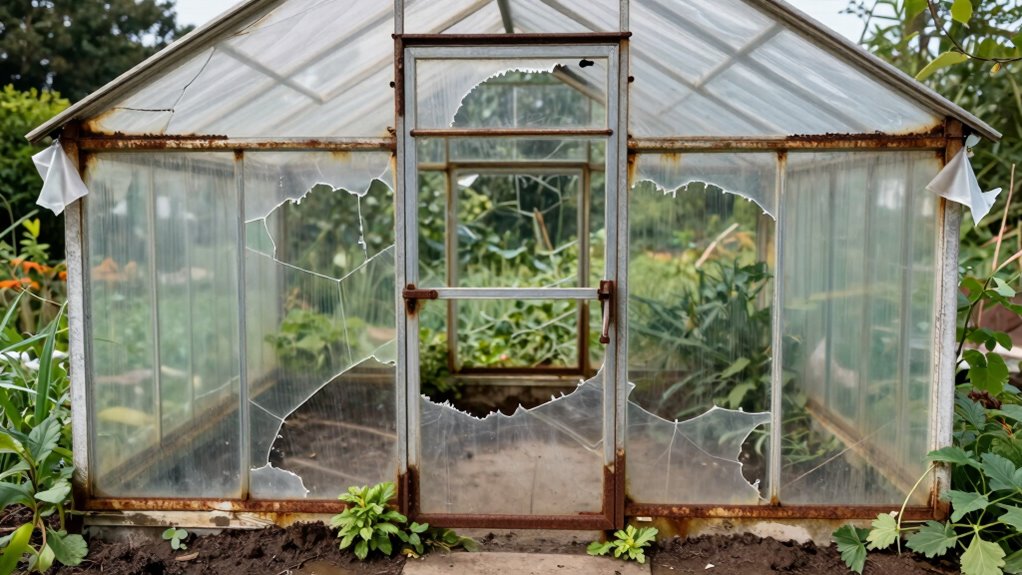
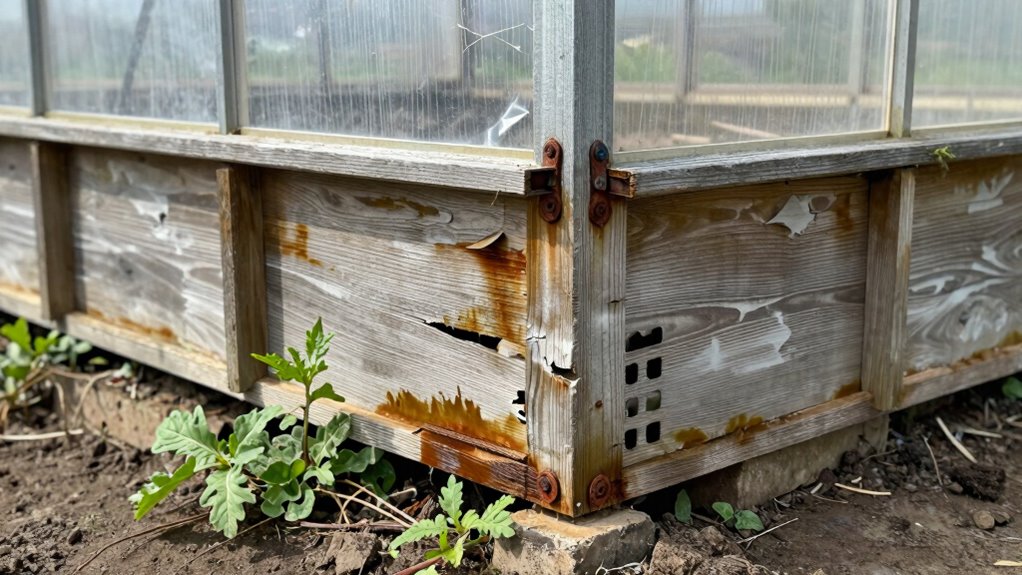
Another mistake that often gets overlooked is not inspecting the structure thoroughly before completing the setup. If your greenhouse kit isn’t assembled correctly or if parts are damaged, it can compromise the entire structure’s stability. Weak joints, loose fittings, or poorly secured panels can make your greenhouse vulnerable to strong winds or heavy snow. This can result in costly repairs or even total collapse. Always double-check each component and follow the manufacturer’s instructions carefully to guarantee everything fits securely and functions as intended.
Lastly, neglecting to consider the placement of your greenhouse can lead to issues that cut its lifespan short. Positioning it in an area with poor sunlight, excessive shade, or poor drainage can cause persistent problems. Make sure your greenhouse is placed where it gets ample sunlight, away from large trees that could drop debris or shade it excessively, and on well-drained ground to prevent flooding. Proper placement supports healthy plant growth and reduces the risk of structural damage caused by water pooling or debris accumulation.
As an affiliate, we earn on qualifying purchases.
Frequently Asked Questions
How Often Should I Inspect My Greenhouse for Damage?
You should inspect your greenhouse at least once a month to catch any damage early. During each check, focus on pest prevention and guarantee the structural integrity remains intact. Look for cracks, loose fittings, or signs of pests that could weaken the structure. Regular inspections help you address issues promptly, prolonging your greenhouse’s lifespan and keeping your plants healthy. Don’t wait for problems to escalate—stay proactive.
What Tools Are Essential for Proper Greenhouse Setup?
You need basic tools like a tape measure, level, and screwdriver for proper greenhouse setup. Don’t overlook the importance of plant spacing and ventilation systems, which are vital for healthy growth. A ruler helps guarantee correct spacing, while a level ensures your structure’s stability. Keep a wrench handy for assembling frames, and consider a drill for faster work. These tools make setup smoother and help your greenhouse last longer.
Can I Use My Greenhouse Kit in Extreme Weather Conditions?
You can use your greenhouse kit in extreme weather, but you need to prepare for it. Focus on extreme weather preparedness by reinforcing your structure and using insulation techniques like bubble wrap or thermal curtains to maintain temperature. Guarantee proper ventilation and secure your greenhouse to withstand strong winds. Regularly check seals and joints. With these precautions, your greenhouse can survive harsher conditions while protecting your plants effectively.
How Do I Maintain Optimal Humidity Levels?
Ever wondered how to keep your greenhouse’s humidity just right? You should regularly monitor humidity control using a hygrometer and adjust ventilation techniques accordingly. Open vents or windows to decrease humidity when it’s too high, and use a humidifier or misting system to boost it when it’s too low. Consistent airflow prevents mold and plant stress, ensuring your greenhouse stays an ideal environment for healthy growth.
Are There Eco-Friendly Options for Greenhouse Materials?
Yes, there are eco-friendly materials and sustainable alternatives for your greenhouse. You can opt for recycled polycarbonate panels, bamboo framing, or reclaimed wood, which reduce environmental impact. Using biodegradable or non-toxic paints and sealants also helps. These options not only protect the environment but can enhance your greenhouse’s durability. By choosing eco-friendly materials, you support sustainability while ensuring your greenhouse remains functional and long-lasting.
Conclusion
Remember, each setup mistake is like a crack in your greenhouse’s foundation, subtly weakening its future. When you build it right, you’re planting seeds of resilience that grow stronger over time. Your careful attention becomes the sun that nurtures your greenhouse’s life, shielding it from the storms of neglect. With mindful assembly, you craft a sanctuary where your plants thrive, symbolizing not just a structure, but a legacy of growth, patience, and care that endures beyond the seasons.