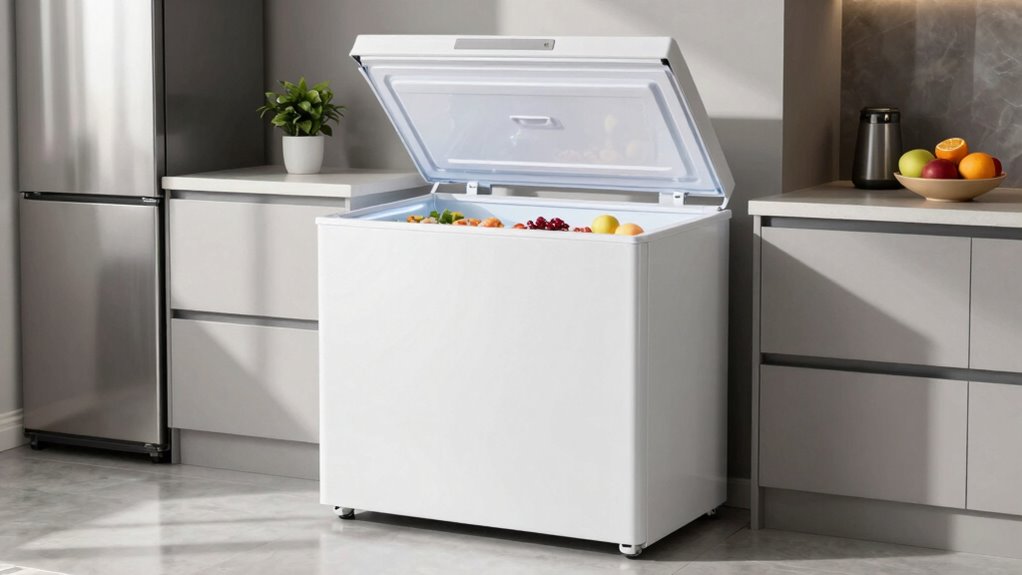

Before buying a chest freezer, focus on energy efficiency to save on long-term costs and choose a model with good insulation and seals for consistent temperatures. Consider the size and capacity to match your storage needs without wasting space or increasing energy use. Noise levels matter too—look for quieter options if it’ll be near living areas. Also, check build quality and features like automatic defrost for durability and easier maintenance. Keep exploring to make a smart, lasting choice.
Key Takeaways
- Assess your storage needs to choose the appropriate size and capacity for efficiency and convenience.
- Prioritize energy efficiency ratings to reduce long-term electricity costs and environmental impact.
- Consider noise levels and look for models with noise-dampening features for a quieter operation.
- Check build quality, durable materials, and reliable compressors for long-term performance and fewer repairs.
- Evaluate maintenance features like automatic defrost and organization options to enhance usability and lifespan.
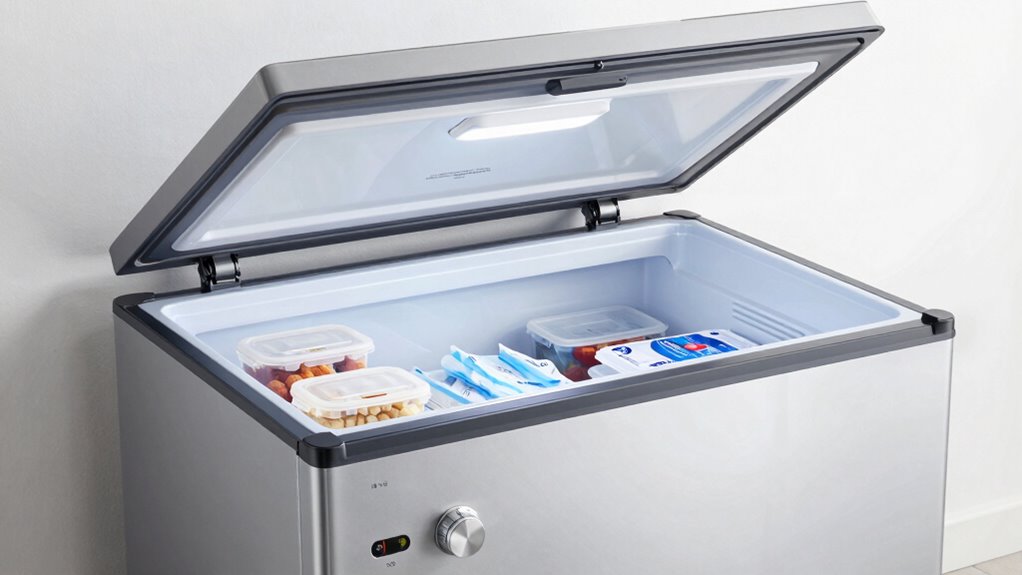
Buying a chest freezer is a practical way to store large quantities of food, but before you make a purchase, it’s important to understand what really matters. Among the most essential factors are energy efficiency and noise levels. An energy-efficient model saves you money on electricity bills over time and reduces your environmental footprint. Look for freezers with high Energy Star ratings, as these appliances are designed to consume less power without sacrificing performance. While a cheaper freezer might seem appealing initially, it can end up costing you more in the long run through higher energy bills. Choosing a unit with good energy efficiency means you get to keep your food frozen effectively while being kinder to your wallet and the environment.
Prioritize energy efficiency and noise levels for a cost-effective, quiet, and reliable chest freezer.
Additionally, considering the impact of appliance choices on sustainability can help you make more environmentally conscious decisions. Noise levels are another key consideration that often gets overlooked. Chest freezers operate continuously, and some models produce more noise than others. If you plan to keep your freezer in a living space, such as a basement near the family room or a kitchen close to your main living area, a quieter model can make a significant difference to your comfort. Excessive noise can be distracting or disruptive, especially during quiet evenings or when you’re trying to focus. Look for freezers with lower decibel ratings, and check reviews or specifications that specify noise output. Many newer models incorporate sound-dampening features or quieter compressor technology, which can help you avoid the constant hum or rattling that disturbs your peace. Understanding appliance efficiency can also influence your overall satisfaction with your purchase. Additionally, some models offer automatic defrost features, which can save you time and effort in maintenance.
Furthermore, paying attention to filtering and pump protection options can help extend the lifespan of your freezer and prevent issues caused by dust or debris buildup. In addition to energy efficiency and noise levels, you should also consider size and capacity. Think about how much food you typically store and whether the freezer’s dimensions will fit comfortably in your designated space. A model that’s too small may force you to run multiple cycles, increasing energy consumption, while one that’s too large could take up valuable space and be unnecessary for your needs. Proper insulation and well-designed seals are also essential for maintaining consistent temperatures and reducing energy waste. Moreover, choosing a freezer with quality construction can help ensure durability and long-term performance, saving you money on repairs or replacements down the line.
Finally, pay attention to the build quality and durability of the freezer. Look for models with sturdy construction, reliable compressors, and features like adjustable baskets or dividers to organize your food efficiently. By focusing on energy efficiency, noise levels, size, and build quality, you guarantee that your new chest freezer will serve you well, saving you money and providing a quiet, reliable storage solution for years to come.
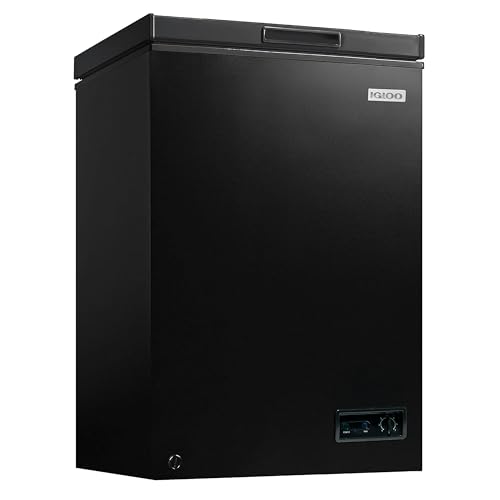
Igloo 3.5 Cu Ft. Upright Deep Freezer Chest- Deep Freezer with Quick Freezing System & Adjustable Thermostat- Low Noise Freezer with Removable Basket & LED Lights for Homes, Garages & Basements- Black
- Spacious 3.5 cu ft Capacity: Compact design for homes and garages
- Fast Freezing System: Uses D-type refrigeration for quick cooling
- Energy-Efficient Sealing: Gasket seals cold air to save energy
As an affiliate, we earn on qualifying purchases.
As an affiliate, we earn on qualifying purchases.
Frequently Asked Questions
How Energy-Efficient Are Different Chest Freezer Models?
Different chest freezer models vary in energy efficiency, primarily influenced by their energy labels and power consumption. You’ll notice that models with higher energy labels, like A++ or A+++, use less power and save you money over time. Check the power consumption details; lower wattage generally means better efficiency. By comparing these factors, you can choose a freezer that’s eco-friendly and cost-effective, fitting your needs and helping reduce energy bills.
What Is the Typical Lifespan of a Chest Freezer?
They say, “A stitch in time guarantees nine,” and the same applies to your chest freezer’s lifespan. Typically, a well-maintained chest freezer lasts 10 to 20 years, offering energy savings and ample storage capacity. Regular maintenance, like defrosting and cleaning, helps maximize its longevity. Investing in a quality model ensures you enjoy dependable storage and energy efficiency for many years, making it a smart, long-term choice.
Are There Safety Features to Consider Before Buying?
Yes, safety features are important when choosing a chest freezer. Look for child safety options like lock features to prevent accidental openings. These locks help keep curious kids out and guarantee safe storage of food and other items. Additionally, consider a model with a safety lid or alarm systems that alert you if the lid is left open. Prioritizing these features helps protect your family and keeps your freezer secure.
How Noisy Are Various Chest Freezer Brands?
Noise levels vary among chest freezer brands, impacting your overall experience. Generally, higher-end brands like Frigidaire and Midea tend to operate more quietly, with noise levels around 40-45 decibels, similar to a soft whisper. Cheaper brands might be louder, reaching 50-55 decibels or more, comparable to background conversation. When comparing brands, check customer reviews and product specifications to gauge noise levels and choose a model that won’t disturb your space.
What Maintenance Is Required for Optimal Performance?
To keep your chest freezer running smoothly, you need to regularly check temperature regulation and defrost when frost buildup becomes thick. Make certain the thermostat is set correctly, usually around 0°F (-18°C). Periodically defrost to prevent ice buildup, which can hinder performance. Keep the coils clean and guarantee proper airflow around the unit. These simple maintenance steps help maintain peak performance and extend your freezer’s lifespan.
Conclusion
Before you buy a chest freezer, remember it’s like finding the perfect key to a treasure chest—you want it to fit just right. Consider size, energy efficiency, and features that suit your needs. Don’t rush your decision; a thoughtful choice guarantees your frozen treasures stay fresh and accessible. With the right freezer, you’ll feel like you’ve opened a secret to smarter storage—making your kitchen more organized and your food last longer.