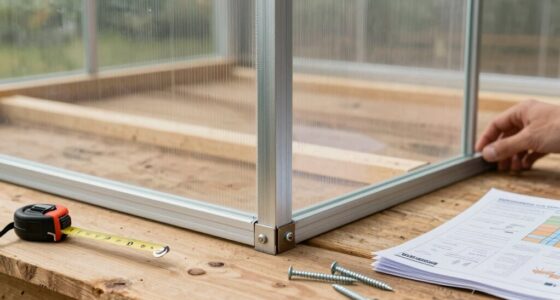
When choosing a chicken coop, prioritize features like a secure, spacious outdoor run for natural foraging and mental stimulation. Guarantee it has proper ventilation to prevent health issues and strong predator protection with sturdy fencing and locks. Durable materials and thoughtful design keep your flock safe and comfortable in all weather conditions. Focusing on these aspects offers lasting value beyond just the price. Keep exploring to discover more essentials that can help you build a healthier, happier coop.
Key Takeaways
- Prioritize secure predator protection features like reinforced fencing and locking mechanisms over cost.
- Ensure adequate ventilation and environmental controls for chicken health and comfort, regardless of initial expense.
- Opt for durable, weather-resistant materials that guarantee long-term safety and reduce maintenance costs.
- Choose a spacious, secure free-range area to promote natural behaviors and mental well-being.
- Design safety features such as proper insulation and weatherproofing to protect hens during extreme conditions.

Have you ever wondered what makes a chicken coop both functional and comfortable for your flock? It’s more than just the size or the price tag. The right features can make a significant difference in your chickens’ health, happiness, and safety. One of the key aspects to evaluate is how well your coop supports free range benefits. Allowing your chickens to roam outside the coop provides them with fresh air, natural foraging opportunities, and mental stimulation. A well-designed coop should include an outdoor run or pasture area that’s secure and spacious enough for your flock to scratch, peck, and enjoy the sunlight. This not only boosts their overall well-being but also reduces stress and boredom, which are common issues in confined spaces. Ensuring proper coop ventilation helps prevent respiratory issues and keeps the environment comfortable for your hens. Good ventilation also helps control moisture and ammonia buildup, maintaining a healthier environment. However, enabling free range benefits isn’t enough if predators can easily access your flock. Predator protection becomes a top priority when designing a coop. You need sturdy fencing that’s buried underground or extends outward to prevent digging predators from tunneling underneath. The coop itself should have secure latches, reinforced doors, and predator-proof mesh or hardware cloth over ventilation openings. Don’t forget to contemplate nighttime safety—installing locks and ensuring no gaps exist where raccoons, foxes, or other predators could squeeze in is essential. The combination of free-range options with solid predator protection ensures your chickens can enjoy the outdoors without constant danger. Additionally, proper coop design can contribute significantly to the longevity of your investment and the well-being of your flock. Incorporating durable materials into your coop’s construction can help withstand weather conditions and prevent predator damage over time. Proper ventilation and insulation further enhance the comfort and safety of your chickens during extreme weather conditions.
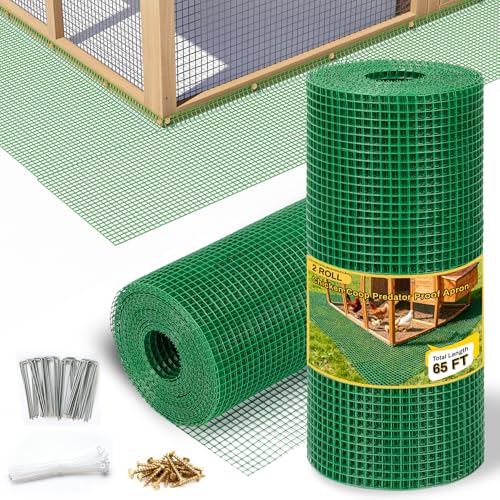
Powrocket Chicken Coop Predator Proof Wire Mesh, Poultry Bottom Barrier Netting, Anti-Digging Skirt Predator Apron, 11.6" x 65 Ft Total
- Predator Prevention Design: Prevents predators from digging in
- Easy Protective Solution: Simple way to protect chickens
- Durable Coated Wire: Weatherproof and wear-resistant mesh
As an affiliate, we earn on qualifying purchases.
As an affiliate, we earn on qualifying purchases.
Frequently Asked Questions
How Do I Ensure Proper Ventilation in My Chicken Coop?
You can guarantee proper ventilation by installing effective ventilation systems like vents or windows that open easily. Focus on airflow optimization by positioning vents at opposite ends of the coop for cross-ventilation, and use adjustable options to control airflow based on weather. Regularly clean and maintain these systems to prevent buildup of moisture and odors. Good ventilation keeps your chickens healthy and comfortable, reducing respiratory issues and creating a better environment.
What Are the Best Predator-Proof Features for a Coop?
Imagine your coop as a fortress, standing tall against lurking predators. To guarantee predator prevention and coop security, install sturdy hardware cloth over vents and windows—think of it as a metal curtain blocking unwanted guests. Use heavy-duty latches on doors, bury hardware cloth underground, and add motion-activated lights. These features create an impenetrable shield, keeping your flock safe and secure from predators sneaking in the shadows.
How Often Should I Clean and Maintain the Coop?
You should clean your coop at least once a week to prevent buildup of waste and bacteria. A regular cleaning schedule helps keep your chickens healthy and comfortable. Maintenance tips include removing soiled bedding, disinfecting surfaces, and checking for pests or damage. Consistent upkeep guarantees your coop remains predator-proof and safe, ultimately extending its lifespan. Staying diligent with your cleaning routine supports your chickens’ well-being and simplifies ongoing maintenance.
What Insulation Options Are Suitable for Different Climates?
Think of your coop as a cozy nest—insulation is its feathered blanket. For colder climates, use straw bales or foam boards to trap warmth. In milder or humid areas, consider spray foam or insulated panels to prevent dampness and drafts. Always tailor insulation materials to your climate considerations, ensuring your hens stay comfortable year-round. Proper insulation makes all the difference in keeping your flock healthy and happy.
How Can I Improve Coop Mobility and Portability?
To improve coop mobility and portability, you can add wheels or skids, making it easier to move around your yard. Incorporate portable nesting boxes and mobile roosts, so your chickens stay comfortable during relocations. Use lightweight materials and sturdy handles for effortless transport. Regularly check and maintain these features to guarantee safety and convenience, allowing you to relocate the coop quickly and efficiently when needed.
Conclusion
Remember, when choosing a chicken coop, it’s the features that truly make a difference—not the price tag. Prioritize safety, ventilation, and ease of cleaning to keep your flock happy and healthy. Cutting corners might save a few bucks now, but a poorly designed coop can turn your peaceful backyard into a chaos-filled poultry prison. Invest in quality, and your chickens will reward you with eggs that are worth their weight in gold—literally!