
To extend your log splitter’s lifespan, avoid common setup mistakes like neglecting hydraulic maintenance, ignoring safety precautions, or setting incorrect pressure levels. Make sure all components are properly aligned and tight, and always follow the manufacturer’s guidelines. Rushing the setup or skipping inspections can cause damage and reduce performance. Staying attentive to these details is essential; keep going to discover more tips that can save you money and time.
Key Takeaways
- Failing to properly align and secure components causes uneven wear and increases the risk of mechanical failure.
- Overlooking safety shields and PPE can lead to accidents that damage the machine and reduce lifespan.
- Incorrect pressure settings strain the hydraulic system, accelerating wear and risking costly repairs.
- Rushing setup and skipping routine inspections can cause leaks, misalignments, and early component failure.
- Operating on uneven or unstable surfaces increases vibration and stress, shortening the splitter’s operational life.
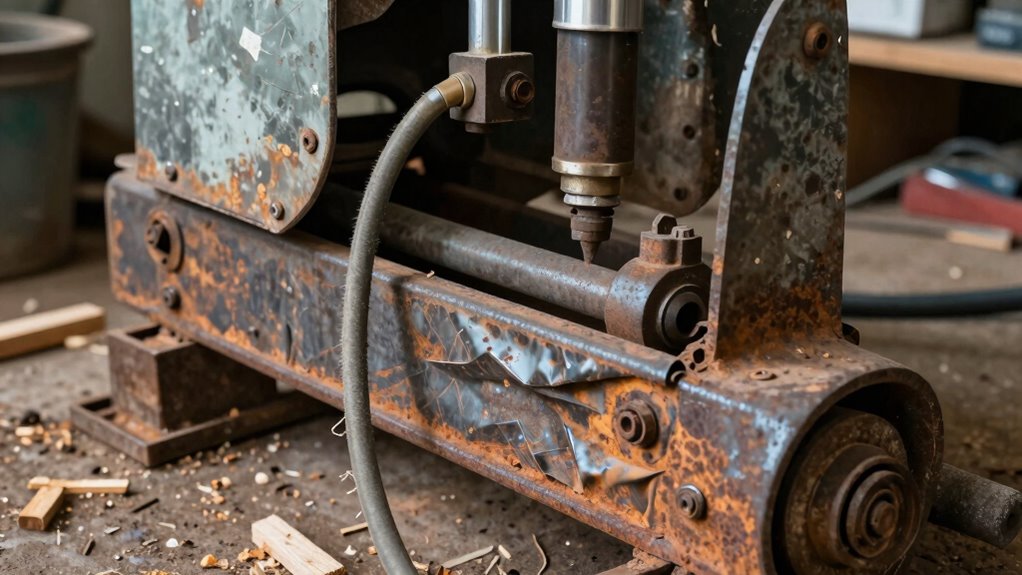
Setting up your log splitter correctly is essential for ensuring it lasts as long as possible. When you’re eager to get started, it’s tempting to rush through the setup process, but skipping important steps can lead to costly damage down the line. One of the most critical aspects is understanding hydraulic maintenance. Properly filling the hydraulic fluid, checking for leaks, and ensuring the hydraulic system is free of debris can prevent premature wear and tear. Hydraulic systems operate under high pressure, so neglecting maintenance can cause components to fail unexpectedly. Always refer to the manufacturer’s guidelines for the correct type and level of hydraulic fluid, and make it a habit to inspect the fluid regularly. This simple step can significantly extend your splitter’s lifespan by preventing corrosion, overheating, or seal damage caused by contaminated or low fluid levels. Additionally, monitoring fluid levels is vital, as low hydraulic fluid can cause the system to overheat or malfunction, further risking damage to your equipment. Ensuring proper hydraulic system maintenance can also help you identify potential issues early before they develop into costly repairs. Incorporating regular checks based on manufacturer recommendations can further safeguard your equipment’s longevity and performance.
Alongside hydraulic maintenance, observing safety precautions during setup is non-negotiable. Many accidents happen because operators overlook basic safety measures, which can also lead to damage that shortens the life of your equipment. Before powering up your log splitter, double-check that all safety shields and guards are in place and secured. Wearing personal protective equipment like gloves, safety glasses, and steel-toe boots isn’t just about safety; it’s about preventing damage to your machine. Ensure the splitter is on a stable, level surface to prevent shifting or tipping during operation. When connecting hoses or moving parts, do so carefully, making sure nothing is loose or improperly attached. Ignoring these precautions can result in hydraulic leaks or mechanical failures that cause costly downtime. Additionally, understanding the importance of proper projector setup can help avoid unnecessary strain on the components and extend the equipment’s lifespan.
Another setup mistake that can harm your log splitter involves incorrect pressure settings. Many models have adjustable pressure controls, but setting them too high or too low can put unnecessary strain on the hydraulic system. Follow the manufacturer’s instructions closely when adjusting these settings, and always test the machine on a small piece of wood before tackling larger logs. Proper setup also means confirming that the splitter is correctly aligned and that all bolts and fittings are tight. Loose components can vibrate or come apart during operation, leading to damage or safety hazards. By taking the time to perform these checks, you’re not only safeguarding yourself but also ensuring your log splitter operates efficiently for years to come. Regularly inspecting hydraulic hoses and fittings for signs of wear or damage can further prevent unexpected failures and prolong the life of your equipment.
In essence, taking your time during the setup process—paying close attention to hydraulic maintenance and safety precautions—can make a world of difference. It’s a small investment of effort that pays off by preventing early wear, costly repairs, and potential injuries. When you approach setup with care and precision, you’re setting your machine up for a long, productive life.
As an affiliate, we earn on qualifying purchases.
Frequently Asked Questions
How Often Should I Perform Maintenance on My Log Splitter?
You should perform maintenance on your log splitter every 25 to 50 hours of use, following your maintenance schedule. Check the hydraulic fluid level regularly and top it off if needed, ensuring it’s clean and free of debris. Change the hydraulic fluid annually or sooner if it appears dirty or contaminated. Regular maintenance keeps your splitter running smoothly and prolongs its lifespan, preventing costly repairs down the line.
What Type of Hydraulic Oil Is Best for Longevity?
Choosing the right hydraulic oil is vital for your log splitter’s longevity. You want hydraulic oil with the correct viscosity; too thick and it strains the system, too thin and it offers inadequate lubrication. Be mindful of oil contamination, which can cause premature wear. Using high-quality hydraulic oil designed for your splitter’s specifications helps maintain ideal viscosity, reducing contamination risks and extending the life of your equipment.
Can Improper Storage Damage a Log Splitter?
Yes, improper storage can damage your log splitter. Storage hazards like exposure to moisture, extreme temperatures, or direct sunlight can cause rust, corrosion, or hydraulic fluid degradation. Improper handling during storage—such as forgetting to drain fluids or leaving parts exposed—also accelerates wear and tear. To avoid these issues, store your splitter in a dry, sheltered area, and follow proper procedures for draining fluids and protecting the equipment from environmental hazards.
Are There Specific Safety Precautions to Extend Equipment Life?
Think of your log splitter as a trusty steed—regular safety precautions keep it in the best shape. Always wear safety gear like gloves and eye protection, and follow inspection routines before each use. These habits help spot wear and tear early, preventing costly damage and extending your equipment’s life. By staying vigilant and cautious, you guarantee safe operation and maximize your log splitter’s performance for years to come.
How Does Climate Affect Log Splitter Durability?
Climate impact profoundly affects your log splitter’s durability. In humid or rainy environments, moisture damage can cause rust and corrosion, weakening parts over time. Freezing temperatures can make hydraulic fluids thicker, straining the system. To prevent these issues, store your splitter in a dry, sheltered area and consider using protective covers. Regular maintenance, like lubrication and inspecting for moisture, helps extend its lifespan regardless of climate conditions.
Conclusion
By avoiding these common setup mistakes, you can give your log splitter a longer, more productive life. Proper care and attention to setup details guarantee it runs smoothly and lasts for years to come. Don’t let small errors snowball into bigger problems—stay vigilant and treat your equipment like family. After all, a stitch in time saves nine. Keep your splitter well-maintained, and it’ll be there for you when you need it most.