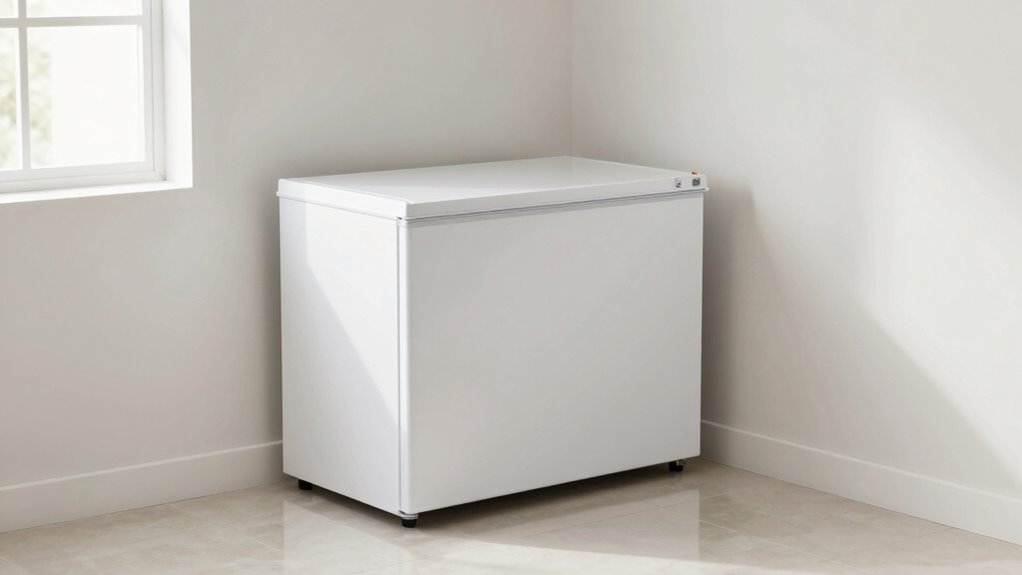

To guarantee safety and ideal performance, place your chest freezer in a cool, well-ventilated spot like a basement or garage, away from direct sunlight and heat sources. Keep it level, with enough space around for airflow and easy access for maintenance. Avoid high-traffic areas or spots children and pets can reach easily. Proper placement extends the lifespan and saves energy—stick around to learn more about picking the perfect location for your freezer.
Key Takeaways
- Place in a cool, well-ventilated area like a basement or garage away from direct sunlight and heat sources.
- Position on a level surface to reduce vibrations and operational noise.
- Ensure sufficient clearance around the freezer for proper airflow and heat dissipation.
- Keep away from high-traffic zones and children’s reach to prevent accidents and safety hazards.
- Select a location that balances accessibility, safety, noise reduction, and optimal performance.
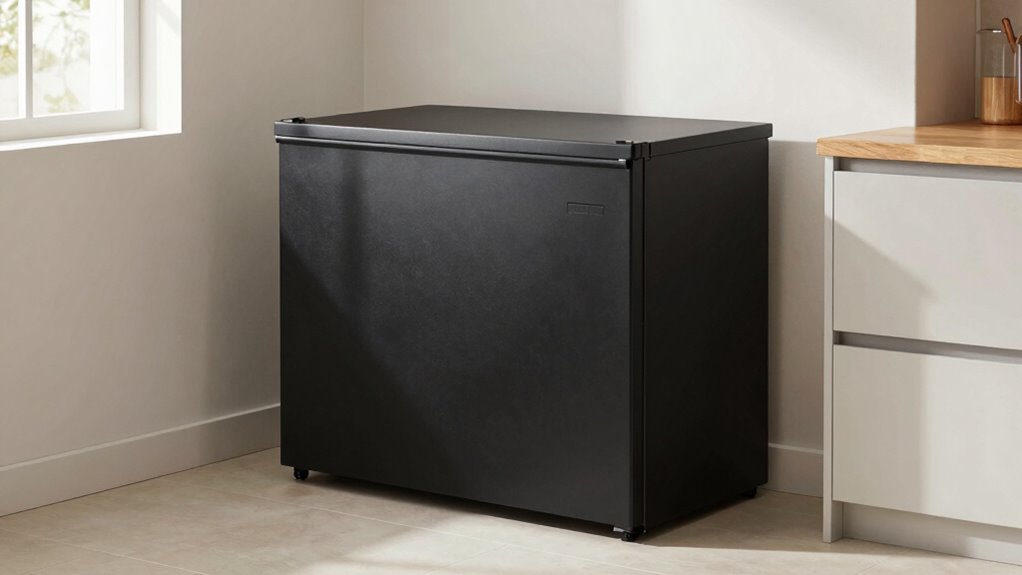
Are you unsure where to place your new chest freezer for ideal performance and safety? Choosing the right spot isn’t just about convenience; it impacts the freezer’s energy efficiency, noise levels, and overall lifespan. A good location ensures your freezer runs smoothly, consumes less power, and doesn’t disturb your household. First, consider placing it in a cool, well-ventilated area. Chest freezers work best in spaces where temperatures stay consistently low and stable, like a basement or garage. Avoid areas exposed to direct sunlight, near heat sources, or in places prone to temperature fluctuations. When a freezer operates in a warm environment, it has to work harder to maintain cold temperatures, which increases energy consumption and reduces its efficiency. Keeping the freezer in a cooler spot helps it run more efficiently, saves on electricity bills, and prolongs its lifespan. Proper placement also reduces vibration and noise, making your environment more comfortable. Additionally, proper airflow around the unit is essential for heat dissipation and maintaining optimal performance, especially in warmer climates or enclosed spaces.
Choose a cool, well-ventilated spot to maximize your freezer’s efficiency and lifespan.
Noise considerations are also important. Chest freezers can produce a humming or buzzing noise when running, which might disrupt your daily routine or sleep if placed too close to living or sleeping areas. To minimize disturbance, position the freezer away from bedrooms, living rooms, or other quiet spaces. If you have a basement or utility room, these often serve as ideal locations because they tend to be less sensitive to noise. Additionally, ensuring the unit is on a level surface prevents unnecessary vibrations and reduces operational noise, which can improve the longevity of the appliance. Proper placement also helps prevent unnecessary stress on the compressor, extending the durability of the appliance. Proper airflow around the unit is also crucial for optimal heat dissipation and energy efficiency.
Accessibility is another factor you shouldn’t overlook. Place your freezer where you can easily reach it for regular use, cleaning, and maintenance. Keep it close enough to your kitchen or food storage area so you don’t have to carry heavy loads over long distances, but also ensure there’s enough clearance around it for proper airflow. Good airflow is vital for heat dissipation, which directly impacts energy efficiency. Avoid cramped spaces or tight corners that can trap heat and cause the compressor to overwork. Furthermore, considering the air circulation around the unit can significantly improve its operational performance. A well-ventilated location also reduces the risk of overheating, which can damage components over time.
Finally, think about safety. Keep the freezer away from high-traffic areas where it might be bumped or accidentally knocked over. If you have children or pets, position it where they cannot easily access or tip it over. By carefully selecting a spot that balances these considerations—cool, ventilated, quiet, accessible, and safe—you’ll optimize your chest freezer’s performance, extend its lifespan, and enjoy energy savings for years to come.

Mini Fridge Silicone Mat with Raised Edge, 23.6''x19.7'' Under Refrigerator Mat, Mini Fridge Drip Pan Prevent Water Leakage and Floor Damage, Leakproof Mat for Under Small Fridge Refrigerator Freezer
- Size: 23.6'' x 19.7'' x 0.6''
- Universal Fit: Suitable for most small appliances
- Leak-proof Edges: Contains spills and prevents leaks
As an affiliate, we earn on qualifying purchases.
As an affiliate, we earn on qualifying purchases.
Frequently Asked Questions
Can a Chest Freezer Be Placed Outdoors Safely?
Placing a chest freezer outdoors can be risky, but it’s possible if you consider outdoor placement carefully. Make sure to shield it from direct sunlight, rain, and snow to prevent damage. Garage considerations are essential—ensure good ventilation and keep it in a dry, insulated spot if you opt for outdoor placement. Regularly check for moisture and temperature fluctuations to maintain peak performance and safety.
How Does Placement Affect Energy Efficiency?
Think of your chest freezer as a loyal guardian, where placement influences its efficiency. If you position it in a spot with good insulation and stable ambient temperature, it works smarter, not harder. Avoid placing it near heat sources or direct sunlight, which forces it to overwork. Proper placement guarantees the best energy use, reduces power bills, and extends the freezer’s lifespan by minimizing strain on its compressor.
Is It Okay to Put a Chest Freezer in a Garage?
It’s generally okay to put a chest freezer in your garage if the storage temperature stays between 0°F and 110°F, as extreme cold or heat can affect its performance. You should also consider noise levels, especially if your garage is near living spaces. Make certain of good ventilation and keep the freezer away from direct sunlight or heat sources. Proper placement helps maintain efficiency and extends the freezer’s lifespan.
What Are the Risks of Blocking Airflow Vents?
Blocking airflow vents is like trapping your freezer in a suffocating cage, causing serious ventilation hazards. When airflow obstruction occurs, your freezer struggles to shed heat, risking overheating and potential breakdown. This can also lead to increased energy consumption and higher bills. Always keep vents clear to guarantee proper airflow, helping your freezer run efficiently and safely, and preventing costly repairs down the line.
How Close Can It Be to Other Appliances?
You should keep your chest freezer at least 4-6 inches away from other appliances to guarantee proper airflow, which is vital for effective temperature regulation. This spacing helps prevent overheating and maintains performance. Additionally, consider placement aesthetics by placing the freezer where it’s accessible and visually unobtrusive. Avoid placing it too close to heat sources or in cramped spaces, as this can compromise safety and efficiency.
Conclusion
Remember, a well-placed chest freezer not only keeps your food safe and fresh but also runs efficiently. Choose a spot that’s cool, dry, and offers good airflow to prevent overheating. Avoid placing it near heat sources or direct sunlight. As the saying goes, “A place for everything, and everything in its place.” When you position your freezer wisely, you’ll enjoy reliable performance and peace of mind, making your kitchen more organized and your food last longer.