
In mountain farm communities, your work follows the changing seasons: planting and preparing fields in spring, tending crops and harvesting early fruits in summer, gathering and storing produce in autumn, and focusing on home repairs and preparations during winter. Festivals mark these cycles, strengthening bonds and passing traditions. Living in tune with nature’s rhythm builds resilience and fosters community spirit. If you keep exploring, you’ll discover how these seasonal patterns shape their resilient, harmonious way of life.
Key Takeaways
- Work in mountain farm communities follows the natural seasonal cycle: planting in spring, tending in summer, harvesting in autumn, and maintenance in winter.
- Seasonal festivals mark key agricultural milestones, fostering community bonding and cultural transmission throughout the year.
- The cyclical pattern of work aligns with land and climate, ensuring optimal resource use and resilience.
- Seasonal activities influence social life, with celebrations providing breaks and opportunities for mutual support.
- Living in harmony with natural cycles shapes daily routines, community cohesion, and sustainable practices.
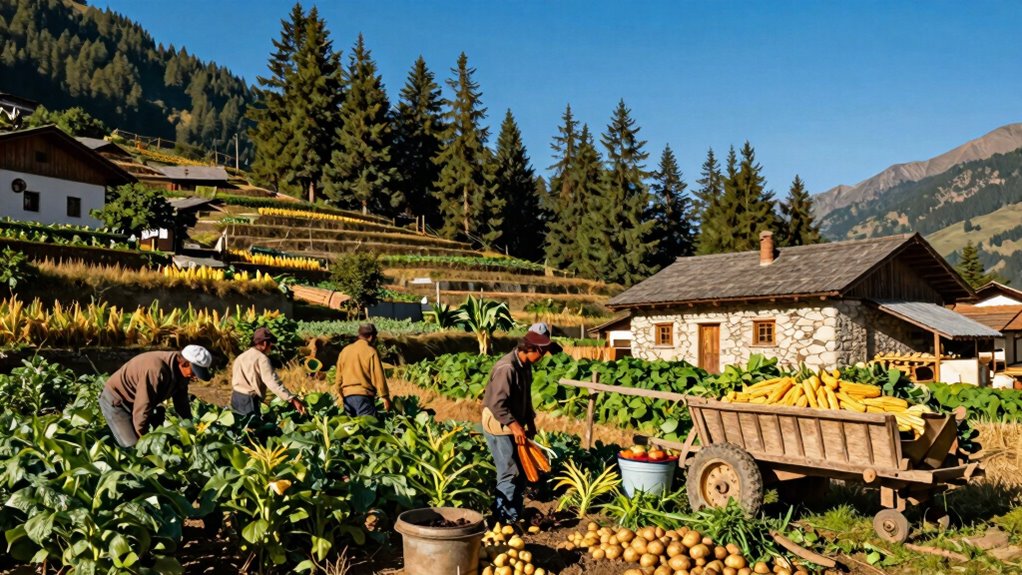
Have you ever wondered how life in mountain farm communities revolves around the changing seasons? It’s a rhythm that dictates your daily routines, work, and social life. As the seasons shift, so does your workload, with each period bringing its own set of tasks and opportunities. In spring, you’re busy planting crops and preparing fields, knowing that the coming months will require constant attention to nurture new growth. Summer follows, and your focus shifts to tending to the crops, harvesting early fruits, and making sure everything is thriving under the sun. As autumn arrives, your work intensifies with harvest time, gathering the fruits of your labor and storing them for winter. When winter hits, the pace slows, but life doesn’t stop. Instead, you focus on maintaining your home, repairing tools, and preparing for the next cycle. This seasonal labor creates a predictable yet dynamic flow to your life, binding you closely to the land and its natural rhythms. The reliance on natural cycles also fosters a deep appreciation for cultural traditions, which are often celebrated during seasonal festivals. Throughout these cycles, community festivals punctuate the year, serving as essential social anchors. These festivals often coincide with key seasonal milestones, giving everyone a reason to pause and celebrate despite the hard work. During planting or harvest festivals, you and your neighbors come together, sharing meals, music, and dances that strengthen bonds forged by collective effort. These gatherings aren’t just about fun—they’re crucial expressions of community spirit, reinforcing shared traditions and mutual support. You find that these festivals provide a break from labor, offering joy and a sense of belonging during the most demanding times of the year. They also serve as opportunities to pass down stories, songs, and customs to younger generations, ensuring the cultural fabric remains strong. The rhythm of seasonal labor and community festivals creates a harmonious living pattern that’s deeply embedded in your community. You learn to anticipate the needs of each season, adjusting your work and social activities accordingly. This cyclical nature fosters resilience, as everyone relies on each other during busy harvests or planting seasons. Additionally, understanding the natural cycles helps you plan for times when resources might be scarce. Recognizing the importance of seasonal timing allows your community to optimize planting and harvesting periods for better yields. The festivals act as milestones, giving everyone a chance to reflect, rejoice, and reconnect. You recognize that your life is intertwined with the land’s natural cycle, and that these seasonal changes aren’t just tasks to complete—they’re an essential part of your identity and community cohesion. Living in such a community means embracing the ebb and flow of the seasons, knowing that each phase brings its own challenges and celebrations, shaping your life in profound ways.
As an affiliate, we earn on qualifying purchases.
Frequently Asked Questions
How Did Seasonal Work Impact Community Social Structures?
Seasonal labor strengthened social cohesion in mountain farm communities by encouraging cooperation during busy times like planting and harvest. When work was heavy, you and your neighbors relied on each other, sharing tools, skills, and support. This shared effort fostered close bonds and a sense of collective identity. As seasons changed, social roles shifted, but the reliance on communal work remained essential, keeping community ties strong throughout the year.
Were There Any Specific Festivals Associated With Work Seasons?
You feel the heartbeat of the mountain community during festival celebrations, where work seasons bloom into vibrant traditions. These festivals mark the turning points of harvest traditions, transforming labor into joyful gatherings. As the mountains echo with song and dance, you witness how these moments celebrate hard work, fostering unity and pride. The spirit of these festivals sustains the community’s soul, blending toil and joy into timeless memories.
How Did Work Seasons Influence Family Roles and Responsibilities?
You see how agricultural traditions shaped family roles during work seasons, assigning specific responsibilities based on age and gender. Men often handled heavy labor, while women managed household chores and seasonal tasks like planting and harvesting. This reinforced family hierarchy, with elders guiding decisions. These seasonal roles fostered cooperation, ensuring work was efficiently completed, and strengthened bonds within the community by emphasizing shared responsibilities aligned with seasonal agricultural demands.
What Tools Were Used During Different Work Seasons?
Your tools during different work seasons are like a gardener’s arsenal, ready for every task. You’d use axes, sickles, and hoes for seasonal labor techniques like clearing land or harvesting crops. In winter, you’d rely on chopping tools to gather firewood, while spring and summer call for rakes and plows. These implements help you navigate each season’s demands, making mountain farm life a symphony of well-timed, skillful labor.
Did Weather Variations Alter Traditional Work Schedules?
Weather variations definitely altered your traditional work schedules. When climate adaptation was necessary, you adjusted timing for crop planting and harvesting to match unpredictable weather patterns. Unseasonal snow or rain could delay planting or harvest, requiring you to shift work seasons or extend labor periods. These adjustments helped you protect your crops and maintain food supply, showing how closely your work routines depended on weather conditions and your ability to adapt.
Conclusion
So, next time you wonder how mountain farm communities thrived despite tough seasons, remember their dedicated work cycles. These seasons dictated every part of life, shaping traditions and resilience. Can you imagine living so attuned to nature’s rhythm, where each season brought new challenges and opportunities? Their story reminds us of the power of community and adaptation. Isn’t it inspiring how they turned seasonal hardships into a way of life?