
Hearths stay central in mountain homes because they represent tradition, foster community, and provide sustainable warmth that electricity can’t replace. You’ll find that fireplaces and wood stoves embody regional history and rustic charm, creating cozy, inviting spaces. They serve as a symbol of resilience and connection to mountain life, beyond just heating. Keep exploring to discover how these hearths preserve cultural identity and why they remain essential even today.
Key Takeaways
- Hearths symbolize cultural heritage, community, and resilience, maintaining their significance beyond practical heating needs.
- Traditional design elements like stone mantels reinforce authenticity and rustic charm, preserving regional identity.
- Hearths serve as natural social hubs, fostering storytelling and bonding even after electrification.
- Wood-burning stoves and fireplaces offer sustainable, resourceful heating aligned with eco-conscious values.
- The hearth embodies nostalgia and regional pride, representing enduring symbols of mountain life and tradition.
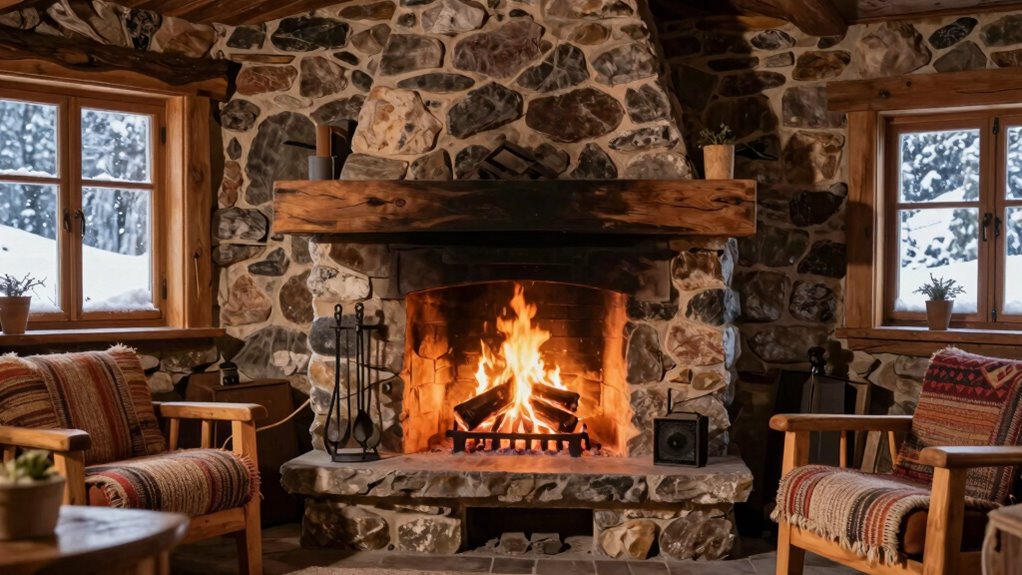
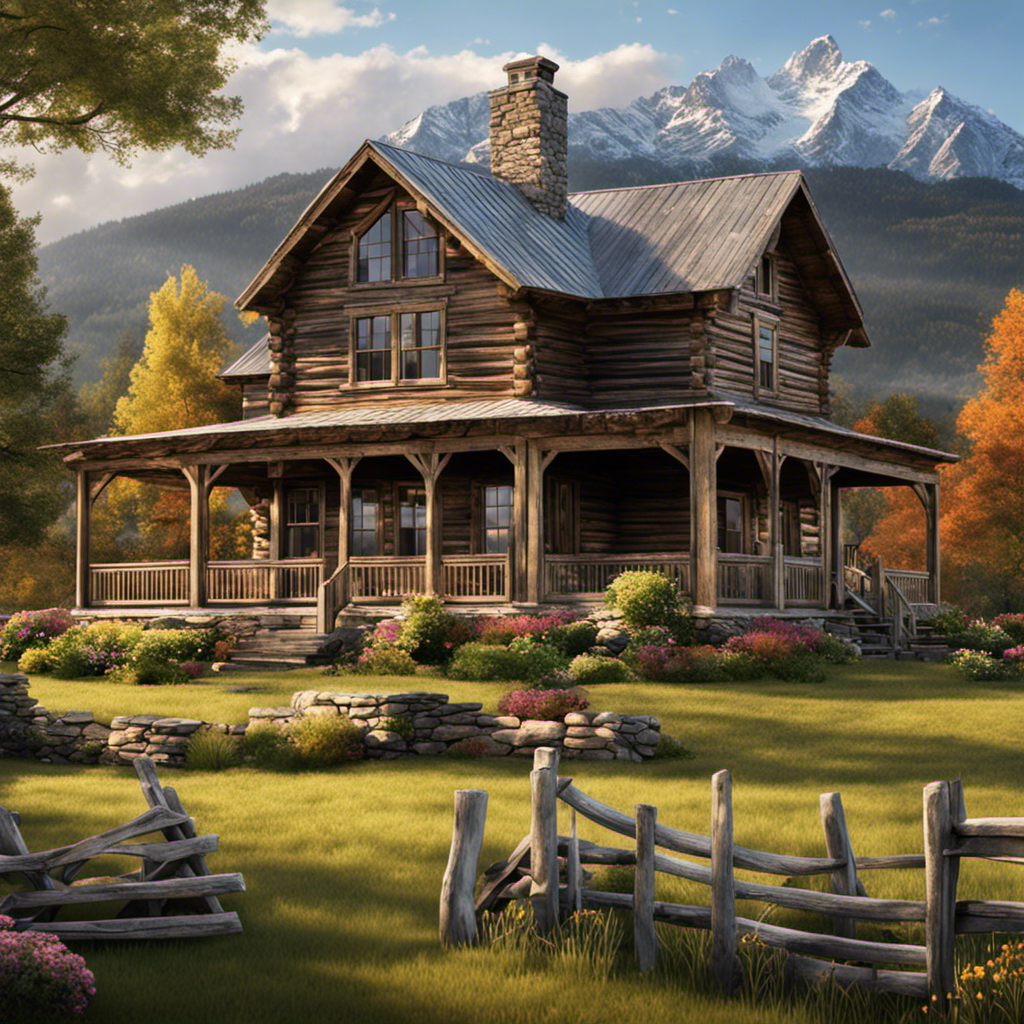
In mountain homes, hearths have long served as the heart of daily life, providing warmth, light, and a gathering place for family and friends. Even long after the advent of electricity, many homeowners like you still prioritize the hearth as a central feature in mountain home design. This isn’t just about tradition; it’s about maintaining a connection to the roots of mountain living. Fireplace traditions, passed down through generations, often emphasize the hearth as more than just a source of heat — it’s a symbol of comfort, community, and resilience. You might notice that, in many mountain homes, the fireplace remains a focal point, not just because it’s functional but because it embodies the spirit of the region’s history.
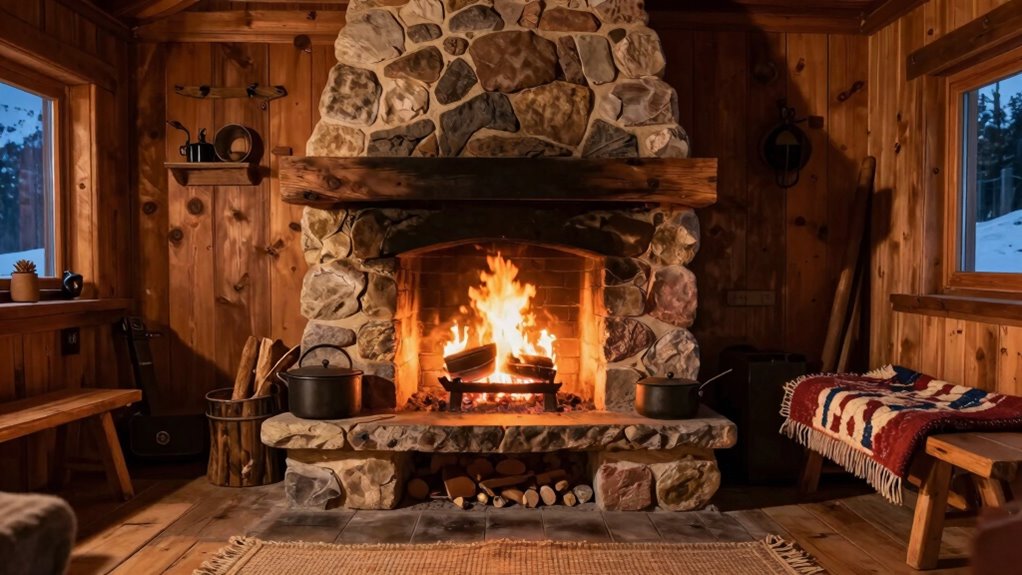
The reason these hearths stay central, even in modern times, has a lot to do with their cultural importance. They evoke a sense of nostalgia and continuity that’s hard to replace with a flick of a switch. When designing your mountain home, you might choose to incorporate traditional elements like stone mantels or wood-burning stoves to honor fireplace traditions. These features don’t just serve aesthetic purposes; they reinforce a sense of authenticity and connection to nature. Many mountain home designs intentionally position the hearth in the living room or great room, making it the natural gathering spot for storytelling, sharing meals, or simply unwinding after a day outdoors. This placement keeps the hearth at the heart of daily activities, echoing the way mountain communities have always relied on their hearths for warmth and companionship. Additionally, choosing traditional heating methods such as wood-burning stoves can also contribute to the rustic charm and energy independence of your home. Incorporating cultural significance into your design helps preserve the deep-rooted traditions of mountain living.
Furthermore, the emphasis on sustainable heating methods like wood-burning stoves aligns with the region’s values of harmony with nature and resourcefulness. Even with modern heating options available, the appeal of a crackling fire remains strong. You feel drawn to the flickering flames, the scent of burning wood, and the cozy ambiance they create. In mountain homes, the hearth isn’t just about practicality — it’s about creating a space that fosters connection and comfort. You might also notice that many mountain home designs incorporate large windows or open floor plans centered around the fireplace to maximize the visual and social impact. The timeless appeal of a traditional hearth continues to resonate because it preserves the essence of mountain life — a life rooted in simplicity, warmth, and community. Additionally, incorporating traditional heating methods like wood-burning stoves can enhance the rustic charm and authenticity of your space. Ultimately, your mountain home’s hearth is more than a feature; it’s a living reminder of the enduring fireplace traditions that define mountain living, even in an era of modern convenience.
wood burning stove for mountain homes
As an affiliate, we earn on qualifying purchases.
As an affiliate, we earn on qualifying purchases.
Frequently Asked Questions
How Did Hearths Influence Social Interactions in Mountain Homes?
Hearths in mountain homes shape your social interactions by serving as a warm gathering spot. You and your family bond over shared meals, storytelling traditions, and conversations around the fire. The hearth’s central position encourages everyone to come together, fostering closeness and tradition. Even with modern technology, the hearth remains a symbol of community, making your home a cozy space for family bonding and passing down stories.
Were Hearths Used for Purposes Other Than Cooking and Heating?
Yes, hearths served purposes beyond cooking and heating. You’d gather around for cooking rituals, sharing stories and traditions that strengthened your community bonds. The fire symbolized warmth, safety, and life itself, making it a central spiritual element in your mountain home. You also used it for light during dark evenings, creating a comforting ambiance. Hearths, thus, held cultural and emotional significance, beyond their practical functions.
Did Hearth Designs Vary Significantly Across Different Mountain Regions?
Yes, hearth designs varied considerably across different mountain regions, reflecting regional craftsmanship and design symbolism. You’ll notice that each area incorporates unique materials, shapes, and decorative motifs that represent local traditions and cultural identity. These variations not only showcase craftsmanship but also serve as symbols of community heritage. By observing these differences, you gain insight into how regional influences shaped hearth architecture, making each hearth a distinctive cultural statement.
How Did Maintenance of Hearths Differ From Modern Fireplaces?
Imagine tending a glowing hearth, where you carefully preserve the wood to keep the fire alive and the room warm. Unlike modern fireplaces, maintaining hearths involved regular chimney cleaning to prevent soot buildup and guarantee proper draft. You had to stay vigilant, checking for creosote and protecting the structure from decay. This hands-on upkeep kept the heart of the mountain home burning steadily, long after electricity lit other parts of your life.
What Cultural or Spiritual Significance Did Hearths Hold?
You see, hearths held deep spiritual significance, serving as sacred spaces for spiritual rituals and family bonding. They embodied ancestral symbolism, reminding you of your heritage and traditions. The hearth was more than just a source of warmth; it was a spiritual center where generations gathered to honor ancestors, perform rituals, and preserve cultural identity. Its central position reflected its importance in nurturing both physical and spiritual well-being within the home.
Conclusion
So, even long after electric stoves and modern amenities arrived, why do you think hearths still hold a special place in mountain homes? They’re more than just a source of heat—they’re a symbol of tradition, warmth, and community. Maybe it’s the comforting crackle of the fire or the stories told around it. After all, isn’t there something timeless about gathering around a hearth, feeling truly at home?