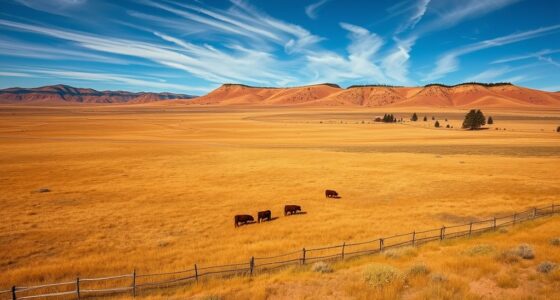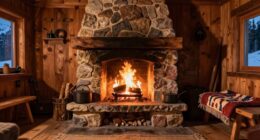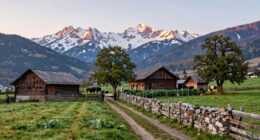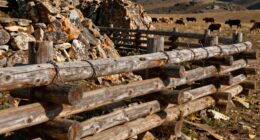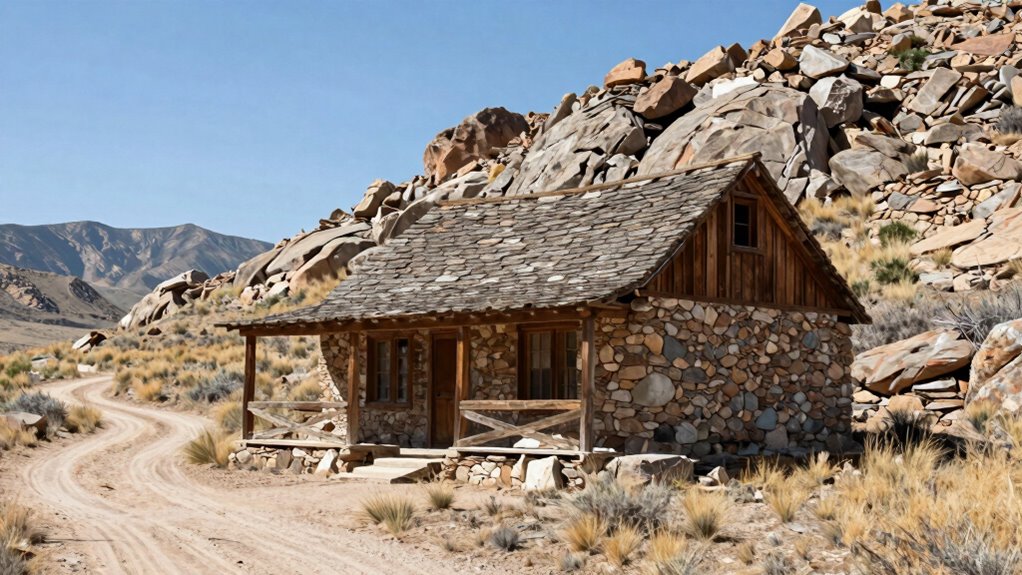

As a homesteader out west, you use native stone to build strong foundations, walls, and erosion barriers that last for generations. Rough-cut lumber helps create flexible structures like fences, raised beds, and shade covers, all blending seamlessly into the landscape. These materials help conserve water by creating microclimates and reducing runoff. Using local stone and lumber makes your homestead more sustainable and resilient. If you keep exploring, you’ll uncover even more ways these traditional materials support your land and water efforts.
Key Takeaways
- Homesteaders used native stone to build durable walls, foundations, and erosion control features suited to the local environment.
- Rough-cut lumber was employed for fences, raised beds, and shade structures, offering flexibility and resilience.
- Native stone created microclimates and moisture retention, supporting crop growth and soil stability.
- Both materials minimized environmental impact and reduced maintenance by blending into the landscape.
- Structures built with local stone and lumber enhanced water conservation and land sustainability efforts.
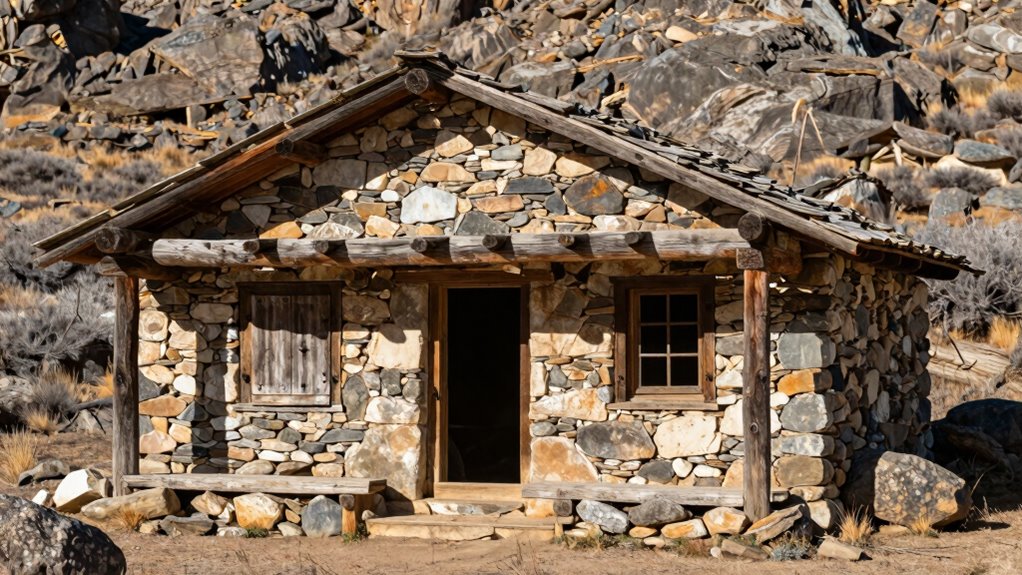
Many homesteaders choose to build with native stone and lumber because these materials are readily available and durable. Out West, where resources can be limited and the environment tough, using local materials makes perfect sense. You find that native stone provides a sturdy foundation and walls that last for generations, while rough-cut lumber offers flexible building options. This approach isn’t just about practicality; it’s tied to efficient agricultural techniques and water conservation. By using materials native to the area, you can design structures that blend into the landscape, reducing the need for extensive maintenance and resource input.
Building with native stone and lumber ensures durability, efficiency, and seamless integration into the landscape.
When constructing your homestead, you might incorporate agricultural techniques that maximize water efficiency. For example, building with native stone walls helps create microclimates and retains soil moisture, which is essential in arid regions. These stone walls can serve as barriers to wind and help prevent erosion, making your land more productive. Similarly, rough-cut lumber can be used to craft raised beds or fencing that directs water flow, ensuring it stays close to your crops. Using local materials means your structures are better adapted to the climate, helping you conserve water by reducing runoff and evaporation.
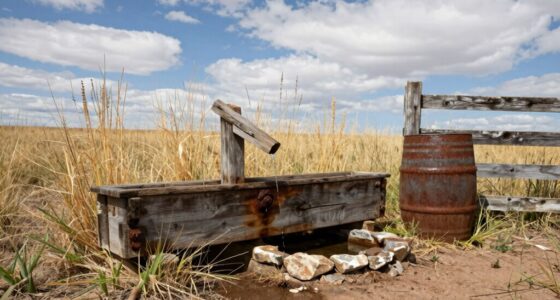
Water conservation is a key reason many homesteaders rely on native stone and lumber. You realize early on that sourcing water is a constant challenge, so you design your land and buildings to minimize waste. For instance, you might build a rainwater catchment system using stone-lined troughs or tanks, which are less prone to leaks and wear. The durability of native stone allows you to create long-lasting water storage solutions that withstand the elements. Meanwhile, rough-cut lumber can be used to construct pergolas or shade structures that protect your crops and livestock from the sun, reducing water loss through evaporation.
Your use of natural materials also supports sustainable living. You avoid importing processed building supplies, which reduces energy consumption and environmental impact. This practice aligns with traditional agricultural techniques that emphasize working with the land rather than against it. You learn to adapt your building methods to local conditions, which makes your homestead more resilient. Native stone and lumber become integral parts of your water conservation strategy, helping you develop a self-sufficient homestead that thrives in the challenging Western environment. In the end, your approach reflects a deep understanding of the land’s capabilities and limits, ensuring your homesteading efforts are sustainable for years to come.
native stone retaining wall kits
As an affiliate, we earn on qualifying purchases.
As an affiliate, we earn on qualifying purchases.
Frequently Asked Questions
How Did Homesteaders Source Native Stone and Lumber Sustainably?
You sourced native stone and rough-cut lumber sustainably by carefully selecting materials that didn’t disturb wildlife habitats or deplete soil preservation. You gathered stone from local quarries or natural outcroppings, minimizing environmental disruption. For lumber, you relied on selective cutting, harvesting only mature trees, and practicing responsible forestry. This approach helped conserve the land’s health, protected local ecosystems, and guaranteed resources remained available for future generations.
What Tools Were Essential for Working With Native Stone and Rough-Cut Lumber?
You’ll need essential tools like chisels and hammers for stone shaping, making rough edges smooth and workable. For lumber, an axe or saw helps with cutting and shaping, while a moisture meter is vital for lumber drying, ensuring the wood is properly seasoned. A sturdy mallet and rasp can also assist in fine-tuning your work. These tools enable you to work effectively with native stone and rough-cut lumber, creating durable structures.
How Did Climate Affect Building Techniques With Native Materials?
Climate greatly influenced your building techniques with native materials, prompting you to adapt for durability. In colder regions, you focus on stone craftsmanship to create insulated, sturdy walls that withstand harsh weather. In warmer areas, you opt for rough-cut lumber, allowing for better ventilation and cooling. You understand that climate adaptation is essential, so you select and shape materials to guarantee your structures last and remain comfortable regardless of weather conditions.
Were There Cultural Influences on Material Selection and Construction Styles?
You notice that cultural influences shape material choices and styles, like how Native American symbolism often appears in stone carvings, reflecting spiritual beliefs. Homesteaders incorporate regional aesthetics, blending local materials with cultural symbols to create structures that resonate with community identity. For example, a homestead might feature native stonework with carved motifs representing cultural heritage, highlighting how cultural symbolism influences construction styles and regional aesthetics, making buildings meaningful and uniquely regional.
How Did Native Materials Impact the Longevity of Homestead Structures?
Native materials like stone and rough-cut lumber greatly enhanced the longevity of your homestead structures. Their natural durability means they withstand weather and time better than imported materials, ensuring your buildings last decades or even generations. Additionally, their availability close to your site reduces transportation costs and delays, making repairs easier and more affordable. Using local materials not only strengthens your structures but also creates a resilient, sustainable homestead environment.
Conclusion
So, next time you admire those sturdy old homesteads out west, remember—you’re gazing at the original eco-friendly, upcycled masterpieces. Native stone and rough-cut lumber? Basically the DIY revolution of yesteryear. Who knew that building with nature’s leftovers could stand the test of time—and a few prairie storms? Maybe it’s time to ditch fancy tools and embrace your inner homesteader. After all, why buy new when Mother Nature’s hand-me-downs are so much more authentic?