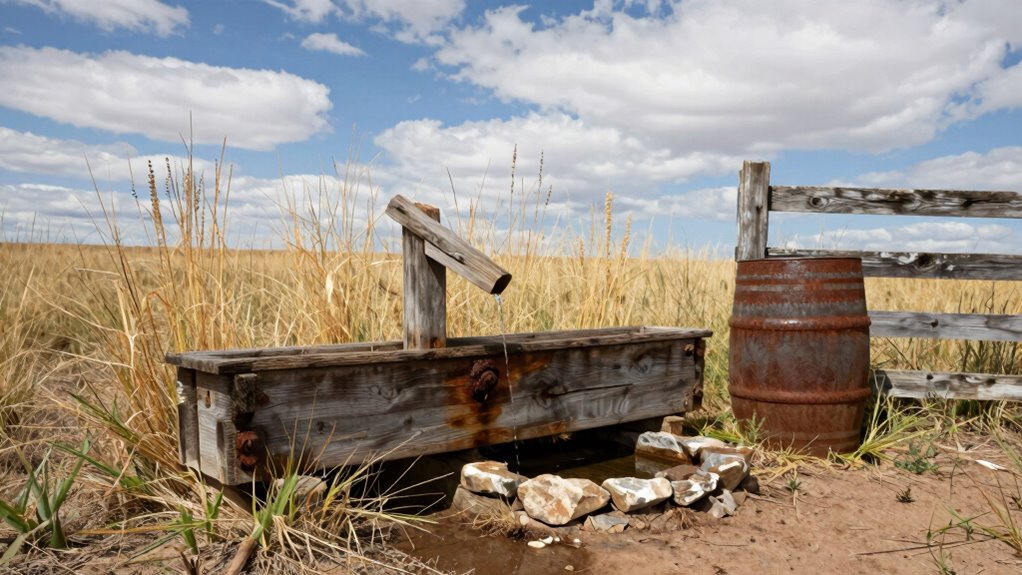

Early Western homesteads used simple, resourceful tricks to catch and store water. They attached large gutters to rooftops to direct rain into containers or underground reservoirs. They kept catchment surfaces clean for better collection and often used natural terrain to funnel water into constructed basins or earthen tanks. Covering reservoirs helped prevent evaporation, while positioning them uphill utilized gravity for distribution. These practical methods helped guarantee a steady water supply, and discovering more tips can make your own system even more reliable.

Get furniture and decor delivered free with Prime
- Fast, free delivery on millions of items
- Prime Video, Amazon Music and more included
- Member-only deals all year
Key Takeaways
- Early homesteads collected rainwater directly from rooftops and surfaces using large gutters and downspouts for efficient channeling.
- They built reservoirs in natural depressions or excavated basins, reinforcing them with stones or clay to prevent seepage.
- Gravity was utilized to distribute stored water from uphill reservoirs to homesteads and livestock areas.
- Catchment surfaces were kept clean and debris-free to ensure water purity for household and agricultural use.
- Water storage was expanded through large reservoirs, often covered to reduce evaporation and ensure supply during dry seasons.
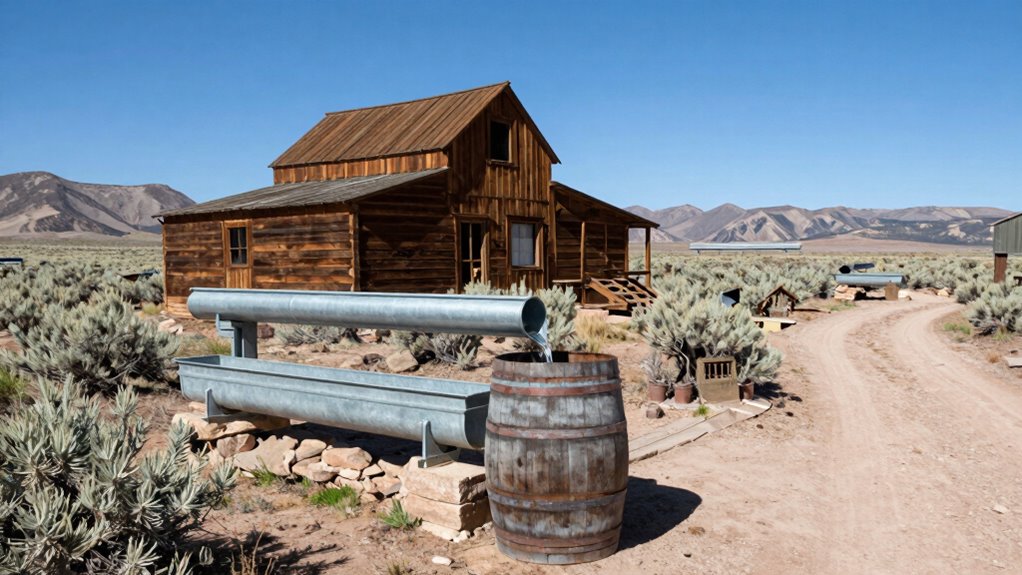
Early western homesteads often faced the challenge of securing reliable water sources, and savvy settlers discovered simple yet effective catchment tricks to meet their needs. One of the most common methods was rain harvesting, which involved collecting rainwater directly from rooftops or other surfaces. You’d attach large gutters to your rooftops, channeling the water into downspouts that directed it into storage containers or underground reservoirs. This method was especially useful in dry regions where natural water sources were scarce or seasonal. By capturing rain during the wet months, you could store enough water to get through the drier periods. The key was to keep your catchment surfaces clean and your gutters free of debris to guarantee the water remained relatively pure for household use or livestock. Additionally, proper water filtration was often employed to further ensure water purity before use. Reservoir construction was another essential trick that early settlers relied on. Instead of depending solely on natural springs or rivers, you’d build reservoirs—large, sometimes earthen or stone-lined tanks—to store water collected from rain or runoff. These reservoirs acted as a buffer, providing a steady supply during droughts or dry spells. When constructing a reservoir, you’d choose a natural depression or dig into the ground to create a basin, then reinforce it with stones or clay to prevent seepage. Covering the reservoir with a simple lid or planting grass over it helped reduce evaporation. To guarantee efficiency, you’d often position reservoirs uphill from your homestead, allowing gravity to help distribute the stored water to your fields and homes. Combining rain harvesting with reservoir construction gave you a reliable catchment system that minimized dependence on external water sources. During heavy rains, your gutters would quickly fill your reservoirs, ensuring a reserve for later use. This integration was essential for survival, especially in areas prone to drought or where water was hard to access. You learned to adapt by designing catchment systems that captured every drop possible, whether by increasing gutter capacity or expanding reservoir size. These tricks didn’t require complex technology—just practical knowledge and careful planning. Over time, they became the backbone of water management for early homesteads, enabling settlers to sustain their families, livestock, and crops despite challenging environmental conditions. Your resourcefulness in using rain harvesting and reservoir construction made a big difference in establishing a resilient homestead in the western frontier.
rainwater harvesting gutter system
As an affiliate, we earn on qualifying purchases.
As an affiliate, we earn on qualifying purchases.
Frequently Asked Questions
How Effective Were Early Water Catchment Systems During Droughts?
Early water catchment systems were fairly effective during droughts because they relied on rainwater harvesting, which allowed you to store and utilize water when surface sources dried up. These systems increased drought resilience by capturing rain during wet periods, giving you a supply during dry times. While not perfect, they provided an essential water source, helping you survive and maintain your homestead despite prolonged droughts.
What Materials Were Most Commonly Used for Early Water Catchment?
You’ll find that early water catchment systems mainly used materials like wood, stone, and metal for rainwater harvesting. These catchment materials needed good durability to withstand weather and constant use. Metal sheets, such as tin or galvanized iron, were popular for rooftops because of their durability, while stone and wood served as sturdy basins or troughs. These materials guaranteed reliable water collection, especially during droughts when every drop counted.
How Did Homesteads Store Collected Water for Long-Term Use?
Think of your homestead as a sturdy ship, ready to weather dry spells. You store collected rainwater in large, durable storage tanks designed for long-term use. These tanks, often made from wood, metal, or stone, are sealed tightly to prevent contamination. Effective rainwater harvesting and clever storage tank design guarantee your water supply remains steady even during droughts, just like a ship’s well-stocked hold sustains its voyage through stormy seas.
Were There Any Legal Restrictions on Water Collection Methods?
You should know that legal regulations and property rights often limited how you could collect water. Laws varied by region, but many required you to obtain permits or follow specific methods to avoid infringing on neighboring rights. Some areas restricted capturing rainwater or using certain catchment systems, aiming to protect water sources and property rights. It’s essential to understand local laws before installing water collection systems to stay compliant and avoid legal trouble.
How Did Early Settlers Ensure Water Purity in Catchment Systems?
You guarantee water purity in catchment systems by carefully designing for rainwater purification; you often use first flush diverters to discard initial runoff, removing debris and contaminants. While simple filters and screens trap larger particles, regular cleaning prevents buildup. Combining thoughtful catchment system design with natural purification techniques, you can maintain safe, drinkable water, even in remote areas. This proactive approach helps sustain your homestead’s water supply effectively.
Conclusion
As you stand on the edge of these old homesteads, imagine the clever water catchment tricks they’ve used—tiny dams, barrels soaking up the sun, and channels whispering secrets of survival. These simple tools turned arid land into a life-giving oasis, like a hidden wellspring beneath the dirt. By mastering nature’s secrets, they transformed barren stretches into thriving homesteads, proving that with ingenuity, even the driest land can bloom with hope.
Halloween Picks
halloween
As an affiliate, we earn on qualifying purchases.