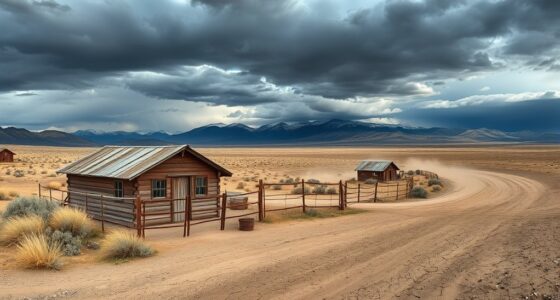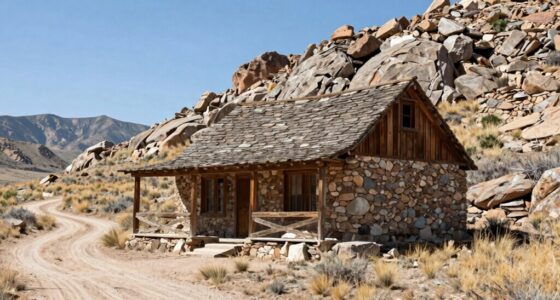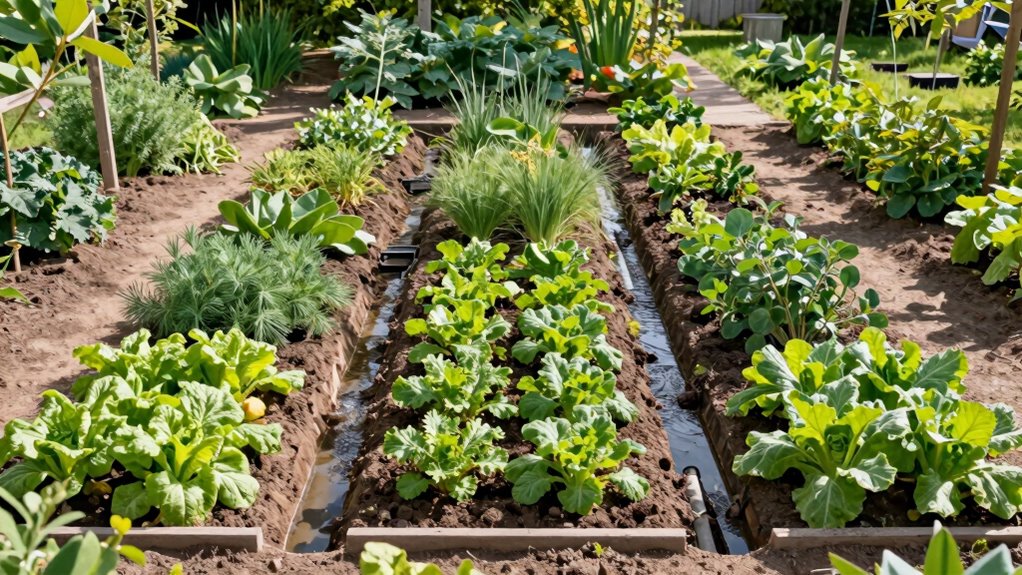
Early western garden layouts focused on water efficiency by positioning plots close to homes to reduce water travel and using simple irrigation methods like furrows and ditches. You’ll see features like raised beds, narrow rows, and mulching to minimize evaporation and soil erosion. Companion planting, such as beans near corn, boosted yields while improving soil fertility naturally. If you keep exploring, you’ll discover more strategies to help you stretch limited water supplies effectively.
Key Takeaways
- Plots placed close to homes to minimize water travel and reduce evaporation losses.
- Use of raised beds and narrow rows to control runoff and improve water efficiency.
- Incorporation of simple irrigation methods like furrows to direct water precisely to plant roots.
- Companion planting strategies, such as beans with corn, enhance soil fertility and reduce water needs.
- Mulching and soil covering techniques retain moisture and prevent erosion in dry climates.
Have you ever wondered how early Western families organized their gardens? Back then, they faced the challenge of stretching limited water supplies while ensuring their crops thrived. To do this, they relied on thoughtful garden layouts that maximized efficiency and sustainability. One key strategy was companion planting, where certain plants were grown together to benefit each other. For example, planting beans near corn not only made good use of space but also improved soil fertility, as beans fix nitrogen in the soil. This natural partnership reduced the need for additional fertilizers, helping conserve water and nutrients. By pairing plants wisely, families could produce more food with less water, making their gardens more sustainable. Additionally, utilizing natural filtration systems and native plants could further enhance water conservation efforts and support biodiversity in their garden designs.
Another essential aspect was soil conservation. Early farmers understood that preserving the health of their soil was fundamental for a successful garden, especially in dry climates. They often used methods like mulching with straw or dried grass to reduce evaporation and keep moisture in the soil longer. Covering the soil also protected it from erosion caused by wind and rain. In addition, they practiced crop rotation, planting different crops in the same space over different seasons. This prevented soil depletion and kept the land fertile, reducing the need for watering and additional inputs. These techniques helped maintain healthy soil that could retain moisture, which was indispensable in regions where water was scarce. Recognizing the importance of soil health, they carefully managed their land to ensure its long-term productivity. Moreover, understanding the significance of water conservation allowed them to adapt their practices to conserve this vital resource effectively.
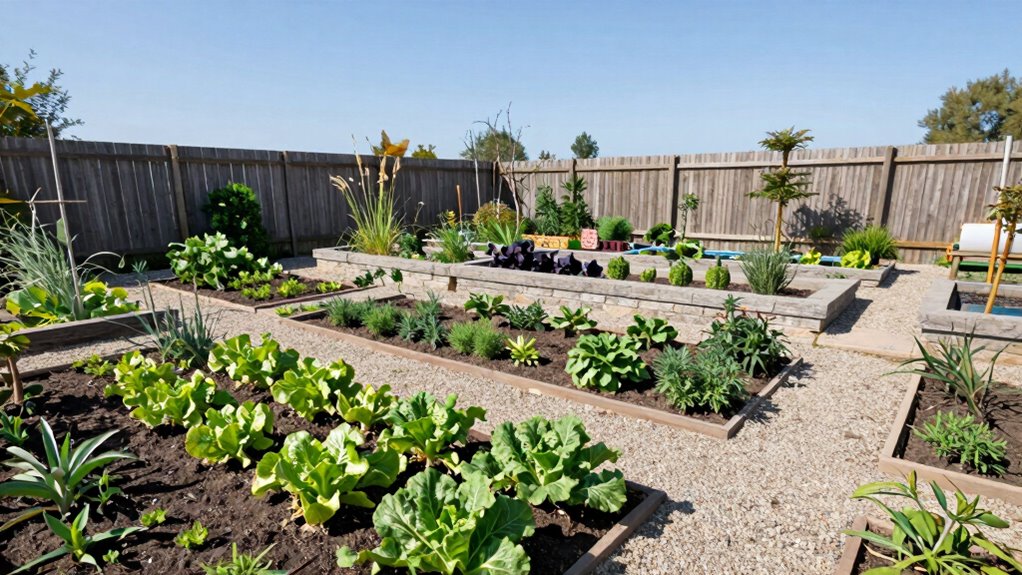
The garden layouts themselves were designed with water efficiency in mind. Families often arranged their plots in close proximity to their homes, minimizing the distance water needed to travel. Raised beds and narrow rows helped control runoff and improved irrigation methods, ensuring water reached the roots directly. Some even used simple irrigation techniques like furrows or ditches to direct water where it was most needed, avoiding wasteful overspray. These layouts not only conserved water but also made tending the garden easier and more manageable, especially for families with limited resources. By thoughtfully designing their gardens with water conservation in mind, early families created sustainable food sources that could support their households even in challenging environments.

GYMHILL Elevated Raised Garden Bed with Legs, 33.66" Tall Self-Watering Resin Outdoor Planter Box with Storage Shelf, Drain Plug Water & Monitor for Plants Vegetables Flowers Fruits (Black)
- Ergonomic Height Design: Reduces bending and kneeling for comfort
- Mobility with Locking Wheels: Easily move planter to optimize sunlight
- Compact Size for Limited Spaces: Fits on balconies, patios, and small areas
As an affiliate, we earn on qualifying purchases.
As an affiliate, we earn on qualifying purchases.
Frequently Asked Questions
How Did Early Western Families Source Their Water for Gardens?
You sourced your garden water through rainwater harvesting methods, collecting runoff in barrels or cisterns for later use. Additionally, you focused on soil conservation techniques to retain moisture and prevent evaporation, making the most of limited water supplies. These practices helped early Western families stretch their water resources, ensuring their gardens thrived despite scarce water availability. Combining rainwater harvesting and soil conservation was key to sustainable gardening during those times.
Were There Specific Plants Prioritized in Early Garden Layouts?
Think of early gardens as carefully choreographed dances, where plant prioritization and garden zoning lead the performance. You’d prioritize water-efficient crops like beans and herbs, placing them near water sources. Root vegetables and drought-tolerant plants often took center stage, while less hardy plants were tucked into shaded or protected zones. This strategic layout maximized water use, ensuring each plant thrived without wasting precious resources.
How Did Climate Influence Garden Design in Early Western Settlements?
Climate heavily influenced garden design in early western settlements, prompting you to adopt historical irrigation techniques for efficient water use. You’d choose plants suited to the dry, unpredictable weather, practicing climate adaptation by grouping crops that thrive together and designing layouts that maximize water retention. These strategies helped you conserve water, ensuring your garden’s survival amid harsh conditions while supporting your community’s needs.
What Tools Were Used to Construct These Water-Efficient Gardens?
Think of tools as the brushstrokes shaping a water-wise masterpiece. You’d use shovels and hoes for soil conservation, carefully shaping the land to prevent erosion. For irrigation techniques, simple devices like dippers, aqueducts, and hand-powered pumps helped direct water efficiently. These tools allowed early settlers to craft gardens that conserved water, ensuring crops thrived even in harsh climates, much like artists perfecting their craft for lasting beauty.
Did Early Gardens Include Any Water-Saving Features or Innovations?
Yes, early gardens included water-saving features and innovations. You’ll find irrigation techniques like ditches and basins designed to direct water efficiently, minimizing waste. These methods promote water conservation by ensuring that water reaches plants directly and reduces evaporation. Such innovations helped families stretch limited water supplies, making gardening more sustainable, especially in arid regions. By using these techniques, early gardeners maximized water use and supported healthy, productive gardens.
Conclusion
So, next time you marvel at modern water-saving gardens, remember those early Western families who laid out their plots with ingenuity and a touch of irony. They thought they were simply managing their resources, yet they were truly pioneering the art of stretching water in ways we still admire today. It’s funny how their humble garden layouts, born out of necessity, laid the groundwork for today’s sustainable practices—proof that sometimes, necessity really is the mother of invention.