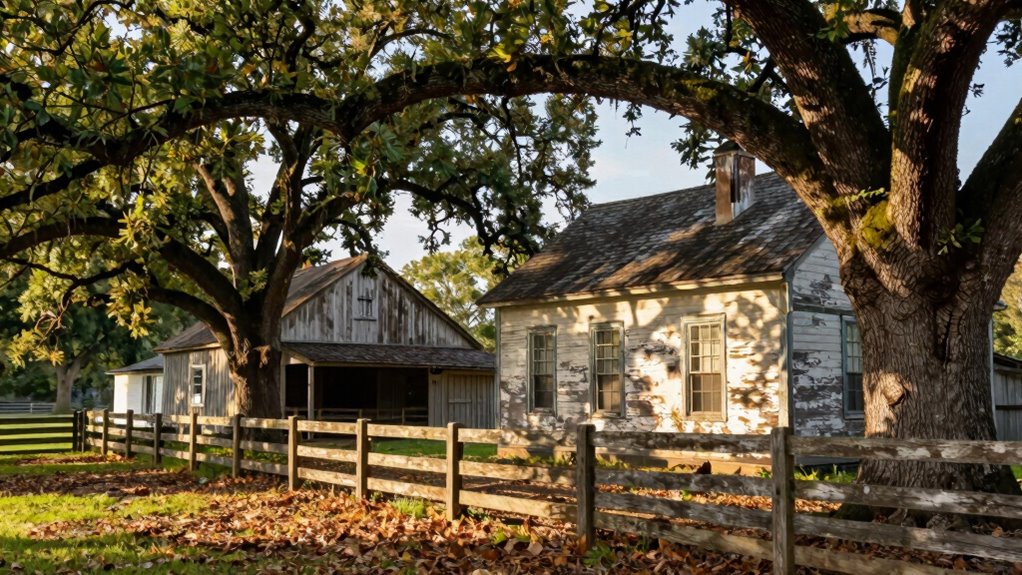

Native yard trees like oaks, pecans, and magnolias once shaped southern farmsteads into livable, thriving communities. They provided shade, shelter, and wind protection, making summers cooler and harsh weather less damaging. These trees also supported wildlife and natural pest control, creating a balanced ecosystem. By stabilizing soil and boosting land productivity, they made rural life sustainable. Keep exploring to discover how these trees continue to impact farmstead resilience today.

Get furniture and decor delivered free with Prime
- Fast, free delivery on millions of items
- Prime Video, Amazon Music and more included
- Member-only deals all year
Key Takeaways
- Native yard trees provided shade, cooling farmsteads during hot southern summers.
- They acted as natural windbreaks, protecting crops and homes from harsh weather.
- Trees like oaks and pecans attracted beneficial insects and birds, aiding natural pest control.
- They offered shelter and food, supporting local wildlife and promoting biodiversity.
- Native trees enhanced land stability and resilience, making rural living more sustainable.
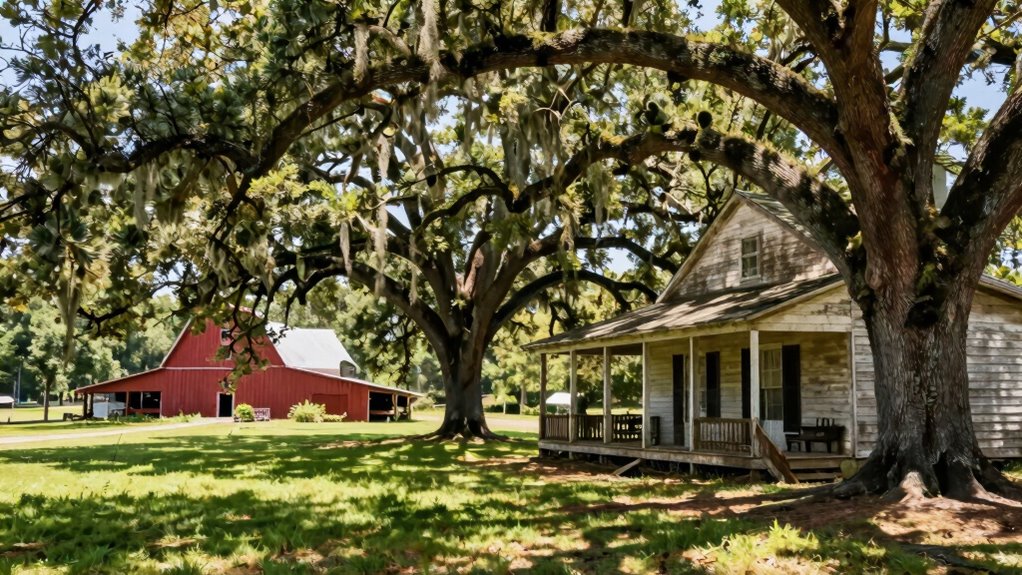
In the South, yard trees have long been more than just scenic additions—they’ve shaped the very character of farmsteads and made rural life more livable. You’ve likely noticed how certain trees, especially native species, are woven into the landscape, serving purposes far beyond mere decoration. These trees offer natural benefits, acting as living barriers that protect crops and homes from harsh weather, while also creating shaded spaces that keep the environment cooler during hot summers. Their deep roots help stabilize the soil, preventing erosion and maintaining the land’s productivity. Incorporating native species can also improve the overall resilience of your landscape against pests and harsh weather conditions. Native trees are inherently adapted to local conditions, which enhances their ability to provide these benefits effectively.
Native species play a crucial role because they’re adapted to the local climate, soil, and pests. When you choose native trees for your yard, you’re supporting an ecosystem that’s already balanced. These trees attract beneficial insects and birds, which in turn help with pest control. For example, certain native oaks and pecans draw in predatory insects that hunt harmful pests, reducing the need for chemical interventions. This natural pest control keeps your farmstead healthier and more sustainable. You might notice fewer infestations of pests like aphids or caterpillars, thanks to the natural defenses and predator populations that native trees encourage. Additionally, native trees often require less maintenance and fewer treatments, making them a practical choice for sustainable farming practices.
Native trees attract beneficial insects and birds, naturally reducing pests and supporting a healthy, sustainable farmstead.
Furthermore, yard trees provide shelter for wildlife, which is essential for maintaining the ecological balance. Birds, squirrels, and beneficial insects find refuge in these trees, helping control pest populations and pollinate plants. You can appreciate how this natural cycle keeps your farmstead resilient without relying heavily on pesticides. In addition, trees like sweetgum or magnolia offer food sources for birds and insects, boosting biodiversity and supporting the health of your entire farm environment. Incorporating native tree species can also improve the overall resilience of your landscape against pests and harsh weather conditions. These trees not only enhance the aesthetic but also contribute to a sustainable and self-regulating environment, which is vital for long-term rural living. Recognizing the importance of ecological balance highlights how native trees contribute to a healthy ecosystem and reinforce their value in rural landscapes. By choosing native trees, you’re fostering a balanced environment that benefits all aspects of rural life.
native oak tree saplings for landscaping
As an affiliate, we earn on qualifying purchases.
As an affiliate, we earn on qualifying purchases.
Frequently Asked Questions
Which Tree Species Are Most Common in Southern Farmsteads?
You’ll find that native species like oak, pecan, and pine are most common in southern farmsteads, providing shade and stability. Ornamental varieties such as magnolia and crepe myrtle add beauty and charm to the yard. These trees thrive in the region’s climate, offering shade, shelter, and aesthetic appeal, making your farmstead more livable and inviting. Their presence reflects a blend of practicality and Southern charm.
How Do Yard Trees Impact Local Ecosystems?
Yard trees considerably impact local ecosystems by supporting urban biodiversity and aiding climate regulation. You provide habitat for birds, insects, and other wildlife, boosting biodiversity in your community. Additionally, your trees help moderate temperatures, reduce heat islands, and improve air quality. By planting and caring for yard trees, you actively contribute to a healthier, more resilient environment, making your surroundings more sustainable and comfortable for everyone.
What Are the Best Practices for Preserving Historic Yard Trees?
Preserving historic yard trees is like tending a precious treasure chest. You should regularly perform tree pruning to remove dead or overgrown branches, ensuring the tree’s health. Protect the roots by avoiding soil compaction and installing barriers during construction. Consulting an arborist for proper care and monitoring the tree’s health helps sustain these living landmarks, allowing them to thrive for generations and continue enriching your landscape’s legacy.
How Do Yard Trees Influence Property Value?
Yard trees boost your property value by providing urban shade, which lowers cooling costs and enhances comfort. They also improve air quality, making your neighborhood healthier and more attractive. When you maintain mature trees, you create a welcoming environment that appeals to buyers. Overall, well-preserved yard trees increase curb appeal, reduce energy expenses, and contribute to a better quality of life, making your property more desirable and valuable.
What Modern Alternatives Mimic the Benefits of Traditional Yard Trees?
Think of modern alternatives as the superheroes of urban forestry, ready to save your property’s charm. You can mimic traditional yard trees with strategic tree planting strategies that maximize shade, air quality, and aesthetic appeal. Select drought-tolerant, native species, and incorporate vertical gardens or green walls where space is limited. These methods guarantee your home benefits from the same cooling and environmental advantages, even without the towering trees of the past.
Conclusion
Just as a sturdy sail guides a ship through stormy seas, those yard trees once steered your farmstead’s comfort and charm. They sheltered your days, shaded your nights, and stood as silent guardians of your home’s heartbeat. Remember, these trees are the roots of your history—standing tall as quiet storytellers of a simpler, greener time. Cherish them, for they’re the timeless whispers of your southern legacy, forever anchoring your memories in their shade.
Halloween Picks
halloween
As an affiliate, we earn on qualifying purchases.