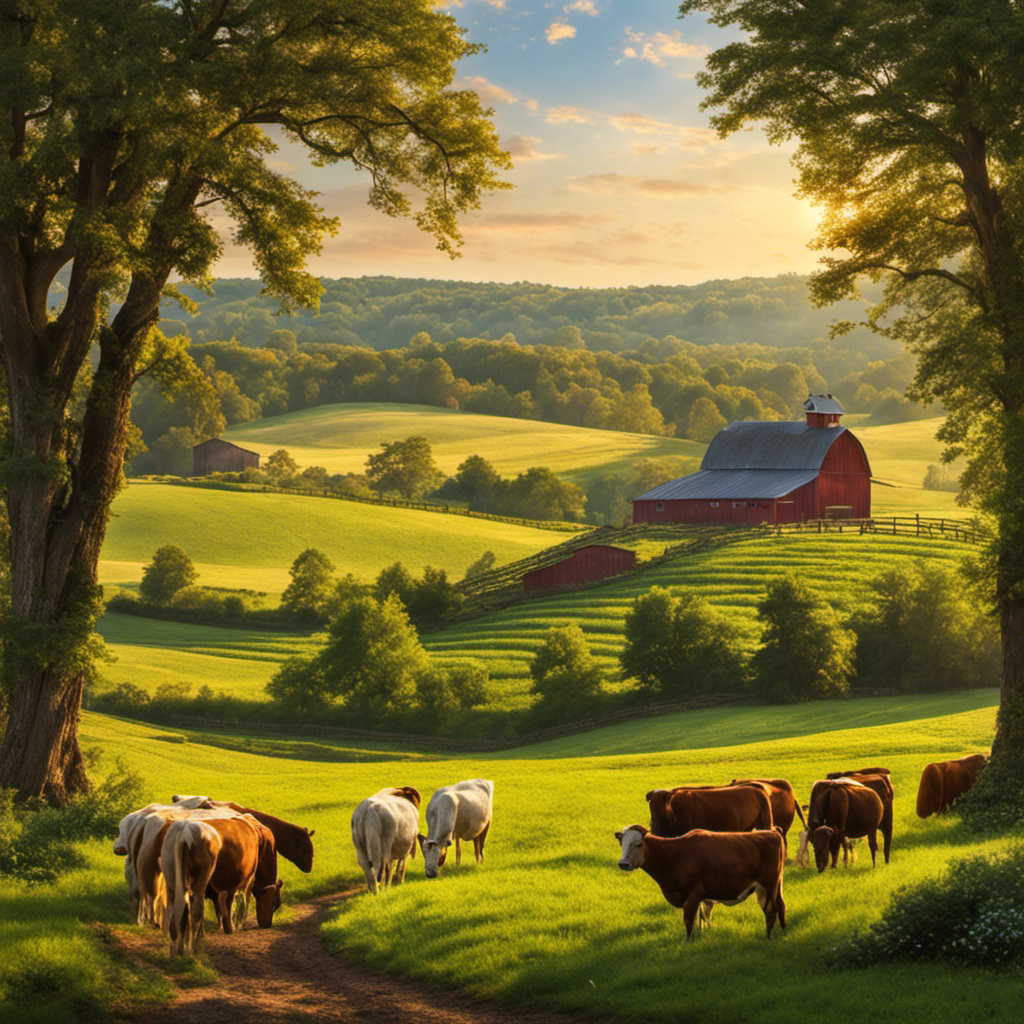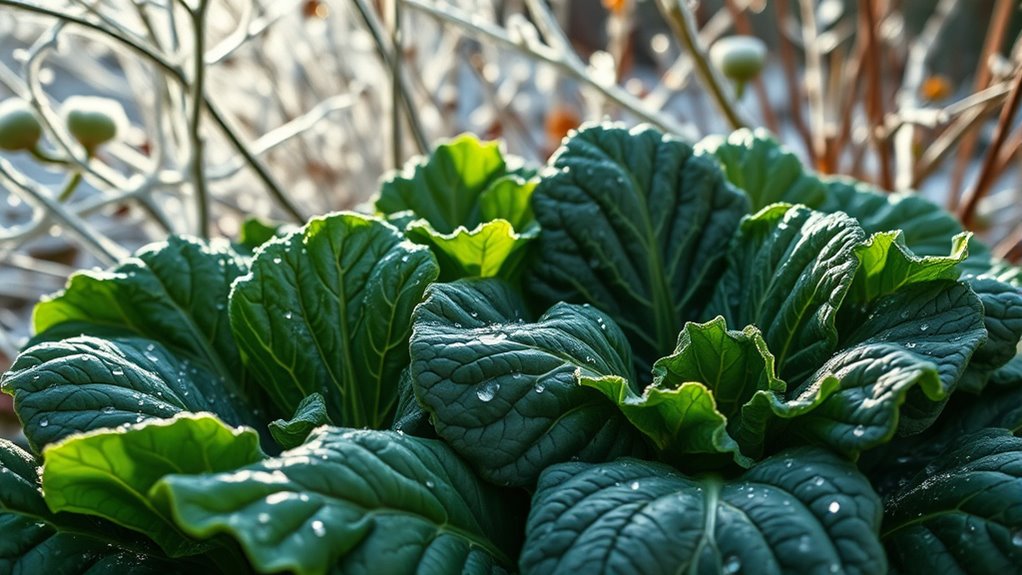
To grow collard greens successfully in your winter garden, select cold-hardy heirloom varieties that can handle lower temperatures and shorter days. Prepare rich, well-draining soil with organic amendments, and consider using raised beds or row covers to protect plants from frost and wind. Proper watering and site selection are key to maintaining healthy plants throughout winter. If you keep these tips in mind, you’ll find ways to extend your harvest and enjoy fresh greens longer.

Get furniture and decor delivered free with Prime
- Fast, free delivery on millions of items
- Prime Video, Amazon Music and more included
- Member-only deals all year
Key Takeaways
- Select cold-hardy heirloom collard green varieties for better winter resilience and flavor.
- Prepare rich, well-draining soil with organic matter to support winter growth and moisture retention.
- Use garden protection techniques like raised beds, row covers, or cold frames to shield plants from frost.
- Plant indoors before the last frost and transplant outdoors once seedlings are strong enough.
- Maintain consistent watering to keep soil moist and promote healthy greens throughout the winter season.
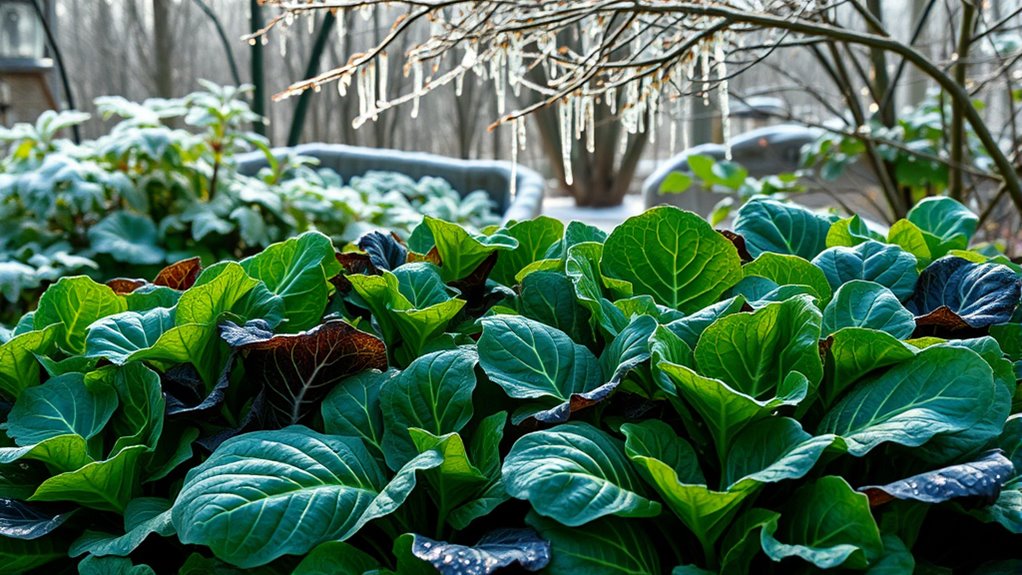
As winter settles in, many gardeners wonder if they can still enjoy fresh greens, and the good news is that collard greens thrive in cool weather. You can extend your harvest season by selecting the right varieties and preparing your garden properly. Heirloom varieties of collard greens are an excellent choice because they often have better flavor and resilience to colder temperatures. These varieties have been passed down through generations, offering unique flavors and robust growth habits that can handle the chill of winter more effectively than some hybrids. When choosing heirloom seeds, look for those labeled as cold-hardy or suitable for fall and winter planting. This guarantees your plants will withstand the lower temperatures and shorter daylight hours.
Heirloom collard greens are hardy, flavorful, and perfect for extending your winter harvest.
Soil preparation is essential for growing healthy collard greens, especially in winter. Before planting, assess your soil’s condition and make necessary amendments. Collards prefer rich, well-draining soil with a pH between 6.0 and 7.5. To prepare, start by removing any weeds or debris from your planting area. Incorporate organic matter, such as compost or aged manure, to boost fertility and improve soil structure. This not only provides essential nutrients but also helps retain moisture during colder, often drier months. Proper soil preparation ensures your plants have a strong foundation, which is indispensable for withstanding winter’s challenges. Additionally, understanding dream symbols related to growth and resilience can offer insights into nurturing your garden and overcoming seasonal hardships.
You should also consider raised beds or row covers to protect your collard greens from frost. Raised beds warm up faster in the spring and stay warmer longer into the fall and winter, creating a more stable environment for your greens. Covering your plants with row covers or cold frames helps trap heat and shields them from harsh winds. Be sure to check your local frost dates and plan your planting schedule accordingly. You can seed collard greens directly into prepared soil or start them indoors a few weeks before the last expected frost, transplanting them outside once they’re strong enough.
Maintaining consistent moisture is key, especially in winter when soil can dry out quickly under cover or in windy conditions. Water deeply but infrequently to encourage deep root growth and prevent stress. As long as you provide the right soil conditions, select appropriate heirloom varieties, and protect your plants from extreme cold, you can enjoy fresh collard greens well into the winter months. With a little effort, your winter garden will flourish, providing nutritious greens straight from your garden to your plate.
cold hardy heirloom collard green seeds
As an affiliate, we earn on qualifying purchases.
As an affiliate, we earn on qualifying purchases.
Frequently Asked Questions
What Are the Best Varieties of Collard Greens for Winter Gardening?
You should choose cold-tolerant cultivars like ‘Vates’ and ‘Georgia’ for winter gardening, as they thrive in chilly conditions. Heirloom varieties such as ‘Champion’ and ‘Butterfly’ also perform well in winter, offering great flavor and resilience. These options help you extend your growing season, guarantee a steady harvest, and enjoy fresh greens even when temperatures drop. So, pick these hardy, proven varieties to make your winter garden successful.
How Do I Prevent Pests in My Winter Collard Greens?
Prevent pests proactively by planting pest-resistant varieties and practicing proper pest prevention. You can deter destructive insects with natural pest deterrents like neem oil, garlic spray, or companion planting. Regularly inspect your greens for signs of pests, and remove any affected leaves promptly. Keep your garden clean and well-maintained, ensuring healthy plants that resist pests naturally. This diligent approach helps you protect your winter collard greens effectively and effortlessly.
Can Collard Greens Be Grown Indoors During Winter?
Yes, you can grow collard greens indoors during winter. Make sure they get adequate indoor lighting, like grow lights or near a sunny window, to mimic sunlight. Keep an eye on watering schedules, maintaining moist but not waterlogged soil. Regularly check for pests and pests, and adjust lighting and watering as needed. With proper care, your collard greens will thrive indoors, providing fresh greens even in colder months.
What Soil Conditions Are Ideal for Winter Collard Greens?
You should use rich, well-draining soil with plenty of organic matter for winter collard greens. Incorporate soil amendments like compost or aged manure to boost nutrients and improve moisture retention. Make certain the soil stays consistently moist but not waterlogged. To prevent frost damage, provide frost protection such as row covers or cold frames. These conditions help your greens thrive through the winter months, giving you a healthy, flavorful harvest.
How Long Does It Take for Collard Greens to Mature in Winter?
You can expect collard greens to mature in about 60 to 80 days, depending on your growth rate and harvest timing. In winter, the cooler temperatures may slow their growth slightly, so be patient. Keep an eye on the size of the leaves; they’re usually ready when they’re about 12 to 18 inches tall. Regular watering and proper care will help make certain a quicker, healthy harvest.
Conclusion
Just as a sturdy anchor keeps a ship steady through storms, planting collard greens in winter grounds you in resilience and hope. Your garden becomes a fortress against the cold, a symbol of your ability to nurture life in tough times. Embrace this season as an opportunity to grow strength and patience. Like the greens that thrive despite the frost, your perseverance will turn winter’s challenge into a flourishing reward. Keep tending, and watch your efforts bloom.
Halloween Picks
halloween
As an affiliate, we earn on qualifying purchases.