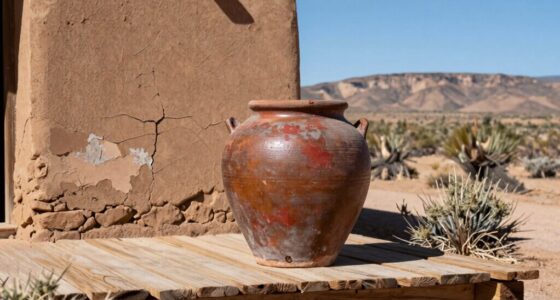
Thick walls and small windows work well in arid climates because they help keep indoor spaces cool. Thick walls act as natural insulators, absorbing heat during the day and releasing it slowly at night. Small windows limit the entry of direct sunlight, reducing heat gain and maintaining cooler temperatures inside. These simple yet effective features are based on centuries of environmental adaptation. If you want to discover more about these clever solutions, keep exploring how they’re still used today.

Get furniture and decor delivered free with Prime
- Fast, free delivery on millions of items
- Prime Video, Amazon Music and more included
- Member-only deals all year
Key Takeaways
- Thick walls provide thermal mass, absorbing heat during the day and releasing it slowly at night.
- Small windows limit heat gain from direct sunlight, reducing indoor temperatures.
- These features naturally insulate interiors, minimizing reliance on mechanical cooling systems.
- The design helps maintain stable indoor temperatures despite extreme outdoor heat.
- Traditional techniques are simple, effective, and adaptable for sustainable, energy-efficient architecture.

In arid climates, thick walls and small windows have proven to be highly effective design strategies. You’ll notice that many historical architecture styles, from ancient Middle Eastern structures to traditional North African homes, employ these features to combat extreme temperatures. The purpose is straightforward: thick walls act as thermal mass, absorbing heat during the day and releasing it slowly at night. Small windows minimize the amount of direct sunlight entering the building, reducing indoor temperatures and preventing heat gain. This approach isn’t just a modern solution; it’s rooted in centuries of architectural ingenuity, developed out of necessity long before air conditioning or modern insulation materials existed.
Historically, these design choices were essential for maintaining livable indoor environments in regions where temperatures could soar well above comfortable levels. The thick walls, often made from mud brick, stone, or adobe, provide a natural barrier against the scorching heat. They store coolness during the night and keep interiors insulated from the blazing sun. Small windows, sometimes equipped with shutters or lattice screens, limit the amount of heat that can enter, while also offering some privacy and protection from dust and wind. These elements are a testament to how traditional architecture adapted to its environment with simple, effective solutions. Over time, these techniques became integral to the cultural identity of arid regions.
Today, you see modern adaptations of these ancient principles, integrated into contemporary architecture to improve energy efficiency. Architects incorporate thick, insulated walls and small, strategically placed windows into new buildings designed for hot climates. They might use advanced materials like insulated concrete or include shading devices to optimize natural cooling. These adaptations aren’t just about aesthetic or tradition; they’re practical responses to environmental challenges. Modern technology allows you to enhance the basic concepts of historical architecture—preserving the core idea of insulating against heat—while adding features like passive cooling systems or solar shading. The core principle remains the same: controlling heat gain with design elements that are simple yet highly effective.
Understanding why thick walls and small windows work so well in arid climates reveals a timeless wisdom that continues to influence sustainable design today. Your ability to recognize how these features help regulate indoor temperature highlights the importance of integrating environmental considerations into architecture. Whether rooted in historical architecture or adapted for modern use, these strategies demonstrate that sometimes, the simplest solutions—like building with thick walls and small openings—are the most effective at creating comfortable, energy-efficient spaces in extreme environments.
As an affiliate, we earn on qualifying purchases.
Frequently Asked Questions
How Do Thick Walls Affect Indoor Air Quality in Arid Climates?
Thick walls improve indoor air quality in arid climates by providing excellent wall insulation, which keeps temperatures stable and reduces the need for constant cooling or heating. This insulation helps prevent dust and pollutants from entering through tiny gaps, maintaining cleaner indoor air. Additionally, the dense walls slow airflow, minimizing dust circulation and ensuring that indoor air stays fresher and healthier, even in dry, dusty conditions.
Are Small Windows Energy-Efficient During Extreme Temperature Fluctuations?
Yes, small windows are energy-efficient during extreme temperature fluctuations because they reduce heat transfer, boosting thermal insulation. They limit solar gain during hot days, preventing indoor temperatures from rising too high. At night, smaller openings help retain warmth. By controlling both heat entry and loss, small windows help maintain a stable indoor climate, lowering energy use for cooling or heating, especially in arid climates with significant temperature swings.
Do Thick Walls Require More Maintenance Than Thinner Walls?
Thick walls generally require more maintenance than thinner ones because they can accumulate dirt and moisture, affecting wall insulation and paint durability over time. You’ll need to regularly inspect and clean them to prevent damage. However, the added insulation benefits often outweigh this, especially in arid climates. Proper sealing and using durable paint can help reduce maintenance, ensuring your thick walls stay in good condition longer.
Can Small Windows Limit Natural Light and Ventilation?
Think of small windows as tiny gateways, selectively controlling what comes in. Yes, they can limit natural light and ventilation, but strategic window placement maximizes light penetration while minimizing heat gain. By positioning windows high or on shaded walls, you enhance airflow and light without compromising comfort. This balance keeps your space cool and bright, proving that smaller openings can still work wonders in managing arid climates.
How Do Materials for Thick Walls Perform in Long-Term Desert Exposure?
In desert conditions, materials for thick walls perform well because they offer excellent thermal insulation and high durability. You’ll find that stone, adobe, and rammed earth resist extreme heat and harsh weather for decades. These materials slow heat transfer, keeping interiors cooler during the day and warmer at night. Their durability guarantees that your structures withstand sandstorms, intense sunlight, and temperature fluctuations, making them ideal choices for long-term desert exposure.
Conclusion
So, don’t dismiss these ancient designs just yet. While modern buildings often prioritize big windows and thin walls, in arid climates, it’s the thick walls and small windows that truly shine. They keep the heat out during the day and trap the cool air inside at night. It’s a simple, effective solution that’s stood the test of time—proof that sometimes, going back to basics is the smartest move you can make for comfort and sustainability.
Halloween Picks
halloween
As an affiliate, we earn on qualifying purchases.