
TL;DR

Get furniture and decor delivered free with Prime
- Fast, free delivery on millions of items
- Prime Video, Amazon Music and more included
- Member-only deals all year
PINCH designer Russell Pinch says the Anders Light was created in 2009 as a pendant for a studio photoshoot, then took five years to perfect. Its layered banana-fiber shade is still handmade, and the design has grown from a slow-selling studio piece into one of PINCH’s most requested lights, with a wall-light version now available.
PINCH’s Anders Light, now one of the British design studio’s most requested pieces, began in 2009 as a pendant made for a photoshoot rather than for sale, according to designer Russell Pinch. A Livingetc report says the shade took five years to perfect and remains painstakingly handmade from layered banana fiber, a process that shapes the light’s soft, uneven glow.
Russell Pinch designed the first Anders Light while PINCH was preparing a shoot of its early furniture. The studio, founded in 2004, had a small collection that included the Avery chair, Harper table and Moreau sofa, and needed a light to hang above a table. Pinch told Livingetc that an image of a Lanvin dress in motion, with its outer skirt lifting over layers beneath, gave him the idea for a sculptural, folded shade. His first model used scraps of fabric and was only a rough attempt to capture that movement.
Making the concept into a finished light required a different kind of expertise. Pinch was freelancing for Jasper Conran at the time and brought the model to the company’s creative director. She advised him to find a milliner rather than a tailor. Lighting manufacturers had offered to make the shade in plastic, but Pinch said he wanted a material that would preserve the drape and softness of fabric. The solution was banana fiber, whose translucency diffuses light through the shade’s layers.
According to Livingetc, the studio spent five years refining the design. Each pendant is made by cutting, stiffening, sewing and pinning individual layers, then sculpting them into shape. Pinch said the angle of each drape is checked for quality, even though the finished form can appear spontaneous. The Anders sold only modestly for almost a decade, he said, but PINCH kept it in the collection. It later became one of the studio’s most requested designs and is now also offered as a wall light.
How the Handmade Shade Shapes Its Appeal
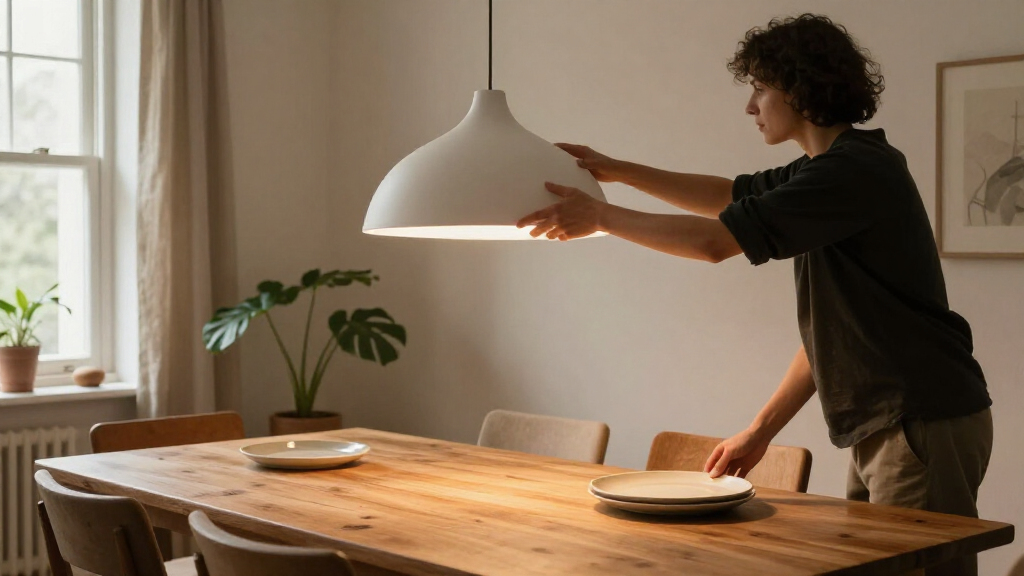
The Anders shows how a lighting design’s appeal can depend on the way it is made as much as on its outline. Its layered plant-fiber shade softens the light, with some folds glowing more brightly than others. That effect gives the pendant a different presence from a uniform, hard-edged fixture and helps explain why the piece can work above a dining table or in a bedroom or living room.
Its path from a studio prop to a regularly requested product also offers a specific example of a design that did not find a large market immediately. Pinch told Livingetc that sales were just sufficient to keep the light in production. Its later demand, including commercial commissions, suggests that a slow start did not determine the design’s eventual place in the studio’s range. The report does not provide sales figures, so the scale of that change cannot be quantified.
The making process has practical significance for buyers and specifiers: the shade is not a simple mass-produced shell. Each piece involves handwork and checks on the form of its folds. That craft is central to the look PINCH describes, while also making the finished object dependent on careful production.
handmade banana fiber pendant light
As an affiliate, we earn on qualifying purchases.
As an affiliate, we earn on qualifying purchases.
From Photoshoot Prop to PINCH Collection
PINCH was founded in 2004 by Russell and Oona Pinch. In 2009, while the studio was photographing its early furniture, it needed a pendant for the set. The original Anders concept came from fashion imagery rather than a lighting brief: Pinch recalled seeing a dress lift and reveal its petticoat layers, then trying to translate that motion into a hanging form.
The design was not an immediate commercial hit. Pinch said it remained in the collection for close to a decade with sales that only just justified keeping it. He also said the studio continued to use it in its own photography. Over time, the lamp found a wider audience and appeared in private homes and commercial interiors. Livingetc cites a Texas yoga studio where several pendants run across the ceiling, as well as a project by interior designer Lonika Chande.
The product has continued to develop: PINCH now makes a wall-light version alongside its pendant forms. The report frames the Anders as part of the studio’s longer design approach. Pinch said PINCH aims to make work that does not feel tied to a particular moment, while describing the Anders as unusual for its sculptural shape and continued longevity.
““I wanted it to have the drape of a dress. Anything less would have looked a bit soulless. It needed that soul.””
— Russell Pinch, PINCH co-founder and designer
Sales and Production Details Remain Unreported
Livingetc does not give sales totals, production volumes or a precise date for when the Anders became one of PINCH’s most requested pieces. The report also does not state how many artisans make the lights, how long each shade takes to complete, or whether production has changed as demand has grown. Pinch’s account describes the material and steps involved, but does not provide a full manufacturing breakdown.
The article identifies a wall-light version as a current development in the range but does not give its release date, price or availability by market. It is also not clear whether PINCH plans further versions or changes to the pendant. Those details were not included in the report.
The Anders Range Continues to Evolve
For now, the clearest next step is the wall-light version, which extends the Anders design beyond its original pendant form. PINCH’s current range also includes multiple pendant shapes, according to the report. Prospective buyers and designers will need to consult the studio or its retailers for current specifications, prices and availability, since Livingetc’s account does not list them.
The report does not identify a future launch or a new production milestone. The Anders’ next chapter therefore remains tied to the ongoing availability of its handmade forms and any later changes PINCH chooses to announce.
Key Questions
What is the Anders Light?
The Anders Light is a sculptural pendant designed by British studio PINCH. Its shade is made from layered banana fiber that diffuses light.
Why did Russell Pinch create it?
Pinch created the original light in 2009 for a photoshoot of PINCH furniture. The studio needed a pendant to hang above a table; he did not initially design it as a product for sale.
How long did it take to develop?
According to the Livingetc report, PINCH spent five years perfecting the design. Each shade is still handmade through a sequence of cutting, stiffening, sewing, pinning and sculpting.
What makes the shade look and feel soft?
The shade’s layered banana fiber lets light pass through and diffuse unevenly across its folds. Russell Pinch said the studio checks the angle of every drape, though the finished arrangement can look random.
Did the Anders become popular right away?
No. Pinch told Livingetc that sales were modest for almost a decade and only just justified keeping the light in the collection. The studio later saw it become one of its most requested pieces.
Source: rss
Columbus Day / Indigenous Peoples' Day Picks
long weekend sales
As an affiliate, we earn on qualifying purchases.