
In southwestern homesteads, water storage was central because having reliable access to water meant survival in an arid, unpredictable landscape. You relied on techniques like rainwater harvesting and underground reservoirs to guarantee a steady supply during dry spells or droughts. These systems helped conserve every drop and kept resources available. If you want to understand how these storage methods worked together to support resilient communities, there’s more to discover below.

Get furniture and decor delivered free with Prime
- Fast, free delivery on millions of items
- Prime Video, Amazon Music and more included
- Member-only deals all year
Key Takeaways
- Water was essential for survival in the arid Southwest, making its storage a critical priority for homesteads.
- Innovative rainwater harvesting and underground reservoirs ensured reliable water supply during droughts.
- Combining storage methods maximized water collection and conservation, supporting sustainable living in harsh environments.
- Proper water management prevented wastage and extended water availability, vital for community resilience.
- Effective water storage systems symbolized resourcefulness and adaptation to environmental challenges.
Have you ever wondered how homesteaders in the Southwest manage to sustain themselves despite scarce water resources? The answer lies in their innovative water storage techniques, which became indispensable for survival in an arid environment. They understood early on that capturing and conserving water was critical, so they focused heavily on systems like rainwater harvesting and underground reservoirs. These methods allowed them to gather and hold onto water during infrequent rains, ensuring they had supplies during dry spells. Additionally, they often employed natural filtration systems to keep their stored water clean and safe to use.
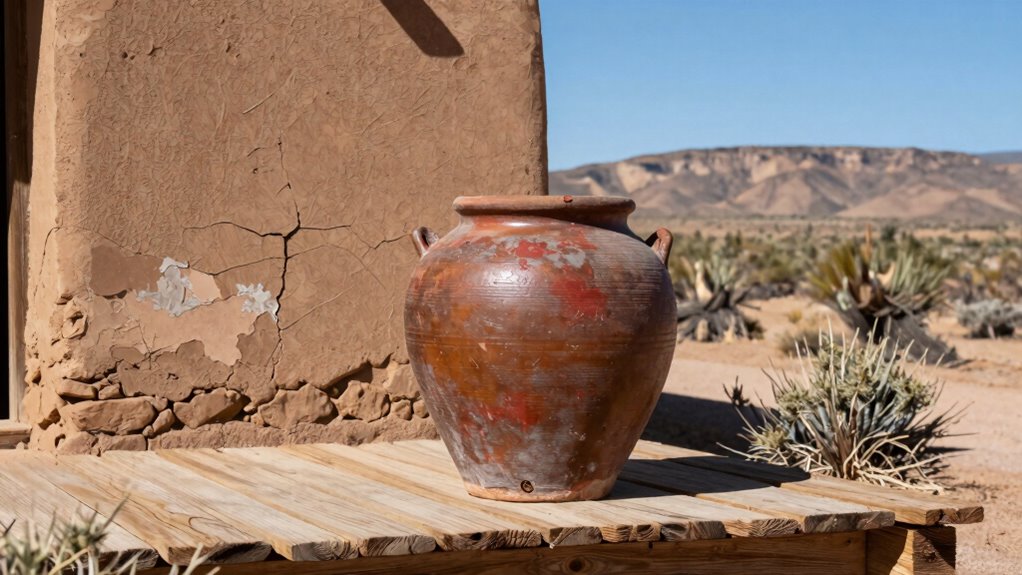
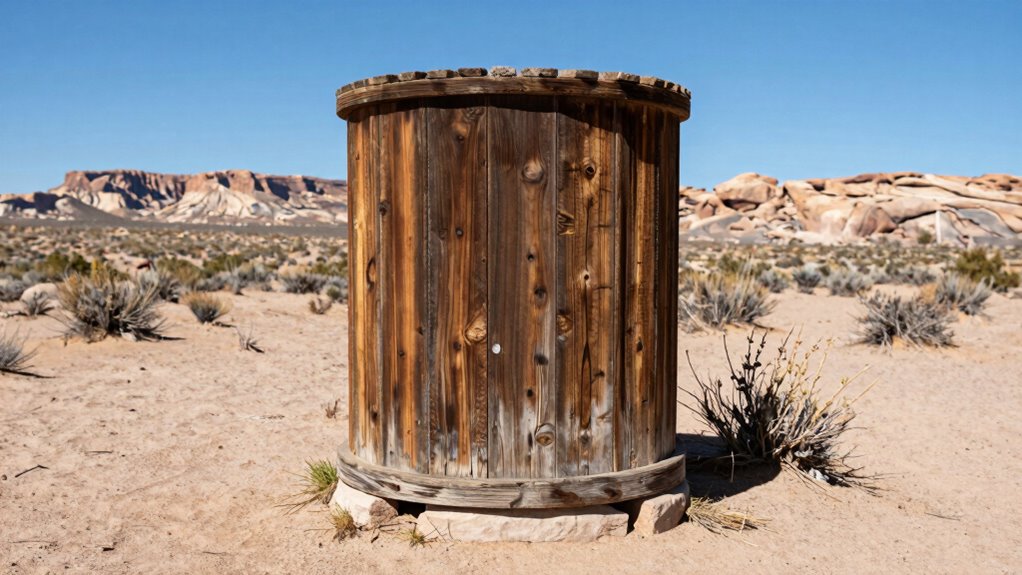
Rainwater harvesting played a pivotal role. You might envision collecting rain from rooftops into barrels or cisterns, but it was more than just a simple act. Homesteaders designed specialized catchment systems that directed rainwater into storage tanks. They used materials like concrete or metal to build these tanks, which could be located close to homes or in more remote areas. The goal was to maximize every drop of rain that fell, especially since rainfall was unpredictable and often limited. By capturing rainwater, they reduced their dependence on distant or unreliable water sources, making their homesteads more self-sufficient.
But storing rainwater wasn’t enough on its own. To guarantee a steady supply, homesteaders also relied on underground reservoirs—sometimes called cisterns or aquifers—buried deep beneath the ground. These underground reservoirs offered a safe, protected place to store large quantities of water away from evaporation and contamination. They often involved digging deep pits or installing large tanks below the surface, lined with materials to prevent leaks. This underground storage became a reliable backup, especially during long droughts when surface water sources would dwindle. Proper water management was essential to ensure the longevity of their supplies and prevent wastage. With underground reservoirs, water remained cooler and cleaner, helping to preserve its quality over time.
You should also understand that combining rainwater harvesting with underground reservoirs created a sustainable cycle. During rains, water was collected and directed into underground tanks, which then supplied the homestead during dry periods. This integrated approach was crucial for survival, enabling homesteaders to manage their limited water supplies wisely. They knew that in the Southwest, water wasn’t just a resource; it was a lifeline. Their ingenuity in designing effective storage systems kept their communities alive and thriving against the odds.
In essence, the focus on water storage—through rainwater harvesting and underground reservoirs—was more than just practical; it was a survival strategy. It reflects a deep understanding of their environment and a commitment to making every drop count. This resourcefulness allowed homesteaders to endure in a challenging landscape where water was scarce but essential.
Products Worth Considering

Blueair Blue Pure 211i Max Air Purifier

Philips Hue Bridge Pro Smart Lighting Hub

Bose TV Speaker (2nd Gen) Compact Soundbar with Bluetooth and HDMI Connectivity
As an affiliate, we earn on qualifying purchases.
Frequently Asked Questions
How Did Early Homesteaders Find Reliable Water Sources?
You found reliable water sources through rainwater harvesting, collecting rainwater from rooftops and storing it for later use. You also used water conservation techniques like drip irrigation and selecting drought-tolerant plants to make the most of limited supplies. These methods helped you guarantee a steady water supply in the arid Southwest, making water storage essential for survival and supporting your homestead’s growth.
What Materials Were Commonly Used for Water Storage Tanks?
You might think water storage tanks were only made from wood, but durable materials like concrete, stone, and metal were common because of their longevity. Homesteaders used simple tank construction techniques like stacking stones or pouring concrete to build reliable tanks that withstand harsh weather. These materials and techniques guaranteed their water supply stayed safe and accessible, making water storage a crucial part of daily homesteading life.
How Did Water Storage Influence Homestead Layout Decisions?
You designed your homestead layout around water storage, prioritizing easy access for climate adaptation and crop irrigation. Placing tanks near fields or along pathways guarantees water is readily available during droughts or dry spells. You also positioned storage close to your home for daily needs, reducing effort and maximizing efficiency. This strategic placement helps you manage water wisely, supporting sustainable farming and living in the challenging southwestern environment.
Were There Any Legal Restrictions on Water Collection?
Legal regulations and water rights act like gatekeepers, controlling access to precious resources. You couldn’t just collect rainwater freely; laws dictated who owned the water and how it could be used. These restrictions ensured fair distribution, preventing one homesteader from monopolizing water supplies. So, when you stored water, you navigated a legal maze, knowing that your rights depended on local regulations designed to keep the flow fair and balanced for everyone.
How Has Modern Technology Improved Water Storage Methods?
Modern technology has greatly improved water storage methods through innovations like rainwater harvesting systems and smart water management. You can now install efficient tanks that capture and store rainwater for later use, promoting water conservation. These systems often include filtration and automation, making water storage more reliable and eco-friendly. By adopting these technologies, you guarantee a sustainable water supply while reducing dependence on traditional sources, especially in arid regions.
Conclusion
You might find it surprising that many southwestern homesteads stored enough water to sustain them through droughts, sometimes holding up to 10,000 gallons. This focus on water storage wasn’t just practical—it was essential for survival in an arid landscape. By prioritizing water, these settlers demonstrated remarkable foresight and resilience. Remember, understanding their methods can inspire us today to better manage water resources in our own lives and communities.