
TL;DR

Get furniture and decor delivered free with Prime
- Fast, free delivery on millions of items
- Prime Video, Amazon Music and more included
- Member-only deals all year
Designer Emily Pun assisted a London couple in transitioning from neutral, safe design choices to a bold, personalized interior scheme. The project involved expanding a terraced home and overcoming decision fatigue during a costly renovation.
Interior designer Emily Pun guided a London couple through a significant design pivot, helping them abandon their strict adherence to neutral palettes in favor of a bold, character-filled interior. The collaboration began when the couple, overwhelmed by rising construction costs and decision fatigue, reached out to Pun via Instagram to salvage their ongoing renovation in Balham. By introducing strategic color choices and restoring architectural details, Pun helped the homeowners transform a standard expansion into a distinctly personal family home.
The project centered on a three-bedroom terraced house in Balham, London, which was undergoing a major structural expansion. With a baby on the way, the couple required additional space, leading to a loft conversion and rear extension that transformed the property into a four-bedroom family home. However, once the structural work was underway, the couple found themselves struggling with the aesthetic direction. They had gathered inspiration on Pinterest but lacked the confidence to translate those images into a cohesive, personal reality, fearing their home would look like a generic board rather than a reflection of their identity.
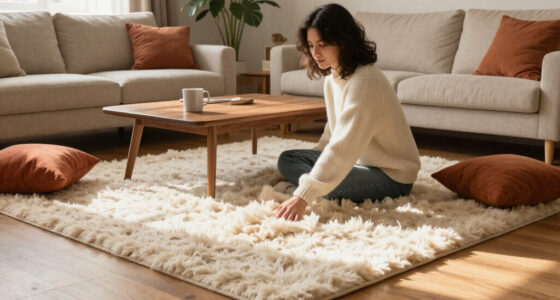
Pun, founder of the design studio Den, was brought in to restore clarity to the process. She noted that the couple’s primary struggle was visualizing color from paint swatches alone. To address this, she implemented a strategy of gradual confidence-building. She began with manageable injections of color, such as a red Nordic Knots rug in the living room, before moving to more permanent, high-impact decisions. This approach allowed the clients to acclimate to bolder hues without feeling overwhelmed by the final result.
A key element of the new design was the kitchen, which Pun transformed from a utilitarian space into a serotonin-boosting centerpiece. The design hinged on a slab of Nacorado quartzite, selected for its warm, rusty-red tones and durability compared to high-maintenance marble. This stone informed the rest of the palette, leading to cabinetry painted in Little Greene’s Bronze Red. By anchoring the room in this rich, earthy scheme, Pun successfully moved the couple away from the “creamy, natural hues” they initially favored, creating a space that felt both practical and emotionally resonant.
This case highlights a growing trend in high-cost renovation markets: the psychological burden of design decisions. With labor and material costs at historic highs in 2026, homeowners often face severe decision fatigue, leading to risk-averse choices that result in generic interiors. Pun’s intervention demonstrates the value of professional guidance not just for aesthetics, but for process management. By providing transparency and helping clients navigate the “gray areas” of construction, designers can prevent projects from stalling or resulting in homes that lack personality.
The project also underscores the shift away from algorithm-driven design. Many homeowners rely heavily on social media platforms like Pinterest, which can create a disconnect between aspiration and personal identity. Pun’s work illustrates how a designer can curate these inputs into a unique, lived-in environment, proving that personalization requires active curation rather than passive consumption of trends.
bold interior paint colors for living room
As an affiliate, we earn on qualifying purchases.
As an affiliate, we earn on qualifying purchases.
Balham Terrace Expansion Challenges
The renovation took place in a traditional London terraced home, a property type known for its specific architectural constraints and potential for hidden structural issues. The couple’s decision to expand via a loft conversion and rear extension is a common solution for growing families in London, but it often introduces complexity regarding natural light and spatial flow. The original plan involved reinstating architectural detailing such as cornices and dado rails, which Pun helped execute to ground the modern updates in the home’s historical context.
The timing of the intervention was critical. The couple contacted Pun mid-build, a period often characterized by high stress and rapid decision-making. The speed of the construction meant there was little time for prolonged deliberation, requiring a level of trust and efficiency between designer and client. The couple’s initial reliance on digital inspiration had left them unable to visualize physical materials, a gap that Pun bridged through site visits to stone yards and direct material sampling.
“The client really struggled to whittle down the exact shade, so I suggested Lime White because it’s not too yellow or too white.”
— Emily Pun, Interior Designer
Long-Term Evolution of Living Spaces
While the kitchen and utility rooms have been finalized with bold choices, the living room remains an iterative process. Pun noted that this space is expected to evolve over time as the couple settles into the home and their needs change. It is not yet clear how the family’s growing child will influence future design adjustments, particularly regarding durability and safety in high-traffic areas.
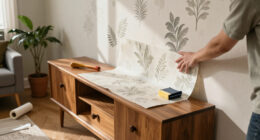
Additionally, the long-term maintenance of the glossy cabinet fronts and peel-and-stick wallpaper in the utility room remains to be seen. While these choices offered cost savings and visual impact, their durability in a high-moisture, high-use environment is still being tested. The couple’s ability to maintain the balance between the bold aesthetic and practical family life will determine the lasting success of the design.
Post-Renovation Design Adjustments
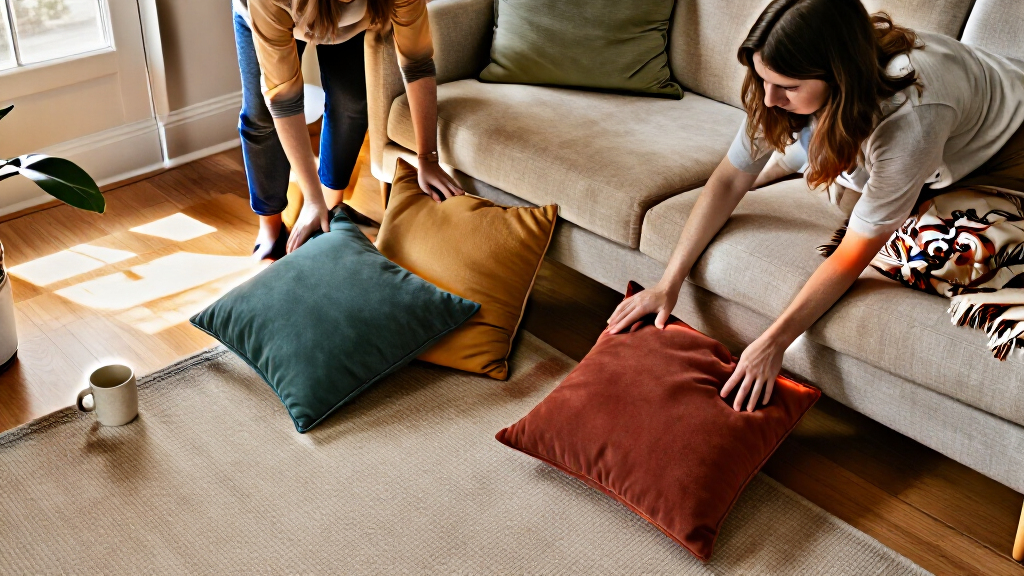
With the structural expansion complete and the core interior scheme established, the couple is now focused on layering personal items and furniture that reflect their daily lives. The design strategy suggests a move toward flexible furnishings that can adapt to the changing needs of a young family. Future projects may involve refining the lighting schemes to better highlight the new color palettes and architectural details.
For the design industry, this project serves as a case study for remote consultation models. Pun’s initial engagement via Instagram highlights how digital platforms are increasingly used to bridge the gap between homeowners and specialists. As renovation costs remain high, more clients may seek targeted, phase-specific design interventions rather than full-service management, focusing on critical decision points like color and material selection.
Key Questions
Why did the couple struggle with color choices?
According to designer Emily Pun, the couple had difficulty visualizing how paint swatches and materials would look in reality. They were overwhelmed by the speed of the build and lacked confidence in making permanent, bold decisions without professional guidance.
What materials were chosen for the kitchen?
The kitchen features Nacorado quartzite for the worktop, chosen for its durability and warm rusty-red tones. The cabinetry is painted in Little Greene’s Bronze Red, a color selected to complement the stone and provide a bold, serotonin-boosting atmosphere.
How did the designer manage the budget?
Pun employed a high-low approach. While significant investment was made in custom joinery and quality stone, savings were achieved in the utility room by using inexpensive peel-and-stick wallpaper and standard Dulux paint, allowing funds to be allocated to more impactful areas.
What was the main goal of the renovation?
The primary goal was to expand the home from three to four bedrooms for a growing family while ensuring the interior felt personal and unique, rather than a generic reproduction of online inspiration boards.
Source: rss
Columbus Day / Indigenous Peoples' Day Picks
long weekend sales
As an affiliate, we earn on qualifying purchases.