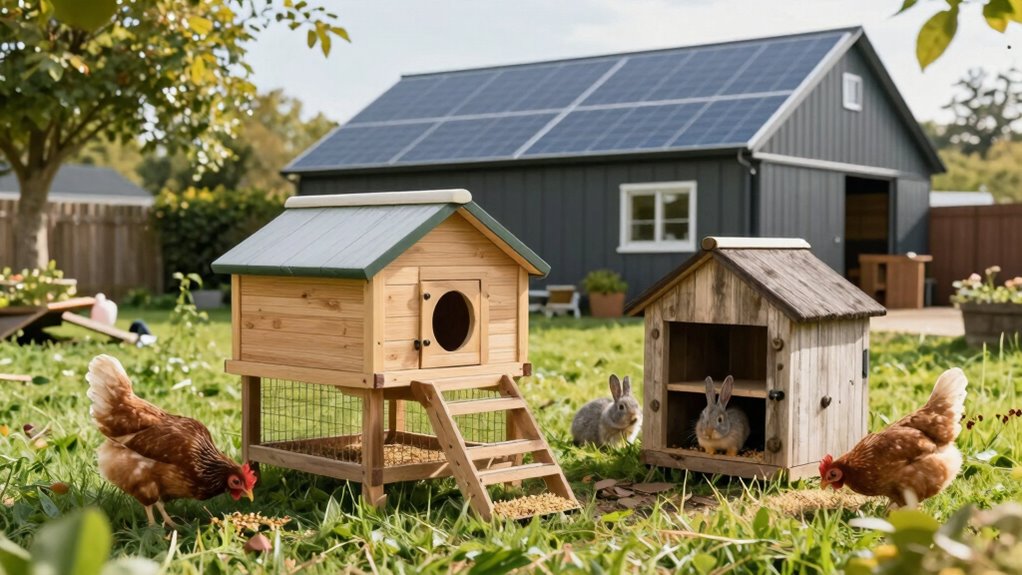

Small livestock are perfect for modern homesteads because they fit easily into limited spaces and urban settings. They’re easier to manage, require less resources, and produce less waste, making eco-friendly living simpler. Plus, animals like chickens and rabbits support local food production, composting, and pest control. By choosing small livestock, you promote sustainability and resilience. Want to discover more about how they can transform your homestead? Keep exploring to find out.

Get furniture and decor delivered free with Prime
- Fast, free delivery on millions of items
- Prime Video, Amazon Music and more included
- Member-only deals all year
Key Takeaways
- Small livestock require less space, making them ideal for compact urban or suburban homesteads.
- They demand lower maintenance and resources, supporting eco-friendly and sustainable living practices.
- Their smaller size allows easier management, ensuring animal welfare in limited or confined environments.
- Small animals like bees or rabbits promote biodiversity and contribute to soil health and pollination.
- They serve as educational tools, fostering community engagement and awareness of sustainable agriculture.
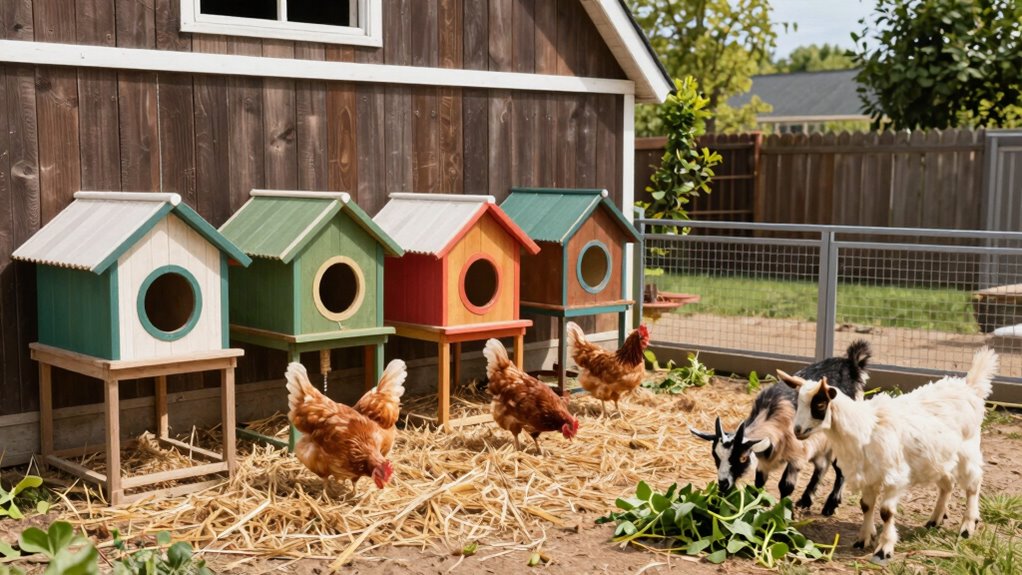
Many modern homesteads are turning to small livestock as a practical way to diversify their operations and enhance self-sufficiency. These animals fit seamlessly into smaller spaces and often require less maintenance, making them ideal for those aiming to maximize efficiency without sacrificing productivity. Small livestock, such as chickens, rabbits, goats, and bees, are easier to manage and can be integrated into urban settings more readily than larger animals. This urban integration allows you to produce fresh eggs, dairy, and even honey right on your property, reducing dependence on store-bought goods and promoting a more sustainable lifestyle.
One of the key advantages of small livestock is their ability to support sustainable practices. They tend to have a smaller environmental footprint, require fewer resources, and produce less waste compared to larger farm animals. For instance, chickens can help control pests and weeds while providing nutritious eggs, and their manure can serve as rich compost for your garden. Rabbits, with their efficient feed-to-meat ratio, can supply you with protein without needing extensive land or resources. Keeping small livestock encourages you to adopt eco-friendly routines, such as composting manure and recycling kitchen scraps into feed. These practices not only minimize waste but also enrich your soil, fostering a closed-loop system that benefits your entire homestead. Additionally, understanding animal nutrition is crucial for maintaining healthy small livestock and optimizing their productivity.
Furthermore, small livestock are more adaptable to varying climates and urban environments. They often require less space and are easier to herd or house securely, making them suitable for backyard setups or small plots. This adaptability enhances your ability to integrate farming practices into city or suburban landscapes, supporting local food production and reducing food miles. Their smaller size means you can manage them more closely, ensuring better health and welfare, which is *vital* when working within city ordinances or limited property sizes. Additionally, many small livestock, like bees, play a crucial role in pollination and maintaining biodiversity on your homestead. Incorporating animal husbandry into your routine can further improve the health and productivity of your small livestock. By understanding and adopting sustainable farming techniques, you can create a resilient and eco-friendly homestead.
In addition, small livestock can serve as educational tools, especially if you have children or community involvement. They offer hands-on learning about animal care, sustainable agriculture, and the importance of biodiversity. Managing these animals encourages a connection to nature and responsibility, aligning with the goals of many modern homesteaders who want to live more intentionally.
Ultimately, small livestock perfectly complement contemporary lifestyles that prioritize sustainability, urban integration, and efficient land use. They empower you to produce your own food, reduce environmental impact, and create a resilient homestead—all in a manageable and accessible way. This makes them an excellent choice for anyone looking to build a more self-reliant, sustainable, and integrated homestead, no matter the size of their property.
As an affiliate, we earn on qualifying purchases.
Frequently Asked Questions
What Are the Best Small Livestock Options for Beginners?
For beginners, the best small livestock options include chickens, rabbits, and ducks. These animals are manageable, require less space, and are great for learning responsibility. Choose hardy breeds, like Rhode Island Reds or New Zealand rabbits, which adapt well. Always guarantee predator protection with secure enclosures, especially at night. These small livestock breeds thrive with proper care, making them ideal for newcomers to homesteading.
How Much Space Is Needed for Small Livestock?
You need about 10-20 square feet per small animal, depending on species. Fencing requirements vary; sturdy fencing keeps critters safe and contained. You should also plan for feeding schedules, which are manageable with small livestock, typically requiring daily or every-other-day feeding. Overall, small livestock like rabbits or chickens fit well in modest spaces, making them ideal for homesteads with limited land.
What Are the Common Health Issues in Small Livestock?
Ever wonder what health issues you should watch for? Small livestock often face diseases like lice, mites, or respiratory infections, which can spread quickly if not managed. Disease prevention is key, so guarantee proper sanitation and vaccinations. Also, meet their nutritional needs by providing a balanced diet, as poor nutrition can lead to health problems. Regular health checks help catch issues early, keeping your small livestock healthy and productive.
How Do Small Livestock Impact Household Budgets?
Small livestock impact your household budget positively by being more cost-effective for farming. They require less feed, space, and medical care, helping you save money. Plus, they support sustainable living by producing fresh eggs, milk, or meat without hefty expenses or environmental costs. This makes small livestock an affordable, practical choice for homesteaders aiming to maintain a balanced, eco-friendly lifestyle while managing expenses efficiently.
Are Small Livestock Suitable for Urban Homesteads?
Yes, small livestock can thrive in urban homesteads, but you need to navigate city regulations carefully. Imagine fresh eggs or tiny goats right outside your door—yet, each city has rules about keeping animals. Urban farming offers exciting possibilities, but you must research zoning laws and restrictions first. With proper planning and compliance, small livestock becomes a rewarding addition, transforming your city space into a lively, productive homestead.
Conclusion
Just as a gardener chooses the right seeds to nurture a thriving garden, selecting small livestock for your homestead guarantees a flourishing, manageable farm. These creatures are like delicate seedlings—easily cared for, quick to grow, and perfectly suited for modern life’s rhythm. With small animals, you’re cultivating a sustainable, vibrant homestead—where every little life blossoms into a fruitful harvest, proving that sometimes, less truly is more in the grand garden of homesteading.
Fall Picks
fall essentials
As an affiliate, we earn on qualifying purchases.