If you’re exploring off-grid water options, springs, wells, and pumps are key sources to take into account. Springs naturally emerge from the earth, while wells are drilled into underground aquifers—both needing proper collection and maintenance. Pumps help move water from these sources to your home, especially where gravity isn’t enough. To ensure safety, you’ll want effective purification methods. Keep learning to discover how to set up, maintain, and optimize these systems for reliable, sustainable water supply.

Get furniture and decor delivered free with Prime
- Fast, free delivery on millions of items
- Prime Video, Amazon Music and more included
- Member-only deals all year
Key Takeaways
- Springs naturally provide a sustainable water source, but require proper collection and filtration systems for household use.
- Wells access underground aquifers, needing drilling, pumps, and regular testing to ensure water quality.
- Pumps are essential for moving water from wells or springs when gravity isn’t sufficient.
- Regular maintenance of pumps and collection systems ensures a reliable, clean water supply.
- Combining spring, well, and pump systems with purification methods guarantees safe, off-grid water access.
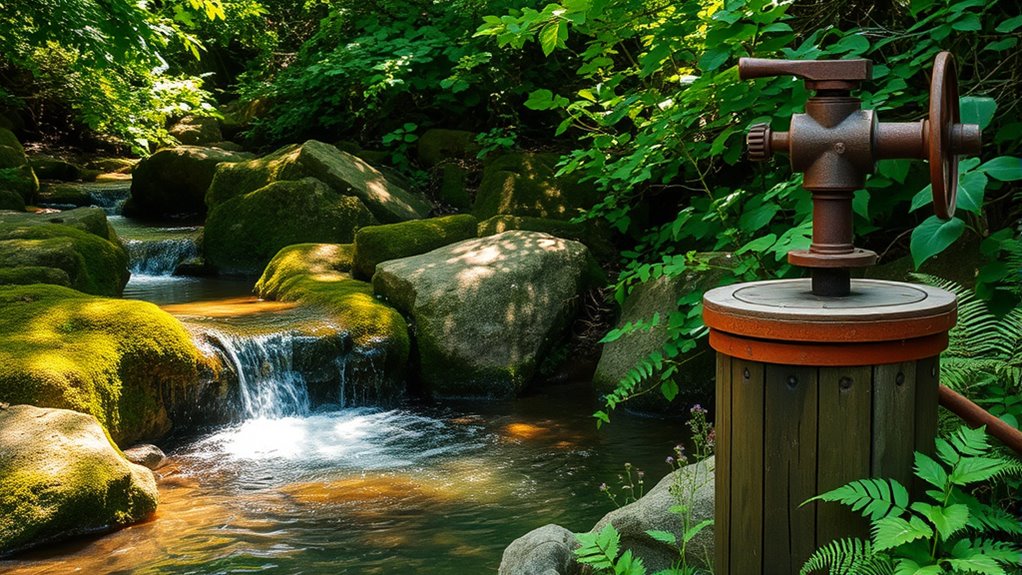
Off-grid water systems provide a sustainable and independent way to access clean water outside traditional municipal sources. When you choose to go off-grid, you’re responsible for sourcing and maintaining your water supply, which often involves methods like rainwater harvesting, well drilling, or spring collection. Rainwater harvesting is particularly popular because it captures precipitation directly from your roof or catchment area, storing it in tanks for later use. This approach not only reduces reliance on external sources but also offers a plentiful supply if managed properly. To guarantee the water remains safe, you’ll need to incorporate effective water purification methods. This might include filters, UV sterilization, or chemical treatments to eliminate bacteria, viruses, and other contaminants, making the rainwater suitable for drinking and household use.
If you opt for a well, you’ll drill or dig into the ground to access underground aquifers. Wells can be manually or mechanically operated, depending on depth and water availability. A pump then draws water from the well into your home or storage tanks. It’s essential to regularly test and maintain your well and pump system to prevent contamination and guarantee a consistent flow. Springs, naturally occurring sources of water emerging from the earth, can also serve as reliable off-grid water sources. Collecting water directly from a spring involves setting up a collection system that channels water into storage tanks while protecting it from debris or animals. Like rainwater harvesting and wells, springs require water purification to remove any impurities before use.
Pumping plays an important role across all these systems, especially when gravity isn’t sufficient to move water where you need it. Choosing the right pump depends on your water source and household demands. For rainwater harvesting systems, you’ll often use a pump to transfer stored water from tanks to your home. For wells and springs, pumps are necessary to draw water up from underground or from the ground level. Proper maintenance of pumps is essential to prevent breakdowns and guarantee a steady supply. Whether you’re collecting rainwater, drawing from a well, or spring, your goal is to produce clean, safe water that meets your household needs. Combining these methods with reliable water purification techniques guarantees that your off-grid water system remains sustainable, safe, and efficient. Additionally, understanding cost considerations can help you plan and maintain your off-grid water system more effectively.
As an affiliate, we earn on qualifying purchases.
Frequently Asked Questions
What Are the Maintenance Costs for Off-Grid Water Systems?
You can expect maintenance costs for off-grid water systems to vary, but regular upkeep helps guarantee system longevity and pump efficiency. Budget for occasional pump inspections, replacing filters, and checking for leaks. Preventive maintenance reduces costly repairs and keeps your system running smoothly. By staying proactive, you extend the lifespan of your system and maintain ideal performance, making your off-grid water supply reliable and cost-effective in the long run.
How Can I Detect Water Contamination in Off-Grid Sources?
Imagine you’re living in a world where water tests are your only clue. To detect contamination, you should conduct regular water testing using kits that check for bacteria, nitrates, or chemicals. Look for contamination indicators like foul smell, strange taste, or discoloration. These signs suggest your water might be unsafe, so testing frequently helps you catch problems early and keep your off-grid water clean and safe for use.
What Permits Are Required for Off-Grid Well Installation?
You’ll need to check local regulations compliance before installing an off-grid well. Typically, a permit is required for site assessment and well construction. Start by contacting your local health or environmental department to understand specific permits, documentation, and inspections needed. They might also require a site assessment to make sure your well meets safety standards. Always follow legal procedures to avoid fines and ensure your water source is safe and compliant.
How Do I Ensure Consistent Water Pressure Off-Grid?
To guarantee consistent water pressure off-grid, you need to focus on pressure regulation and flow optimization. Install a pressure tank to maintain steady pressure, preventing fluctuations during use. Use a pressure regulator to control water flow and protect your system. Regularly check and maintain your pump and pipes, and consider adding an automatic shutoff or pressure switch to keep water flow smooth, reliable, and efficient at all times.
What Are the Best Backup Options for Off-Grid Water Supply?
You should have backup options like rainwater harvesting systems and portable water tanks. Rainwater harvesting provides an eco-friendly source, especially during dry spells, and guarantees you have extra water if your primary supply drops. Also, keep water purification tools on hand to make sure any backup water is safe. These options give you reliable, clean water access when your main system faces interruptions, keeping your off-grid lifestyle secure.
Conclusion
Now, after all this talk about springs, wells, and pumps, you might find it funny that the very thing you rely on—water—can be so elusive. Just imagine, you chase after it with pumps and hope it flows freely, only to realize that the simplest spring might be hiding right beneath your feet. Sometimes, the most basic sources are the hardest to see, reminding you that nature’s gifts are often closest when you least expect them.
Halloween Picks
halloween
As an affiliate, we earn on qualifying purchases.