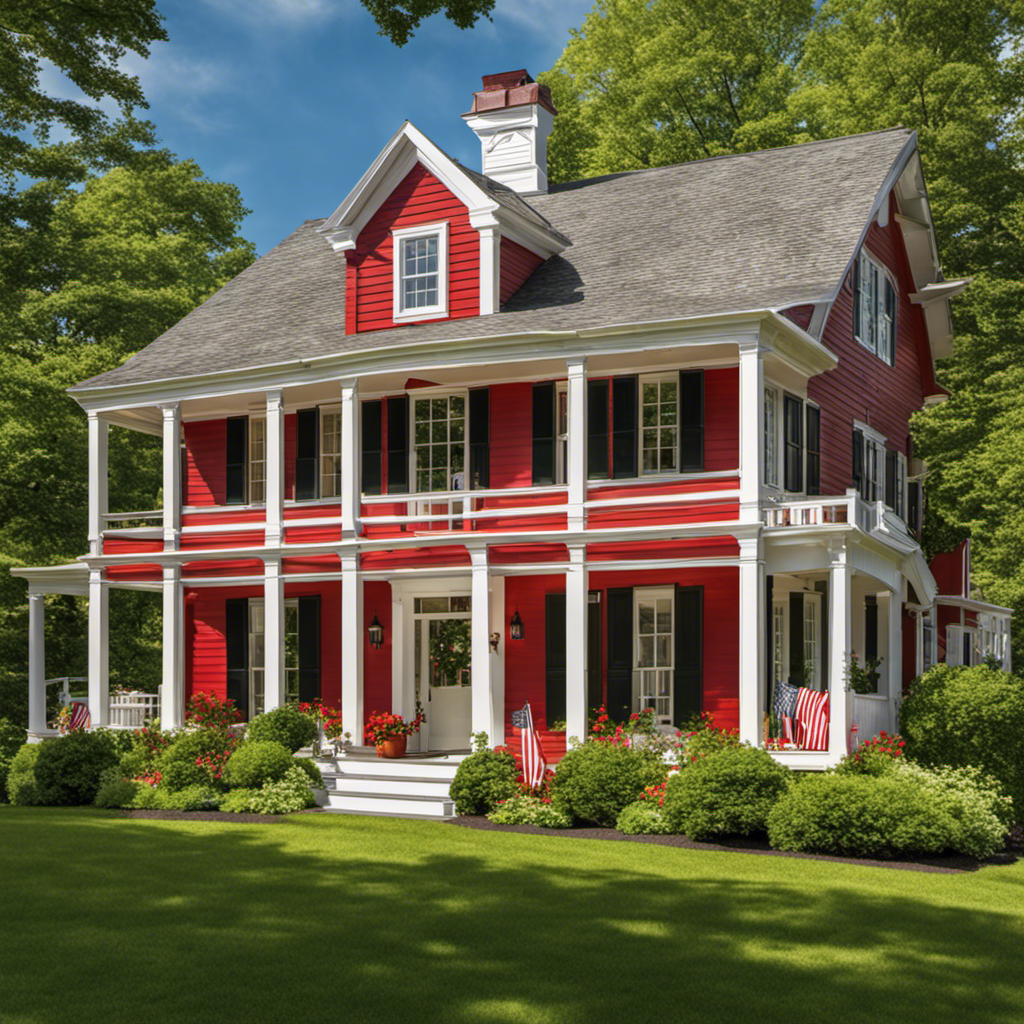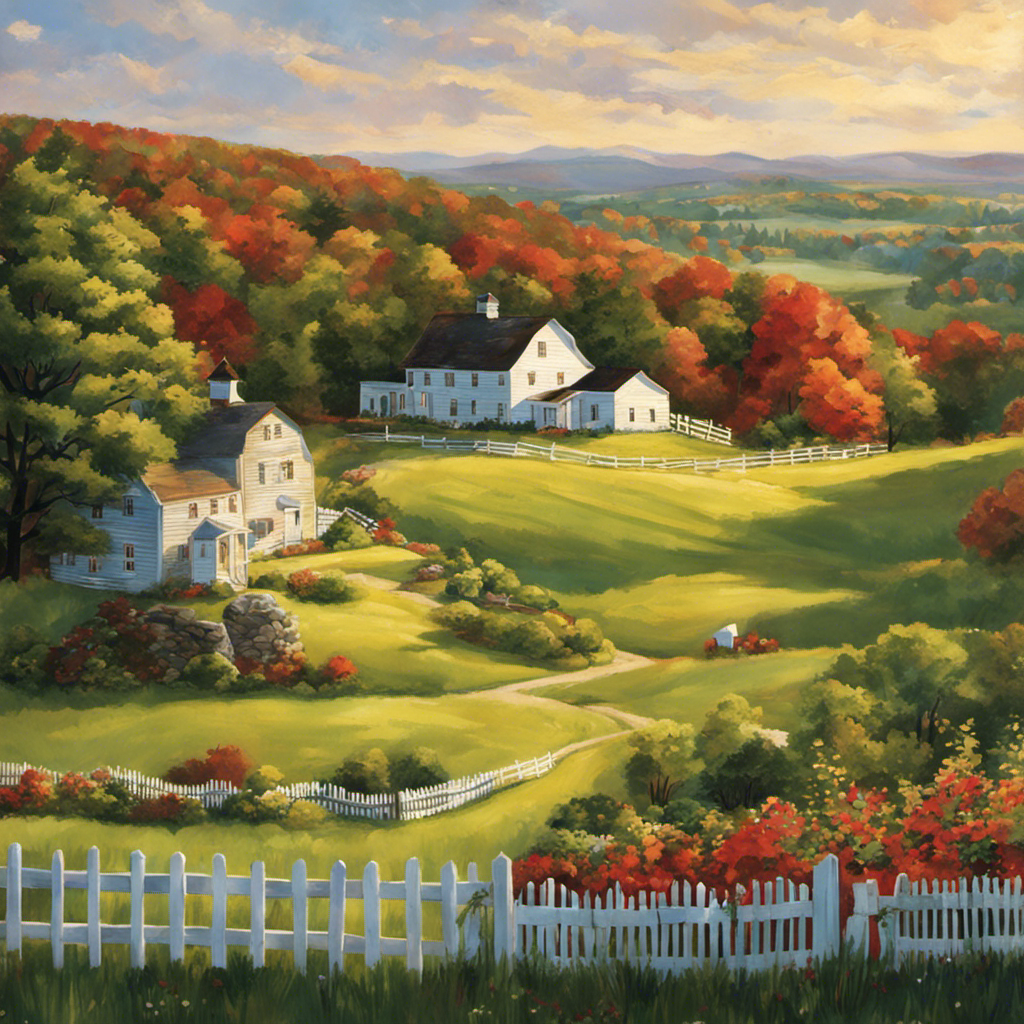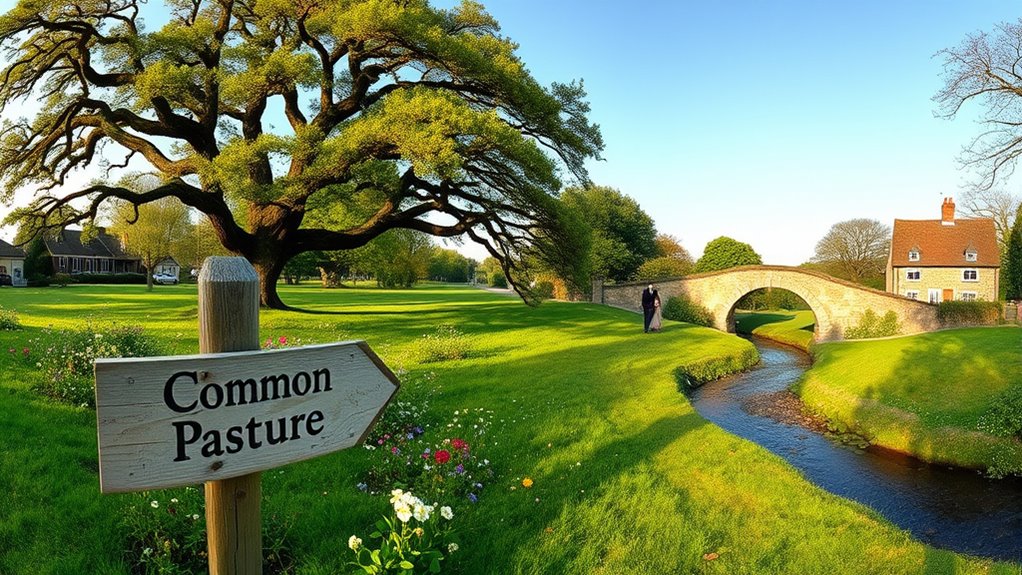
Town greens and common pasture rights are shared spaces that historically allowed communities to graze livestock, socialize, and enjoy outdoor recreation. These open areas fostered community bonds and reflected traditional land use practices. Although the Enclosure Movement reduced such communal lands, many remain protected today for environmental and cultural reasons. Understanding their history helps you appreciate their ongoing role in rural life and community identity—if you’re curious, you’ll find even more fascinating details ahead.
Key Takeaways
- Town greens historically served as communal spaces for recreation, grazing, and social gatherings, fostering community bonds.
- The Enclosure Movement privatized common lands, reducing communal grazing areas and impacting rural communities.
- Grazing regulations managed land use to prevent overgrazing and land degradation, balancing private rights with community interests.
- Modern land use preserves and regulates common greens for recreation and sustainable grazing, maintaining traditional rights.
- These historical practices and rights influence current land policies, emphasizing community identity and environmental stewardship.
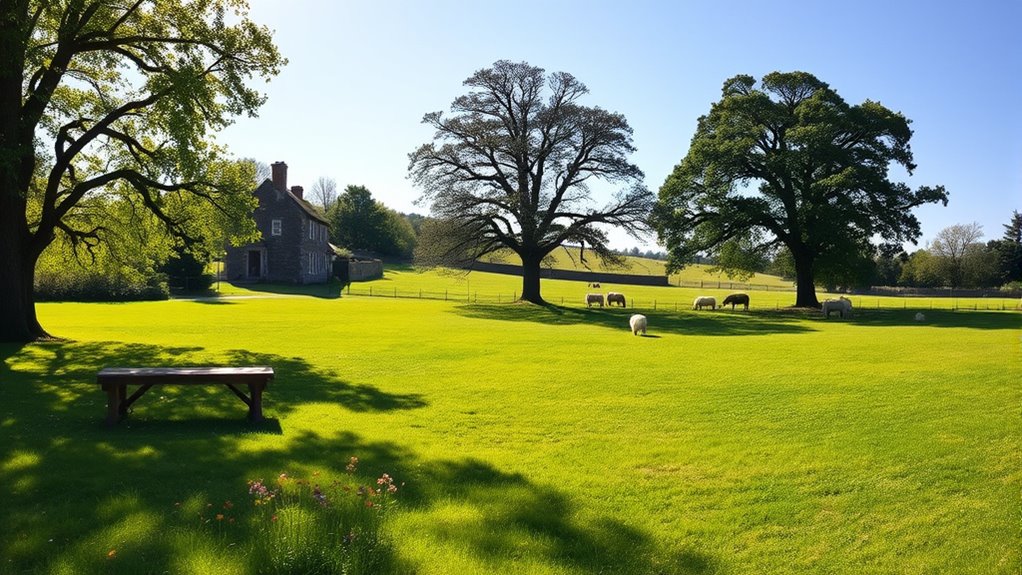
Town greens and common pasture rights have historically played a pivotal role in local communities, providing shared spaces for recreation, grazing, and social gatherings. These communal areas allowed residents to access open land for various purposes, fostering a sense of community and self-sufficiency. However, as societies evolved, the relationship between common lands and private interests shifted dramatically, particularly during the enclosure movement. This period, often in the 18th and 19th centuries, saw many common lands fenced off or converted into private property, reducing the space available for communal use. The enclosure movement aimed to increase agricultural productivity but often came at the expense of traditional rights to graze livestock and gather firewood from common pastures. As fences went up, many villagers found their access to these shared resources limited or completely cut off, leading to social and economic upheaval among rural populations.
Despite the enclosure movement’s sweeping changes, grazing regulations and laws were introduced to manage what remained of common pastures. These regulations were meant to balance individual landownership with the collective interests of the community, ensuring that livestock could still graze in designated areas without overburdening the land. In some regions, local authorities established rules for rotational grazing, limiting the number of animals per household or setting specific times when grazing was permitted. These regulations aimed to prevent overgrazing, soil erosion, and land degradation, which could occur if everyone let their animals wander freely. Still, enforcing such rules wasn’t always straightforward, especially as private landholdings expanded and public spaces shrank. The tension between private enclosure and communal rights persisted, often leading to disputes and calls for reform. Additionally, understanding the importance of soil conservation has led to modern efforts to maintain sustainable grazing practices on remaining common lands.
Today, remnants of these historical practices still influence land use policies and community planning. Some towns and villages work to preserve or restore common greens as public spaces, recognizing their historical importance and social value. Modern grazing regulations continue to govern the use of shared land, balancing environmental sustainability with agricultural needs. You might notice that many rural areas have designated common areas with specific rules for grazing or recreation, reflecting a compromise between private property rights and community access. These regulations aim to sustain the land for future generations while respecting the traditional rights of local residents. Understanding this history helps you appreciate the ongoing importance of town greens and common pasture rights, not just as nostalgic relics but as essential parts of community identity and land stewardship.

Round Bale Hay Net for Horses and Livestock Slow Feed Feeder with 2 inches Hole (5x5 ft)
Efficient Slow Feeding: Hay nets for horses slow feed provide a natural way of eating. With a 2-inch...
As an affiliate, we earn on qualifying purchases.
Frequently Asked Questions
How Are Common Pasture Rights Transferred or Sold?
You can transfer or sell pasture rights through historical land transactions, where the rights are included in the land’s documentation or transferred separately. Guarantee proper pasture rights documentation is updated and legally recorded to avoid disputes. When you sell, both parties should sign agreements detailing the transfer, and the change should be registered with relevant authorities. This process helps maintain clear ownership and usage rights for future pasture use.
Can Individuals Claim New Rights to Town Greens Today?
You can’t typically claim new rights to town greens today, as laws have become stricter over time. Only existing rights are recognized, often based on historical use. Still, public access and recreational use are protected, allowing people to enjoy these areas. Statistically, over 80% of town greens still serve as communal spaces, emphasizing their importance for community recreation. So, while new rights are rare, your access for recreation remains secure.
What Legal Changes Have Affected Town Green Protections?
Recent environmental legislation has strengthened protections for green spaces, making it harder for individuals to claim new rights to town greens. Laws now emphasize green space preservation, ensuring these areas remain accessible and protected from development. You should be aware that legal changes aim to prevent encroachment and maintain the ecological and community value of town greens, so claiming new rights is increasingly restricted by these updated regulations.
Are There Restrictions on Grazing Livestock on Town Greens?
Ever wondered who decides if your livestock can graze freely on town greens? Yes, there are restrictions on grazing livestock, primarily governed by common grazing and livestock regulations. These rules ensure the greens stay healthy and accessible for everyone. You might need special permissions or adhere to specific limits for your animals. Are you aware of the local regulations that could impact your ability to use the town green for grazing?
How Do Town Green Rights Vary Across Different Regions?
You’ll find that town green rights vary across regions due to differing common law traditions and historical precedents. In some areas, these rights remain strong, allowing residents to graze livestock or hold community events. In others, legal changes and modern regulations have limited or abolished these rights. Your rights depend on local history, specific statutes, and how courts have interpreted common law over time. Always check local regulations for accurate information.

Texas Haynet - Durable Round Bale Feeder for Horses - UV Resistant Nylon Net (2 Pack)
WASTE-FREE - Haynet For Horses That Leaves Zero Waste.
As an affiliate, we earn on qualifying purchases.
Conclusion
Remember, a community’s strength lies in its shared spaces and rights. Town greens and common pastures aren’t just patches of land; they’re essential parts of your heritage that foster unity and sustainability. By understanding and respecting these rights, you help preserve a way of life that’s been passed down through generations. As the saying goes, “A chain is only as strong as its weakest link”—so cherish and protect these communal treasures, for they belong to us all.

Wavecover 5.5FT Round Waterproof Tarpaulin to Cover Sheep Ring Feeder, Keep Hay Bales Dry, Equipped with 33FT Tying Rope
KEEP HAY DRY PROTECT FEED: Essential waterproof barrier shields round hay bales and livestock feed (like sheep/cattle ring...
As an affiliate, we earn on qualifying purchases.

Fahnemt Round Bale Hay Net for Horses, Durable Knotless Nylon Slow Feeder, 6x6 ft, Reduces Hay Waste, Ideal for Outdoor Use, Promotes Healthy Digestion (6 * 6Ft)
【Durable & Knotless Design】 – Made from high-quality heavy-duty nylon, this knotless hay net is tear-resistant and long-lasting,...
As an affiliate, we earn on qualifying purchases.