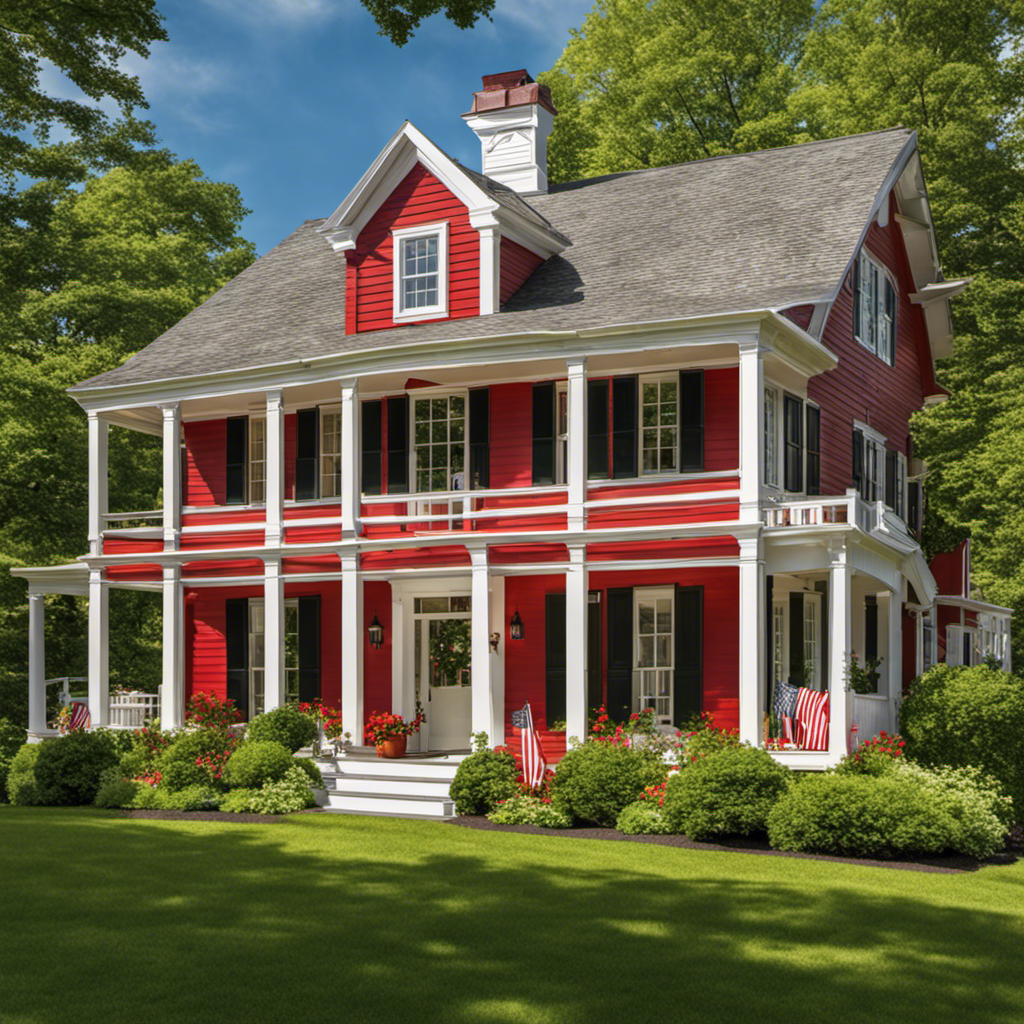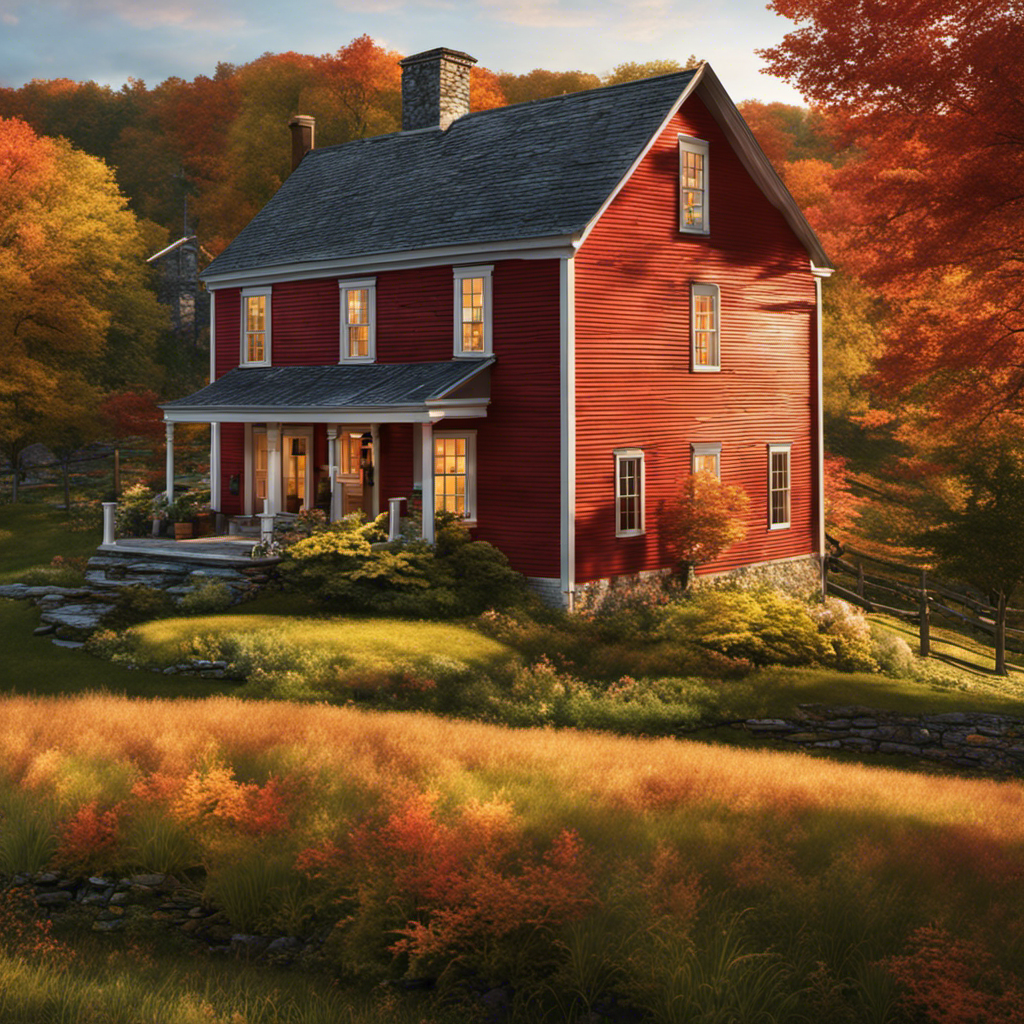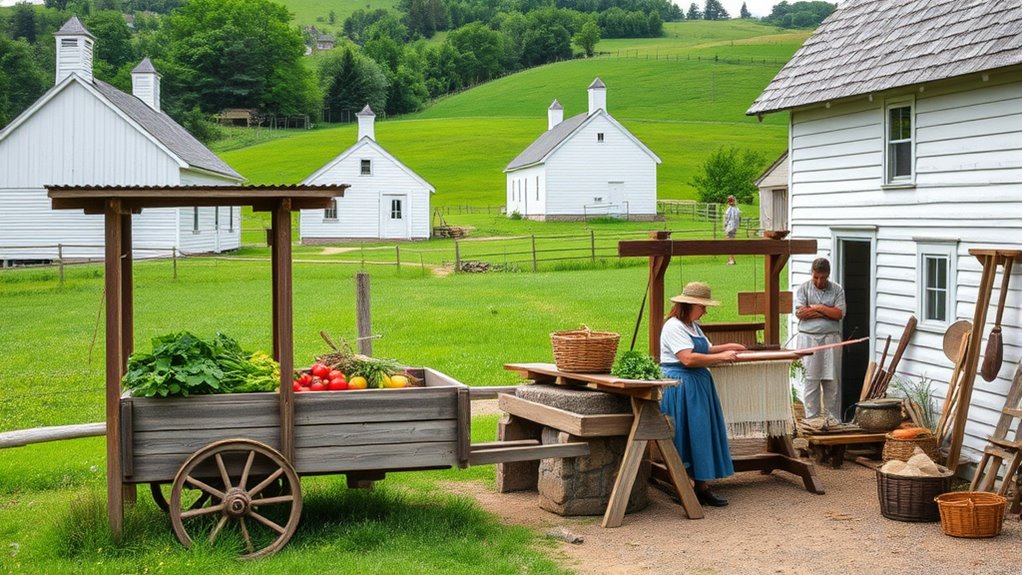

In Shaker villages, you’ll see simple, practical architecture that reflects their values of humility and craftsmanship. They emphasize shared labor, sustainable farming, and community living, with buildings designed for durability and functionality. Craft skills like woodworking and textiles are integral to daily life, highlighting their devotion and resourcefulness. If you keep exploring, you’ll discover how these traditions intertwine to create a harmonious, self-sufficient community rooted in shared purpose and spiritual devotion.
Get ready for Prime Big Deal Days — try Prime free
Exclusive member deals on October 6–7, plus fast free delivery. Cancel anytime.
As an affiliate, we earn on qualifying purchases.
Key Takeaways
- Shaker villages feature simple, practical architecture emphasizing humility, craftsmanship, and community harmony in farmstead design.
- Shakers excelled in woodworking, textiles, and crafts, viewing craftsmanship as a form of worship.
- Farm layouts include communal gardens, workshops, and storage areas supporting sustainable, shared labor practices.
- Decision-making was collective, fostering equality and cooperation within the self-sustaining community environment.
- Sustainability and environmental harmony were integral, reflected in resource-efficient building methods and community practices.
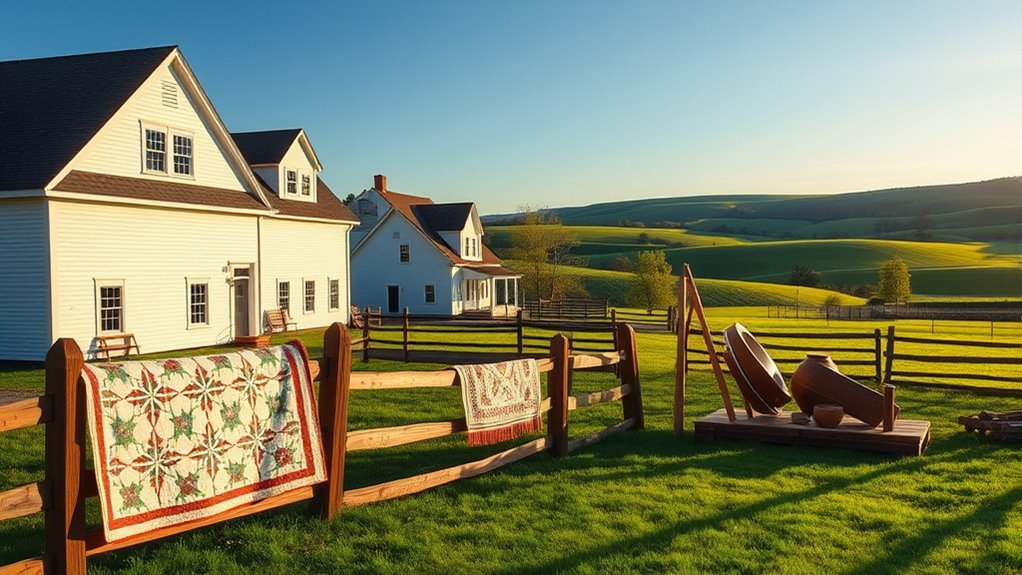
Shaker villages are living examples of a unique religious community that emphasized simplicity, craftsmanship, and communal living. When you visit these villages, you’ll notice how their history is woven into every aspect of their community, especially through Shaker community traditions and farmstead architecture. These traditions shaped a way of life that prioritized equality, hard work, and spiritual devotion, which is reflected in the simple yet functional design of their buildings and the way they organize their daily routines.
Shaker villages embody simplicity, craftsmanship, and communal living rooted in spiritual devotion and shared purpose.
As you walk through a Shaker village, you’ll see that farmstead architecture plays a central role in their community. Their buildings are designed with practicality in mind, featuring clean lines and minimal ornamentation. The meeting house, for example, is often a large, plain structure that emphasizes openness and community gathering rather than grandeur. The dwellings are modest but well-built, designed to facilitate a harmonious living environment. These structures are arranged in a way that fosters a sense of shared purpose, with communal gardens, workshops, and storage areas all integrated into the farmstead layout. This architectural simplicity isn’t just about aesthetics; it’s a reflection of their core values of humility and devotion.
The farmstead architecture also showcases their craftsmanship skills. Every building, from barns to workshops, demonstrates a high level of carpentry and construction expertise. The Shakers believed that good craftsmanship was a form of worship, so they put great care into creating durable, functional structures. Their craftsmanship extended beyond architecture into their furniture, textiles, and other crafts, all characterized by clean lines and practical design. As you explore, you’ll notice the uniformity and quality of their work, which was often produced by community members as part of their daily chores. Additionally, their focus on sustainable building practices highlights their commitment to environmental harmony and resourcefulness, which is integral to their way of life.
Traditional practices like communal farming, shared labor, and collective decision-making are rooted in their traditions. These practices fostered a spirit of cooperation and equality, and you can see this in how their community spaces are arranged and utilized. The farmstead architecture, combined with their community traditions, created a self-sustaining environment that prioritized spiritual growth and social harmony. Walking through a Shaker village, you’ll get a sense of how their architectural choices and community customs are deeply interconnected, illustrating a way of life built on simplicity, craftsmanship, and shared purpose.
As an affiliate, we earn on qualifying purchases.
Frequently Asked Questions
How Did Shaker Villages Influence Modern Sustainable Farming?
You can see how Shaker villages influenced modern sustainable farming through their emphasis on historical preservation and community involvement. They prioritized careful land management, organic practices, and self-sufficiency—principles still central to sustainability today. By valuing community effort and preserving traditional methods, they set a foundation for eco-friendly farming practices, encouraging today’s farmers to adopt environmentally conscious techniques that respect history and promote long-term ecological health.
What Materials Were Traditionally Used in Shaker Craft Products?
Thinking of the Shaker craft products, you notice they often symbolize simplicity and quality. They traditionally used natural fibers like cotton, wool, and flax, which embody purity and sustainability. Hand tools played a vital role, enabling precise craftsmanship and a personal touch. These materials and tools reflect their commitment to practicality and harmony with nature, making each piece a timeless testament to their values of durability and beauty.
Are Shaker Villages Open to the Public Today?
Yes, many Shaker villages are open to the public today. You can take engaging Shaker village tours and participate in Shaker craft workshops to learn about their unique lifestyle and craftsmanship. These visits give you a firsthand look at their simple yet functional designs and traditional methods. So, if you’re interested in history and craft, exploring these villages offers a meaningful and educational experience.
How Did Shaker Beliefs Shape Their Craftsmanship and Community Life?
You see how Shaker beliefs shaped their craftsmanship and community life by emphasizing simple craftsmanship and communal living. Their focus on simplicity drove them to create functional, beautiful items without excess, reflecting their spiritual ideals. You’re inspired by how they prioritized community over individual wealth, working together harmoniously. This approach fostered a strong sense of shared purpose, blending craftsmanship with their spiritual and communal values seamlessly.
What Are Some Rare or Unique Farm Crafts From Shaker Villages?
You might think all farm crafts are the same, but Shaker villages crafted rare gems like handmade tools and herbal remedies, which are practically antiques now. They believed in purity and simplicity, turning everyday items into art. Imagine using tools carved with precision or herbal remedies brewed with care—these aren’t your average farm crafts. Their dedication to uniqueness makes their work a fascinating glimpse into their faith and ingenuity.
Conclusion
As you walk through the Shaker villages, you become a living thread in their woven tapestry of craftsmanship and community. The farm crafts you admire are like whispers from the past, echoing resilience and simplicity. These villages stand as timeless gardens, where tradition blooms quietly amid modern chaos. Embrace their gentle legacy, letting it inspire your own hands to craft beauty with purpose—reminding you that even in simplicity, there’s profound artistry waiting to be uncovered.
NFL season / tailgating Picks
team gear
As an affiliate, we earn on qualifying purchases.