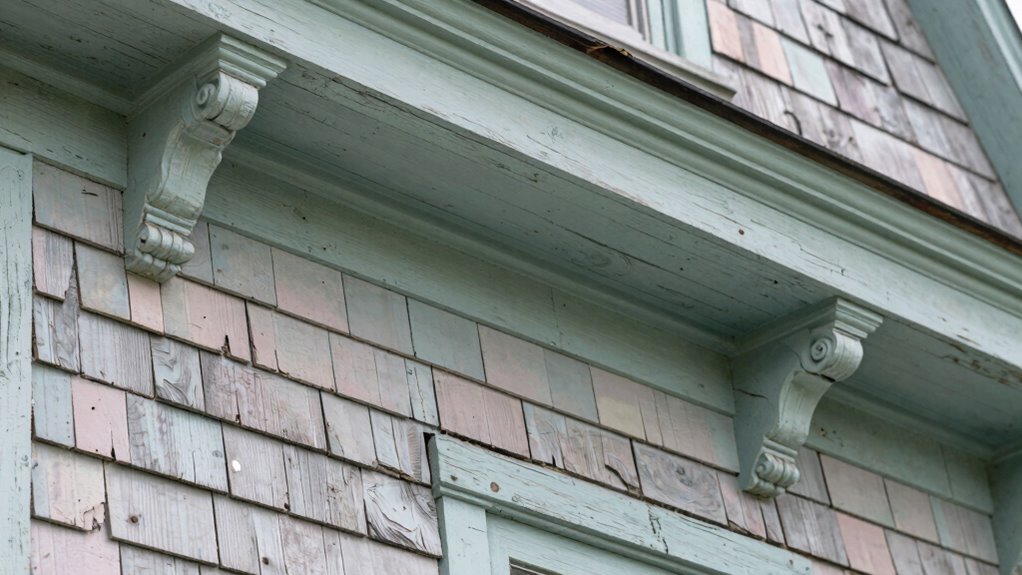

Clapboard shingles and trim details are key symbols of your region’s unique character, showcasing local craftsmanship and architectural history. They reflect regional materials, climate considerations, and traditional construction techniques, creating a visual link to the past. These details also highlight community pride and help maintain the area’s visual identity. By understanding these features, you’ll see how they preserve the region’s cultural heritage—if you keep exploring, you’ll uncover even more about their lasting significance.
Key Takeaways
- Clapboard shingles and trim details reflect regional architectural styles rooted in history and craftsmanship.
- They incorporate local materials and climate considerations, emphasizing regional building techniques.
- These features serve as visual symbols of regional identity and cultural heritage.
- Preservation of traditional details maintains the area’s unique visual and cultural character.
- Modern adaptations blend tradition with durability, ensuring regional authenticity persists today.
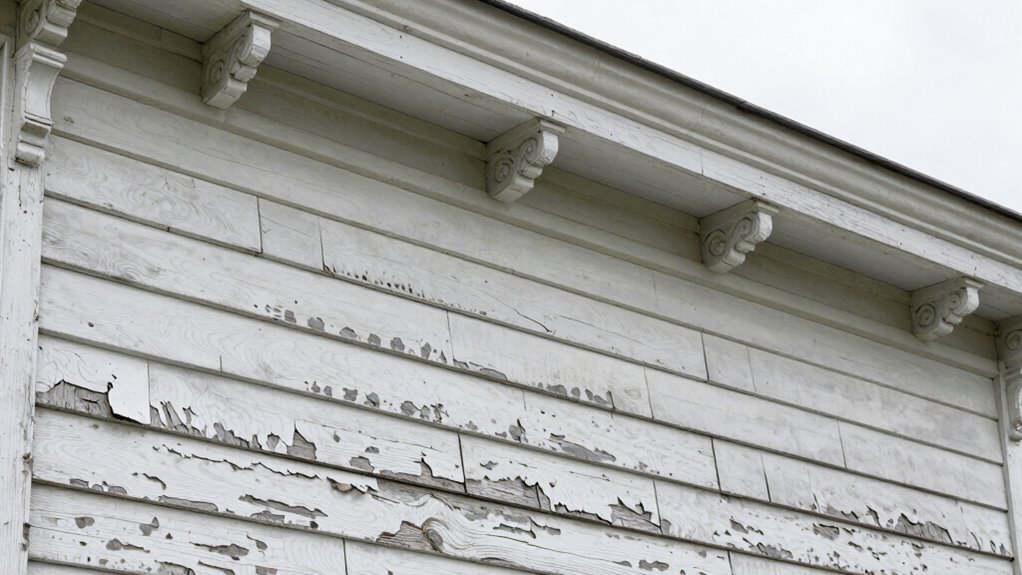
Clapboard shingles and trim details play an essential role in defining the character and curb appeal of a home. When you see these features, they immediately evoke a sense of place, reflecting the region’s history and architectural identity. These elements aren’t just decorative; they serve as a visual language that reveals the evolution of regional styles over time. For example, in older neighborhoods, clapboard siding often echoes historic architectural styles like Colonial Revival or Victorian homes. These styles feature precise trim work, ornate moldings, and carefully crafted detailing that tell stories of craftsmanship from bygone eras. Such details help you appreciate the region’s heritage and give homes a timeless charm that’s hard to replicate with modern design contrasts.
Clapboard shingles and trim details reflect regional history, craftsmanship, and timeless architectural charm.
Despite the sleek, minimalist trends dominating contemporary architecture, clapboard shingles and trim details continue to signal regional identity. They act as a bridge between the past and present, anchoring a home to its historical roots while also adapting to modern tastes. You’ll notice that in many areas, traditional clapboard siding remains popular because it embodies a sense of authenticity and craftsmanship. The trim, often painted in contrasting colors, accentuates window frames, doorways, and corners, making the architecture stand out in a subtle yet distinctive way. These details aren’t just about aesthetics—they reflect regional materials, climate considerations, and historical building techniques that have persisted over generations. Additionally, understanding architectural details can help homeowners make informed decisions about preservation and renovation, especially when considering regional materials and their availability. Recognizing how these details relate to regional architectural style helps in maintaining the home’s authentic character.
In areas where historical architectural styles dominate, you’ll find that clapboard shingles and trim details are carefully preserved or restored. This dedication to authenticity helps maintain the region’s unique visual identity and cultural heritage. At the same time, some homeowners incorporate modern design contrasts by blending traditional clapboard with new materials like fiber cement or introducing sleek, minimalist trim. This fusion creates a harmonious balance, honoring tradition while embracing contemporary tastes. It allows you to enjoy the character and warmth of classic regional styles without sacrificing modern durability or efficiency. The regional building techniques used in creating these details often reflect environmental adaptations suited to local climates, ensuring longevity and resilience. Such techniques are often informed by the region’s climate and natural resources, demonstrating how regional building practices evolve over time.
Ultimately, these architectural details serve as a visual signature of the region’s history and cultural evolution. They signal to neighbors and visitors alike that you value the area’s unique architectural language. Whether in a quaint coastal town or a historic district, clapboard shingles and trim details remain a crucial part of regional identity. They connect you to a community’s past while giving your home a distinctive character that stands the test of time. By recognizing and appreciating these features, you not only enhance your home’s curb appeal but also honor the rich architectural tapestry that defines your region.
As an affiliate, we earn on qualifying purchases.
Frequently Asked Questions
Are Clapboard Shingles More Durable Than Other Siding Options?
Clapboard shingles are generally more durable than other siding options because of their traditional use in historical architecture, which has proven their resilience over time. When you opt for siding installation with clapboard shingles, you get a material that withstands weathering better, especially if properly maintained. Their overlapping design helps shed water effectively, making them a reliable choice that signals regional craftsmanship and historical authenticity.
How Do Trim Details Vary Between Regions?
You’ll notice trim details vary across regions due to regional architectural styles and historical influences. In New England, you see intricate, detailed trims reflecting colonial heritage, while the South features simpler, functional designs influenced by plantation architecture. West Coast homes often incorporate Craftsman elements with natural wood accents. These regional differences in trim details help identify the area’s cultural history and architectural evolution, creating unique character for each region’s homes.
Can Clapboard Shingles Be Customized for Modern Homes?
Yes, you can customize clapboard shingles for modern homes, blending historical authenticity with aesthetic versatility. You might choose different materials, colors, or sizes to match your design vision while preserving the traditional look. This approach allows you to maintain the regional charm and historical feel, while also creating a sleek, contemporary appearance. Customization options guarantee your home reflects your style without sacrificing the timeless appeal associated with clapboard shingles.
What Maintenance Is Required for Clapboard Siding?
You should regularly inspect your clapboard siding for signs of damage or rot, especially after harsh weather. Clean the surface with gentle power washing to maintain its aesthetic appeal and prevent dirt buildup. Applying a fresh coat of paint or stain every few years will help with historical preservation and keep the siding looking vibrant. Address any cracked or loose boards promptly to extend your siding’s lifespan and maintain its charming, regional character.
Are There Environmental Benefits to Using Clapboard Shingles?
Yes, using clapboard shingles offers environmental benefits by promoting historical authenticity and regional aesthetics. These shingles are often made from sustainable wood, reducing reliance on synthetic materials. They enhance the local character, supporting preservation efforts that respect regional architecture. Additionally, natural wood shingles can be recycled or repurposed, minimizing waste and environmental impact. By choosing clapboard shingles, you help maintain a region’s unique look while supporting eco-friendly building practices.
Conclusion
Imagine walking through a neighborhood where every house whispers its story through clapboard shingles and intricate trim details. These architectural features act like a region’s signature, much like a signature scent or a family crest. They’re not just decorative; they’re a visual history that tells you where you are and what’s cherished there. So, next time you see these details, remember—they’re more than style—they’re a living, breathing part of the community’s identity.