Village greens and meeting houses influence nearby farms by creating central hubs for community gatherings, celebrations, and decision-making. These spaces foster social bonds, encourage cooperation among farmers, and shape local traditions. Their architecture reflects shared values and helps preserve cultural heritage. As focal points, they guide the timing of planting festivals and harvests, strengthening community ties and resilience. To understand how these longstanding spaces continue to impact farm communities today, keep exploring their enduring roles.

Get furniture and decor delivered free with Prime
- Fast, free delivery on millions of items
- Prime Video, Amazon Music and more included
- Member-only deals all year
Key Takeaways
- Village greens and meeting houses foster cooperation and mutual support among farmers, influencing farming practices and community planning.
- They serve as central gathering spaces for festivals, markets, and decision-making, shaping agricultural schedules and activities.
- Architectural features reflect community values, preserving traditions that guide local farming methods and cultural identity.
- These spaces promote social bonds and collective identity, reinforcing shared efforts in farming and community development.
- Their historical and cultural significance influences ongoing farm development and the preservation of traditional agricultural practices.
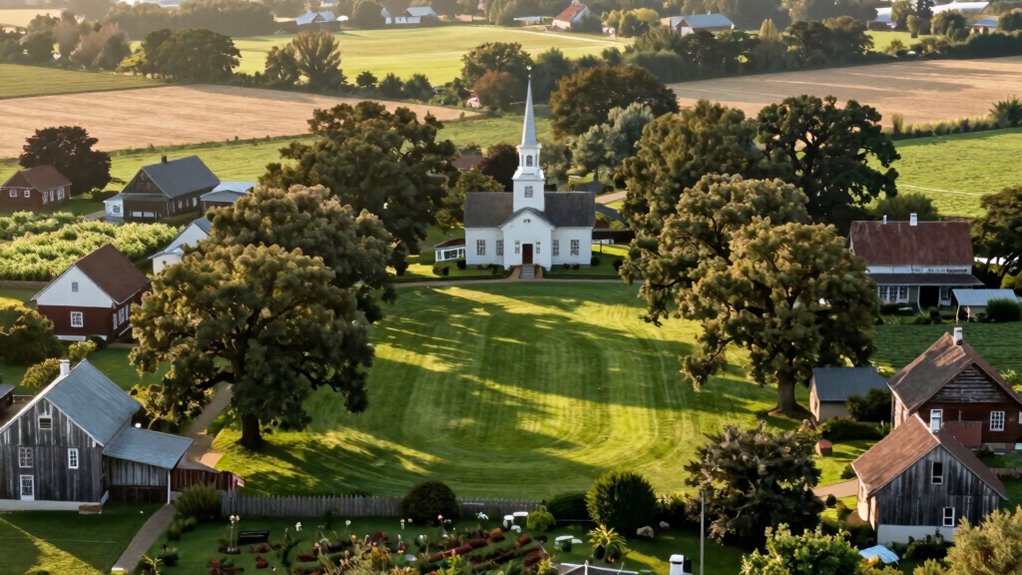
Village greens and meeting houses have historically played a central role in shaping farm communities by fostering social cohesion and providing shared spaces for gatherings. These areas serve as the heart of rural life, where community members come together to celebrate, debate, and support one another. As you walk through these spaces, you’ll notice how their design and historical architecture reflect the values and traditions of the community. The meeting house, often a simple yet sturdy structure, was more than just a building; it was a symbol of collective identity and local democracy. Its architecture typically includes a prominent meeting hall, sometimes with a steeple or bell tower, which served as a visual reminder of the community’s unity and purpose.
Village greens and meeting houses symbolize unity, tradition, and community identity through their simple, enduring architecture.
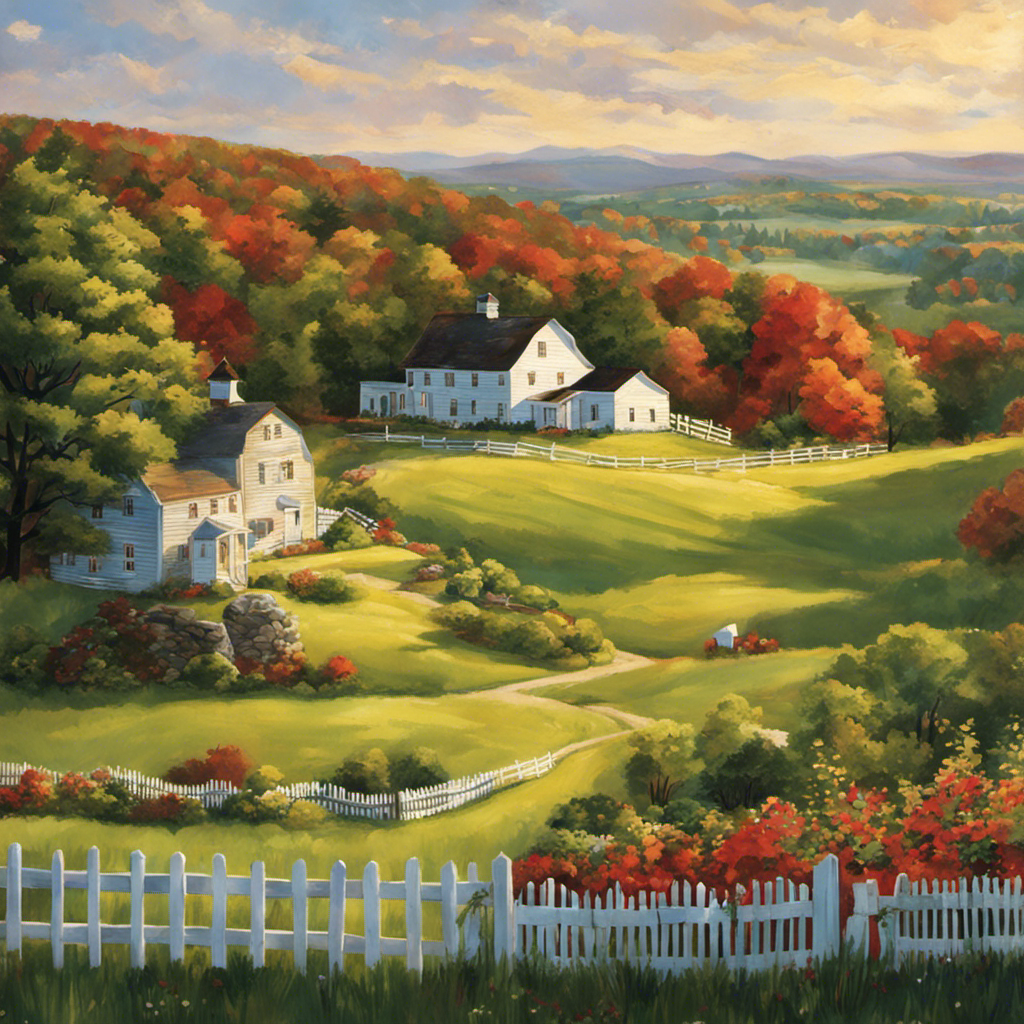
The village green, usually an open grassy space, acts as a versatile venue for community gatherings. Over the years, it’s been the site of farmers’ markets, fairs, celebrations, and even political rallies. These gatherings weren’t just social events—they were essential for maintaining the social fabric of the farm community. When people come together on the green, they share news, exchange goods, and strengthen bonds that help sustain the local economy and social order. You can see how the central location of the green encourages participation and visibility, making everyone feel connected. Additionally, the community-oriented design of these spaces fosters a sense of belonging and shared purpose that continues to influence the development of nearby farms today. Recognizing the importance of public spaces in rural communities highlights how these areas support both social and economic resilience. Moreover, the architecture and layout of these areas often promote collective decision-making, reinforcing community bonds. This tradition of communal decision-making often included practices rooted in local governance, which helped establish norms of cooperation and shared responsibility.
The historical architecture of these meeting houses and greens adds a layer of cultural significance that continues to influence nearby farms today. The design choices, such as timber framing, simple facades, and classic proportions, reflect practical needs and aesthetic values of earlier generations. These structures stand as tangible links to the past, reminding residents of their collective heritage. Their enduring presence fosters a sense of continuity and pride, encouraging community members to preserve their local traditions.
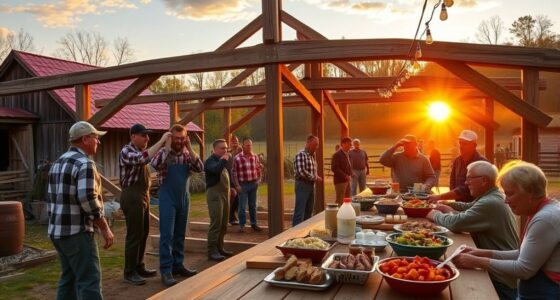
Moreover, the integration of community gatherings within these spaces influences the development of nearby farms. Farmers and villagers often coordinate planting festivals, harvest celebrations, and cooperative efforts around these communal hubs. This tradition promotes collaboration and mutual support, reinforcing the idea that a thriving farm community depends on shared effort. The historical architecture of the meeting houses and greens, along with the tradition of gathering, shapes the social and economic landscape of the farm community, ensuring that the spirit of cooperation endures through generations.
village green outdoor gathering space
As an affiliate, we earn on qualifying purchases.
As an affiliate, we earn on qualifying purchases.
Frequently Asked Questions
How Did Village Greens Influence Local Agricultural Practices?
Village greens influenced local agricultural practices by serving as central spaces for community gathering and land management. You’d see farmers and villagers coming together to discuss crop planting, livestock, and shared resources. These greens fostered cooperation, helping everyone coordinate land use effectively. By encouraging communal decision-making, they maintained open land, prevented overdevelopment, and supported sustainable farming practices, ultimately shaping a cohesive agricultural community centered around shared land management and social interaction.
What Historical Events Led to the Development of Meeting Houses?
You learn that meeting houses developed through the need for community governance and religious gatherings in early settlements. As communities grew, they built these structures around central village greens to serve as communal spaces. These meeting houses became focal points for decision-making, worship, and social events, shaping local traditions and fostering a sense of unity. Their development reflects the importance of collective participation in shaping early community life.
Were Village Greens Used for Farming Activities or Solely Communal Gatherings?
You’ll find that village greens weren’t just for communal gatherings; they often served as multi-purpose spaces, including farming activities in early times. Today, they host community sports and outdoor markets, fostering local connections. Historically, these greens supported small-scale farming and livestock grazing, making them crucial for nearby farms. Over time, their role shifted toward social and recreational uses, but their roots in supporting local agriculture remain an important part of their history.
How Did the Architecture of Meeting Houses Impact Farm Design?
Imagine a 17th-century meeting house with its steeple reaching skyward—its architecture symbolizes community and shared values. This design influenced farm layouts, emphasizing open spaces for gatherings and efficient spatial organization for farming activities. The architectural symbolism promoted a sense of unity, encouraging farms to align structures and fields around communal hubs. As a result, farm design became more functional and community-oriented, reflecting the social importance of these meeting places.
Are There Surviving Examples of Early Village Greens and Meeting Houses Today?
Yes, you can find surviving examples of early village greens and meeting houses today. These historic spaces often serve as essential parts of communities, hosting local biodiversity initiatives and community celebrations. Visiting these preserved sites gives you a chance to connect with history while enjoying modern events that foster social bonds and environmental awareness. Their continued use highlights their enduring importance as centers for community life and ecological appreciation.
Conclusion
As you walk through these historic grounds, you realize how village greens and meeting houses are the heartbeat of nearby farms, weaving community and tradition into the landscape. They’re like the roots of a mighty tree, anchoring every farmstead in shared history and purpose. Without them, the land feels hollow, missing its soul. So next time you visit, remember—you’re stepping into a living tapestry, where every farm and meeting house tells a story etched into the very earth beneath your feet.
Columbus Day / Indigenous Peoples' Day Picks
long weekend sales
As an affiliate, we earn on qualifying purchases.