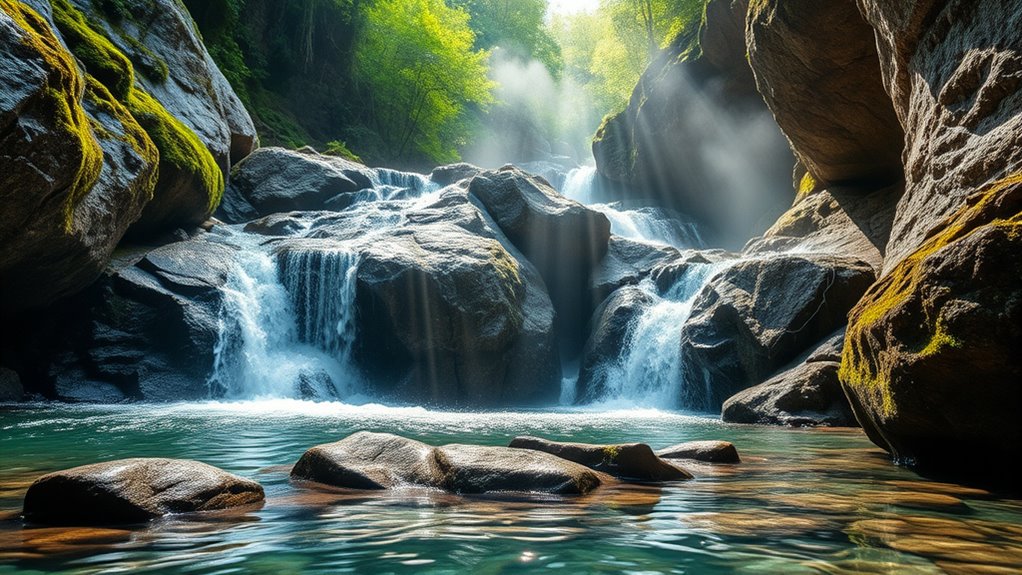

Mountain springs get their water naturally from underground sources that travel through cracks and porous rocks, thanks to gravity pulling the water downhill. This process allows the water to emerge at the surface without any mechanical pumps, often resulting in fresh, clean spring water. Protecting these springs guarantees the water stays pure and unpolluted while maintaining the natural flow that relies on the land’s shape and geology. Keep exploring to learn how safeguarding these sources benefits everyone.
Key Takeaways
- Mountain springs occur when underground water naturally emerges due to gravity-driven flow through cracks or porous rocks.
- Gravity is the primary force that moves spring water from higher elevations to lower areas without mechanical pumps.
- Protecting spring sources ensures the natural, clean flow of water and prevents contamination from pollutants.
- The flow rate and purity of spring water depend on geological conditions and land management practices.
- Maintaining natural spring flow supports ecosystems and provides communities with sustainable, high-quality water sources.
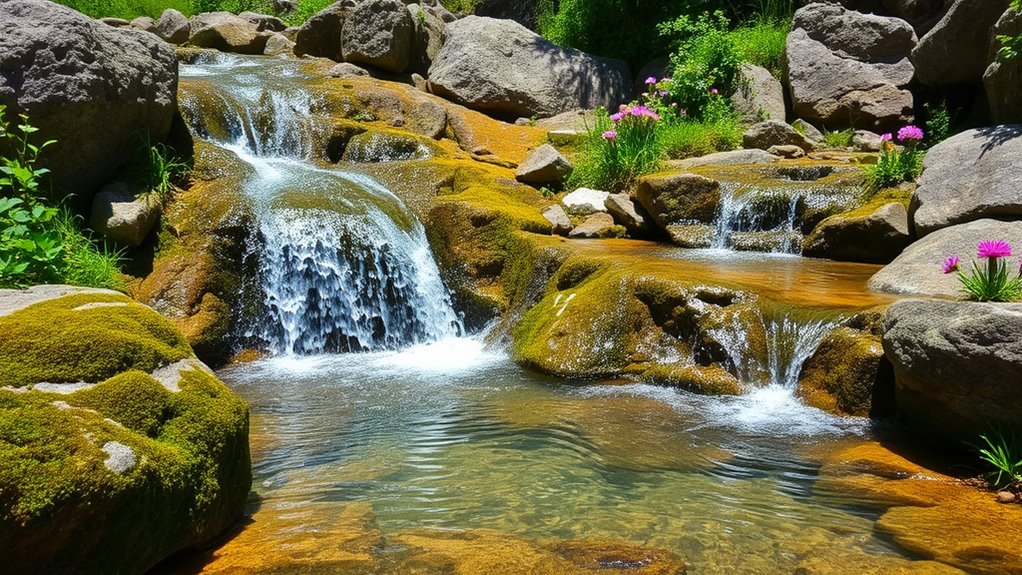
Have you ever wondered how water naturally flows from mountain springs without the need for pumps? The answer lies in the power of gravity and the way the land is shaped. Mountain springs emerge when underground water finds its way to the surface, often through cracks or porous rocks, driven solely by gravity. This natural process creates a continuous flow that can travel great distances, providing clean, fresh water without any mechanical assistance. But to keep this water safe and maintain its quality, spring protection is essential. Protecting the spring means safeguarding it from contamination sources like animals, human activity, and environmental pollutants. When you ensure proper spring protection, you help preserve not just the water’s purity but also the surrounding ecosystem. This is vital because the water quality from mountain springs is often superior—free from many pollutants found in surface water—making it a reliable source for drinking, agriculture, and even industrial use.
Water from mountain springs flows naturally due to gravity and land shape, making spring protection vital for pure, safe water.
The natural flow of water from a mountain spring relies on a delicate balance of geology, hydrology, and land management. If the area around the spring isn’t protected, contaminants can seep into the groundwater or directly enter the spring, degrading water quality. That’s why establishing protective measures like fencing, vegetation buffers, and runoff management is so important. These steps prevent dirt, chemicals, and waste from reaching the spring, ensuring that the water remains pure. When you actively participate in spring protection, you contribute to the sustainability of this vital resource. It’s not just about keeping the water clean; it’s about preserving the natural processes that keep our ecosystems healthy and our communities supplied with safe water.
Moreover, maintaining water quality from mountain springs isn’t just a matter of environmental conservation—it directly impacts human health. Clean, high-quality spring water supports local communities and reduces reliance on complex treatment systems. When the water flows freely and remains uncontaminated, it requires less filtration and chemical treatment, saving resources and energy. As a person who values clean water, you can help by advocating for and supporting spring protection initiatives. Simple actions like avoiding pollution, respecting protected zones, and promoting sustainable land use can make a big difference. By doing so, you ensure that the natural gravity-driven flow of spring water continues unhindered, providing a steady supply of fresh, safe water.
In the end, understanding how water naturally flows from mountain springs emphasizes the importance of spring protection and water quality. When you respect and safeguard these natural sources, you’re not just protecting a single spring—you’re supporting the health of entire ecosystems and communities that depend on this precious resource. The simplicity of gravity-driven flow is a powerful reminder of nature’s elegance, but it also calls for your active role in maintaining its integrity for generations to come. Recognizing the significance of spring protection helps preserve this vital process for future generations.
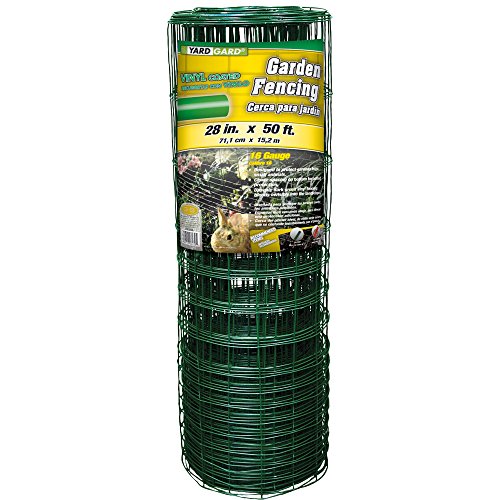
YARDGARD – 4 in. to 1 in. Mesh Welded Wire Fence – 28 in. x 50 ft. 16‑Gauge Vinyl Coated Galvanized Steel – for Rabbit Fencing | Garden Protection | Tree and Flower Barriers
HEAVY DUTY MATERIAL – Vinyl‑coated galvanized steel wiring provides durable, weather‑resistant performance while maintaining flexibility for easy installation
As an affiliate, we earn on qualifying purchases.
As an affiliate, we earn on qualifying purchases.
Frequently Asked Questions
How Does Gravity Influence Water Purity in Mountain Springs?
Gravity plays a key role in water purity by enabling natural filtration and purification as water flows downhill. As you collect spring water, gravity helps it pass through layers of soil and rocks, filtering out impurities. This natural process enhances water quality without chemicals, making it safer to drink. Your reliance on gravity for water flow supports the ongoing process of natural purification, reducing the need for additional water filtration methods.
Are Mountain Springs Sustainable Sources of Drinking Water?
Yes, mountain springs can be sustainable sources of drinking water if you manage spring pollution properly. Regular water filtration helps remove contaminants, ensuring safe drinking water. You should monitor the spring’s health, prevent pollution from nearby activities, and maintain natural flow. When well-managed, mountain springs provide a reliable, eco-friendly water source, supporting community needs while preserving the environment. Proper care makes this resource sustainable for the long term.
What Are the Challenges in Maintaining Gravity-Fed Water Systems?
You face several challenges maintaining gravity-fed water systems. Water contamination risks increase if the system isn’t well-maintained or protected from pollutants. Infrastructure challenges, such as aging pipes or insufficient storage, can cause leaks or disruptions. Ensuring consistent water quality and reliable flow requires regular inspections and repairs. Without proper management, these issues can compromise water safety and access, making it essential to address both contamination and infrastructure problems proactively.
Can Gravity Water Systems Be Affected by Climate Change?
Imagine a delicate balance, like a tower of blocks about to topple—climate impact can destabilize gravity water systems. Yes, they’re affected by climate change, which alters water availability through droughts or floods. For example, a prolonged drought can reduce flow, making water less reliable. You need to adapt and plan for these changes, ensuring your system remains resilient amid shifting climate patterns.
How Do Mountain Springs Compare to Other Natural Water Sources?
You’ll find that mountain springs often have unique spring mineralogy due to the surrounding geology, which influences water quality and taste. Unlike other natural sources, their flow variability can be significant, fluctuating with seasonal changes and weather patterns. You might notice that during dry periods, flow decreases, affecting water availability. Overall, mountain springs provide distinctive mineral content but require careful management because of their unpredictable flow.
vegetation buffer for spring protection
As an affiliate, we earn on qualifying purchases.
As an affiliate, we earn on qualifying purchases.
Conclusion
You can clearly see how mountain springs and gravity water work together to deliver clean, natural flow to communities. Did you know that over 80% of the world’s rural populations rely on gravity-fed water systems from mountain springs? This simple yet effective method guarantees fresh water without heavy machinery or energy, proving nature’s power to sustain us. Embracing these systems helps protect our environment while providing reliable water access—truly a gift from the mountains.

Purewell 3-Stage 0.01μm Ultra-Filtration Gravity Water Filter System, NSF/ANSI 42&372 Certification, 304 Stainless Steel Countertop System with 2 Filters and Stand, Reduce 99% Chlorine, 2.25G, PW-OB
3-Stage Filtration – The Purewell gravity water filter system adopts a composite filter technology, can reduce most contaminants….
As an affiliate, we earn on qualifying purchases.
As an affiliate, we earn on qualifying purchases.

Varify 17in1 Complete Drinking Water Test Kit – 100 Strips + 2 Bacteria Tester Kits – Well, Tap, Home, City Water Testing Strip for Lead, Alkaline, Chlorine, Hardness, Iron, Fluoride, Copper & More
17 IMPORTANT PARAMETERS: The Varify Premium Drinking Water Test Kit offers an unrivaled, complete analysis of your drinking…
As an affiliate, we earn on qualifying purchases.
As an affiliate, we earn on qualifying purchases.