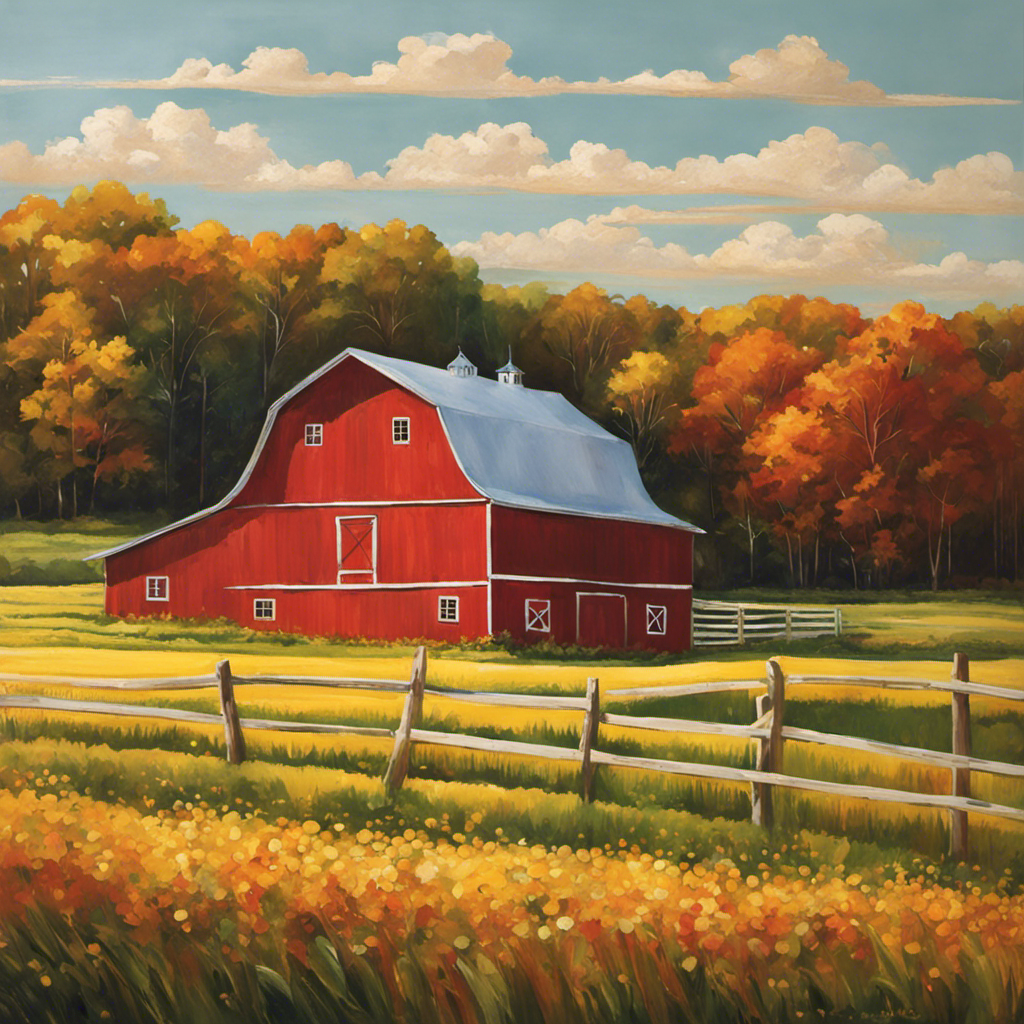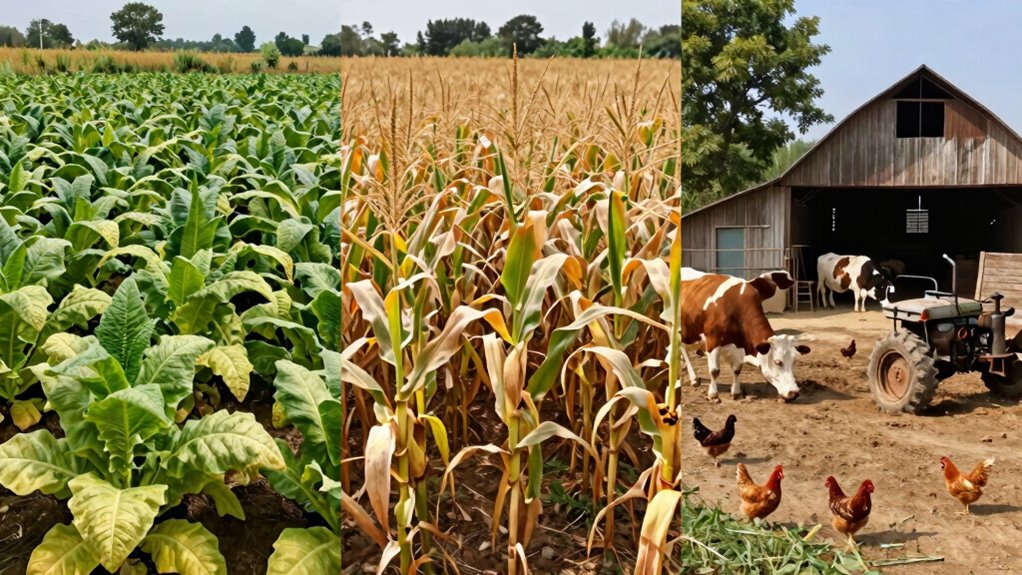

Your home landscape reflects how crops like tobacco and corn, along with livestock, influence design and layout. You’ll notice structures like curing barns, drying sheds, and outbuildings that support crop processing and farm life. Fencing, pastures, and materials adapt to local climate and economic needs, shaping your community’s visual identity. If you explore further, you’ll uncover how these elements tell stories about the community’s history, culture, and way of life.
Key Takeaways
- Tobacco cultivation influenced home placement, with structures like curing barns and porches for processing.
- Corn fields shaped community festivals and led to homes with climate-adapted materials like log or clapboard siding.
- Livestock presence dictated the layout of barns, pens, and grazing areas, integrating functionality and aesthetics.
- Crops and animals reflected community values, shaping landscape features that highlight cultural identity.
- Architectural adaptations combined practical crop needs with cultural expression, influencing overall rural landscape design.
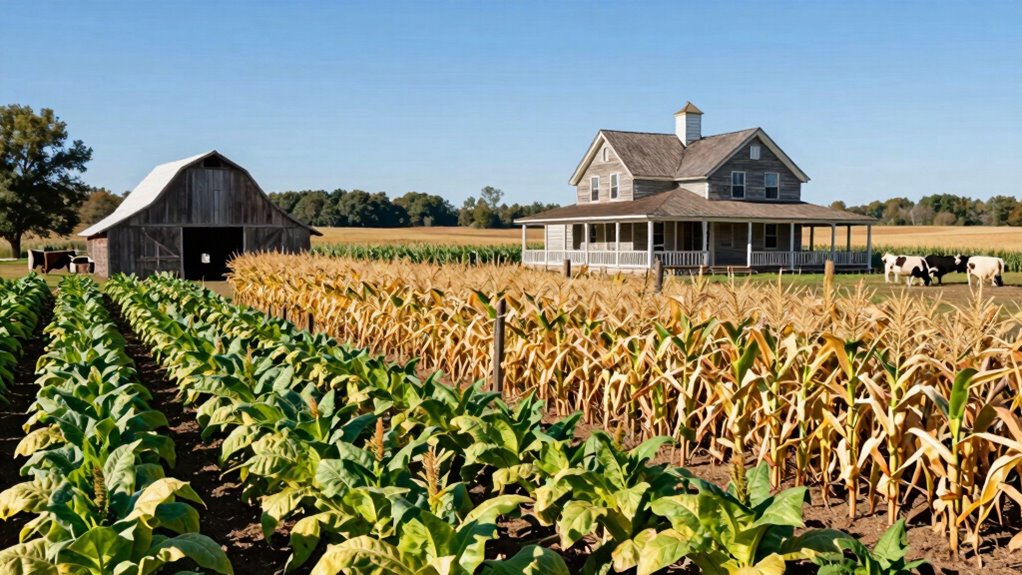
Throughout history, the crops and livestock you see in a landscape reveal much about the region’s economy and culture. When you observe tobacco fields, corn stalks, or herds of livestock in a home’s yard, you’re witnessing more than agriculture — you’re seeing the cultural influences that shaped local lifestyles and the architectural adaptations that evolved to accommodate these agricultural practices. Each element reflects a community’s identity, values, and economic priorities, creating a landscape that’s both functional and culturally significant. The landscape layout often reflects these priorities, balancing practicality with cultural expression.
Crops and livestock reveal how history, culture, and economy shape the landscapes and lifestyles of communities.
Tobacco, for example, often influenced the placement and design of homes in regions where it was a primary crop. In areas where tobacco was king, homes might feature porches or verandas where families could process or dry tobacco leaves, blending lifestyle with crop production. Architectural adaptations became necessary — structures expanded or modified to support curing barns, drying sheds, or storage rooms. These features weren’t just practical; they embodied the community’s reliance on tobacco and its role in social rituals, shaping the aesthetics and layout of the landscape.
Corn, on the other hand, served as a staple food source and also a symbol of self-sufficiency. Landscapes dominated by cornfields often include homes built with materials that withstand the local climate, like log or clapboard siding, reflecting a practical adaptation to the environment. The layout of these homes often integrates space for drying and storage of corn, influencing the overall design. Cultural influences are evident in the way cornfields are woven into community festivals, shaping communal spaces around these traditions. You might notice that homes near cornfields also contain tools or structures for processing corn, illustrating how the crop influences both the landscape and daily routines.
Livestock, such as cattle or pigs, further shapes home landscapes, often leading to architectural adaptations like barns, pens, or coops. These structures become integral to rural homes, defining the land’s functional design. Culturally, livestock reflect a community’s emphasis on sustenance and economic stability, influencing the placement of outbuildings and fencing that secure and organize the land. The presence of livestock also impacts the aesthetic of the landscape, with pastures and grazing areas becoming prominent features that tie the farmstead together visually and practically.
In essence, the crops and livestock you encounter in a home landscape vividly illustrate the blending of cultural influences and architectural adaptations. They tell stories of what communities value, how they survive, and how their environment shapes their way of life. Each element — whether tobacco, corn, or animals — contributes to a landscape that’s uniquely reflective of its history, economy, and cultural identity.
As an affiliate, we earn on qualifying purchases.
Frequently Asked Questions
How Did Climate Influence Crop and Livestock Choices in Home Landscapes?
Climate influences your crop and livestock choices through climate adaptation, guiding what you plant and raise. You select crops suited to your area’s temperature, rainfall, and growing season length, ensuring they thrive. Livestock choices also depend on climate; you pick animals adapted to your environment’s conditions. By understanding these factors, you optimize your home landscape to be sustainable, productive, and resilient against seasonal variations and climate change.
What Role Did Cultural Practices Play in Landscape Design?
You might assume landscape design is purely practical, but cultural practices deeply influence it. Cultural symbolism and ritual significance guide plant choices and layout, reflecting values and beliefs. For example, certain plants symbolize prosperity or protection, shaping garden features. Rituals around planting or harvesting reinforce community ties, turning landscapes into living expressions of identity. Your home landscape becomes a canvas of cultural stories, blending function with spiritual meaning.
How Did Economic Factors Impact Land Use Decisions?
Economic incentives heavily influence your land use decisions, as they drive what you prioritize on your property. Land ownership rights determine how you develop and allocate space, whether for farming, livestock, or leisure. When profitable crops like tobacco or corn offer higher returns, you’re more likely to dedicate land to those, shaping your landscape accordingly. Ultimately, financial motives steer your choices, aligning your land use with economic opportunities and ownership rights.
Were There Regional Differences in Landscape Adaptations?
Imagine walking through a vibrant Southern landscape, where towering tobacco plants meet lush cornfields—regional flora shaped by historical influences. Yes, there were regional differences in landscape adaptations. In the North, livestock and dairy farms thrived, creating pastoral scenes, while the South favored tobacco and cotton, influencing their landscape design. These choices reflected local climate, economy, and cultural history, making each region’s landscape a unique story of adaptation.
How Have Modern Trends Altered Traditional Landscape Practices?
Modern trends have shifted landscape practices toward sustainability and aesthetics. You’re likely to see urban gardening thrive, with more people growing vegetables and herbs in small spaces. Native plants are gaining popularity because they require less water and maintenance, supporting local ecosystems. These changes move away from traditional large-scale farming or livestock-focused landscapes, emphasizing eco-friendly, low-impact designs that reflect contemporary values of conservation and urban living.
Conclusion
You might wonder if these crops and animals truly shaped our homes or if it’s just a nostalgic story. The evidence suggests they did, influencing everything from garden layouts to community spaces. Imagine the land’s silent stories, whispering of tobacco fields, corn rows, and livestock. It’s more than history—it’s a reminder that our environment reflects our past choices. So, next time you see a farm, remember, your home’s landscape is part of a bigger story, woven with tradition and resilience.