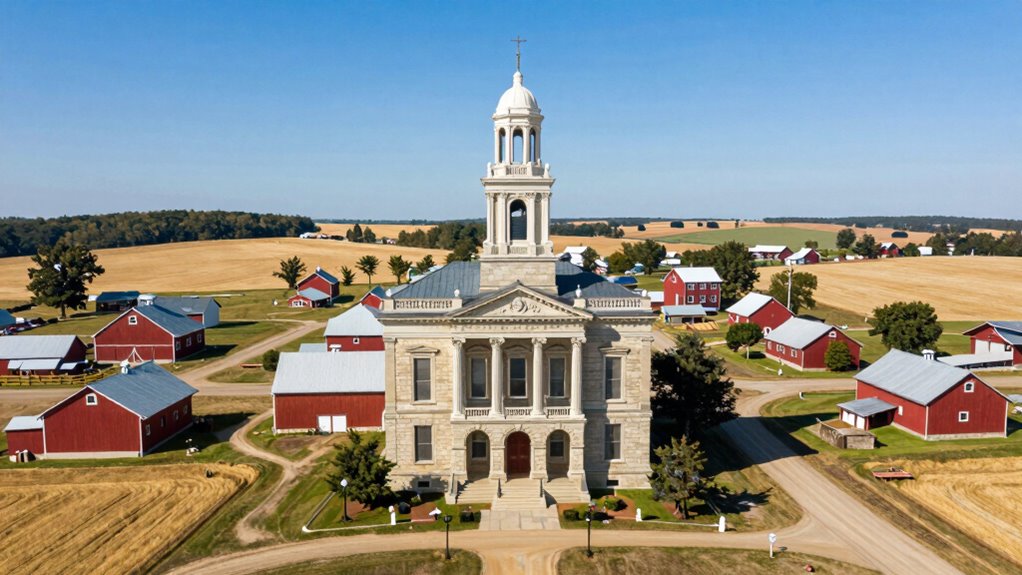

County seats and courthouses have played a essential role in shaping nearby farm communities by serving as hubs for legal stability, economic growth, and social connection. They attract professionals, support dispute resolution, and expand markets for farmers’ products. These centers also foster community events, strengthen social bonds, and promote infrastructure development. As a result, they become enduring pillars of rural progress. To uncover how these influences evolved over time, continue exploring the story behind these crucial community engines.

Get furniture and decor delivered free with Prime
- Fast, free delivery on millions of items
- Prime Video, Amazon Music and more included
- Member-only deals all year
Key Takeaways
- County seats and courthouses established as administrative and social centers, attracting residents and boosting local economies.
- They facilitated land disputes and property rights, fostering agricultural stability and growth.
- Courthouses promoted infrastructure development, improving regional connectivity and access to markets and resources.
- They served as venues for community events, strengthening social cohesion and civic responsibility.
- The presence of courthouses attracted professionals and businesses, stimulating economic activity in farm communities.

County seats and courthouses often serve as the heart of farm communities, shaping their social and economic landscapes. As you look back at their historical development, you’ll see how these centers emerged not just as administrative hubs but also as catalysts for growth and stability. In the early days, establishing a county seat meant bringing legal authority, trade, and social interaction to a specific location. This often led to the development of infrastructure—roads, markets, and public buildings—that encouraged farmers to settle nearby. Over time, the courthouse became a symbol of stability, attracting businesses and residents excited to participate in the legal and civic processes. This historical development fostered a sense of community and trust, which was essential for farming communities relying on cooperative effort and shared resources.
County seats and courthouses are the heart of rural communities, fostering growth, stability, and social cohesion.
The economic impact of county seats and courthouses on nearby farm communities can’t be overstated. When a courthouse is established, it often draws lawyers, clerks, and other professionals, creating a local economy that benefits farmers and merchants alike. Farmers found it easier to resolve disputes over land or crops, which helped protect their investments and promote more secure transactions. As commerce grew around the courthouse, local markets expanded, offering farmers access to broader networks for selling their produce. This influx of economic activity often led to the development of hotels, stores, and services meant to cater to visitors and residents. Consequently, the presence of a courthouse served as a stable economic anchor, attracting new residents and encouraging existing ones to invest in their land and businesses. Additionally, the availability of legal services helped bolster confidence among farmers and entrepreneurs, further stimulating local growth.
Furthermore, the courthouse’s role in legal proceedings and governance helped establish clear property rights, which is essential for agricultural expansion. When land disputes are resolved swiftly and fairly, farmers can focus on cultivating their fields without fear of losing their property. The courthouse also acts as a venue for community events, elections, and public gatherings, reinforcing social cohesion. This combination of legal stability and social interaction strengthens the economic foundation of farm communities, making them more resilient over time. Moreover, the development of public infrastructure around courthouses often encouraged broader rural development initiatives, enhancing regional connectivity and access to resources. Additionally, the rise of public investment in courthouse infrastructure has further solidified the role of these centers as pillars of rural development.
Ultimately, the development of county seats and courthouses shapes the social fabric and economic vitality of rural areas. They transform remote farms into thriving communities by providing legal authority, fostering commerce, and promoting social unity. As you observe these communities today, remember that their origins as centers of legal and civic activity continue to influence their growth and sustainability, underscoring their enduring importance in rural life.
As an affiliate, we earn on qualifying purchases.
Frequently Asked Questions
How Did County Seat Locations Affect Local Transportation Development?
You’ll find that county seat locations markedly shaped local transportation development. When a county seat is centrally located, it encourages the expansion of transport infrastructure like roads and railways, making travel easier and more efficient. This boosts economic growth by facilitating the movement of goods and people. As a result, nearby farm communities benefit from improved access to markets, supplies, and services, strengthening their economic and social ties with the county seat.
What Role Did Courthouses Play in Community Identity?
Have you ever wondered how a courthouse shapes community pride? Courthouses serve as symbols of civic identity, anchoring a community’s sense of history and stability. They often host events and serve as landmarks that foster local pride. Your courthouse becomes more than just a legal building; it embodies the community’s spirit, reinforcing shared values and a collective identity that binds residents together in a common civic purpose.
Did Courthouse Architecture Influence Nearby Farm Community Aesthetics?
Yes, courthouse architecture did influence nearby farm community aesthetics. When you observe the architectural style of courthouses, you notice their grandeur and design often set a visual standard, inspiring local buildings. The aesthetic influence encourages communities to adopt similar styles, creating a cohesive look. This architectural style fosters a sense of pride and identity, making the courthouse a focal point that shapes the visual landscape of surrounding farm communities.
How Did County Seat Shifts Impact Surrounding Agricultural Markets?
You might think shifting county seats would boost nearby agricultural trade, but ironically, it often disrupted market accessibility. When county seats move, farmers face longer routes, less convenient trade points, and uncertain markets. This shift can cause economic decline in original communities, making agricultural trade less efficient. So, instead of strengthening local economies, these shifts sometimes hinder farmers’ ability to reach markets easily, impacting their livelihoods in unforeseen ways.
Were There Any Notable Conflicts Over Courthouse Site Selections?
Yes, court site disputes and county seat conflicts often led to heated disagreements among communities. You’d see towns vying fiercely for the courthouse location, knowing it meant economic growth and prominence. These conflicts sometimes resulted in legal battles or compromises, but they also created lasting rivalries. Such disputes highlight how essential the courthouse was to a community’s identity and future, fueling tensions that could last for years.
Conclusion
You can see how county seats and courthouses shape farm communities by attracting commerce and visitors, boosting local economies. For example, areas near county seats tend to have 20% higher business growth than more remote farms. This vibrant activity not only supports local farms but also fosters community development. So, next time you pass through a county seat, remember it’s more than just a government hub — it’s a essential engine fueling nearby farm life.
Evergreen bestsellers Picks
bestsellers
As an affiliate, we earn on qualifying purchases.