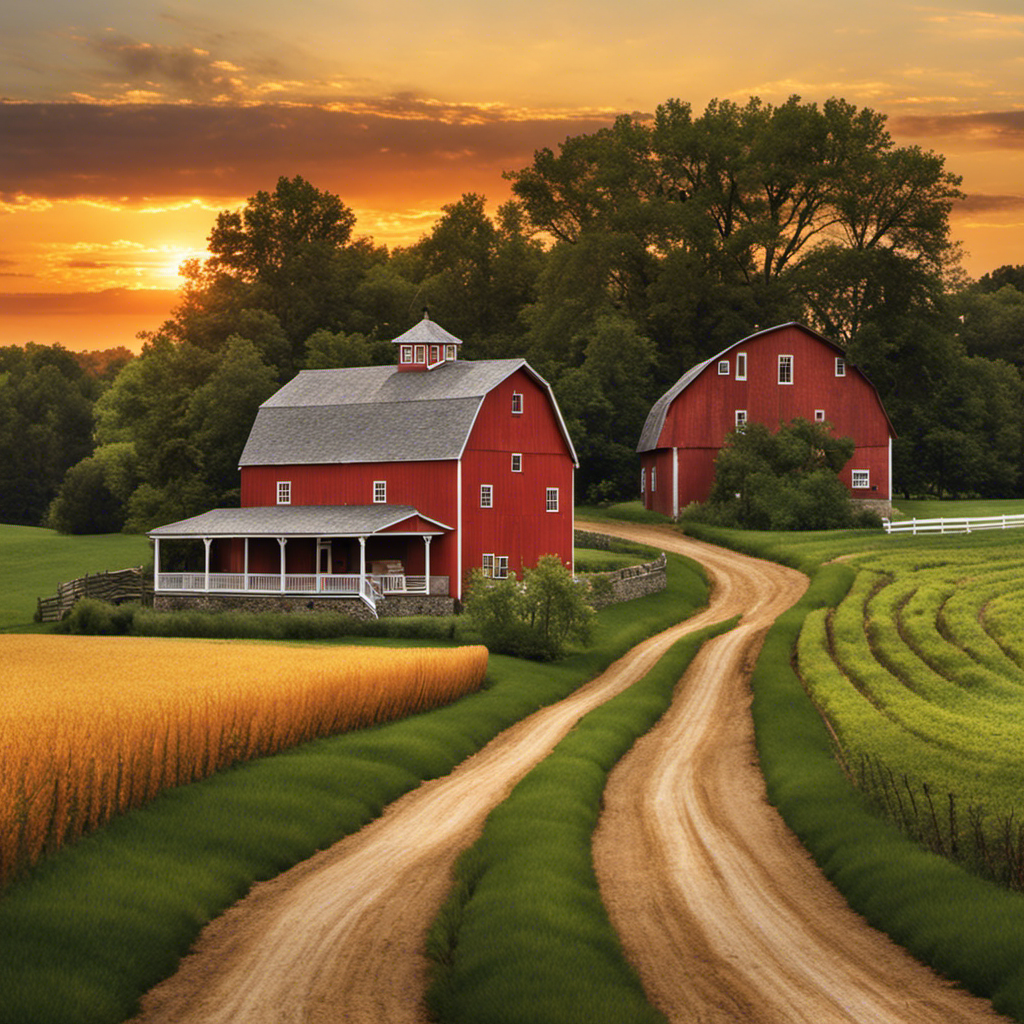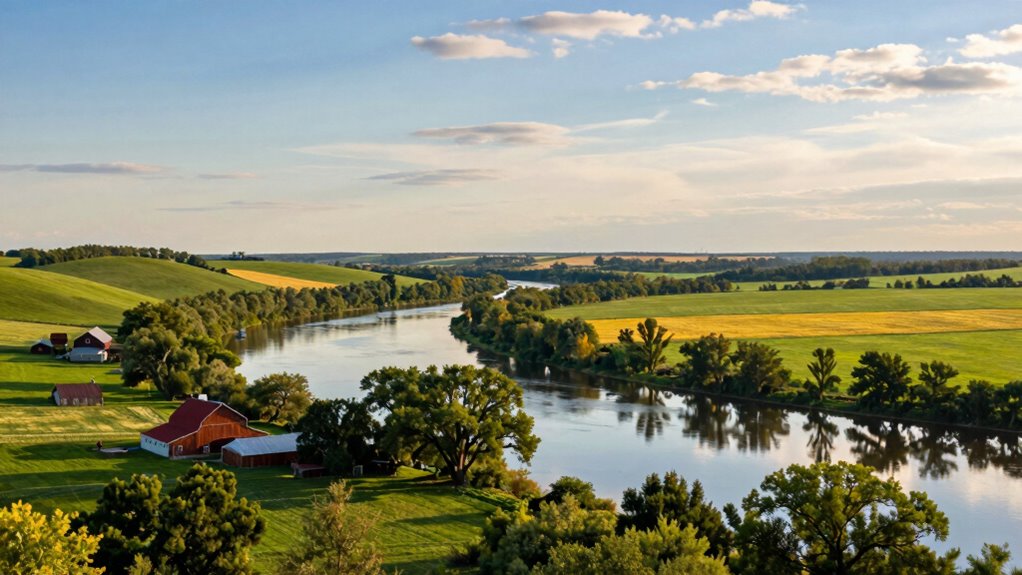

River valleys in the Lower Midwest played a vital role in helping farm towns flourish by providing natural transportation routes and fertile land that supported agriculture. These waterways allowed farmers to easily move crops and supplies, boosting local economies. Flood control infrastructure like levees and dams made settlements safer and more predictable. The strategic location of these valleys attracted trade and growth. If you want to discover more about how these rivers shaped the region’s prosperity, keep exploring.

Get furniture and decor delivered free with Prime
- Fast, free delivery on millions of items
- Prime Video, Amazon Music and more included
- Member-only deals all year
Key Takeaways
- River valleys provided essential transportation routes for farmers to access markets before roads and railroads.
- Flood control infrastructure made river valleys safer for settlement and farming.
- Towns developed along riverbanks, becoming regional trade centers and boosting local economies.
- Navigable waterways facilitated quick movement of crops, livestock, and supplies to distant markets.
- Engineering improvements ensured the durability and safety of flood control systems, supporting regional growth.
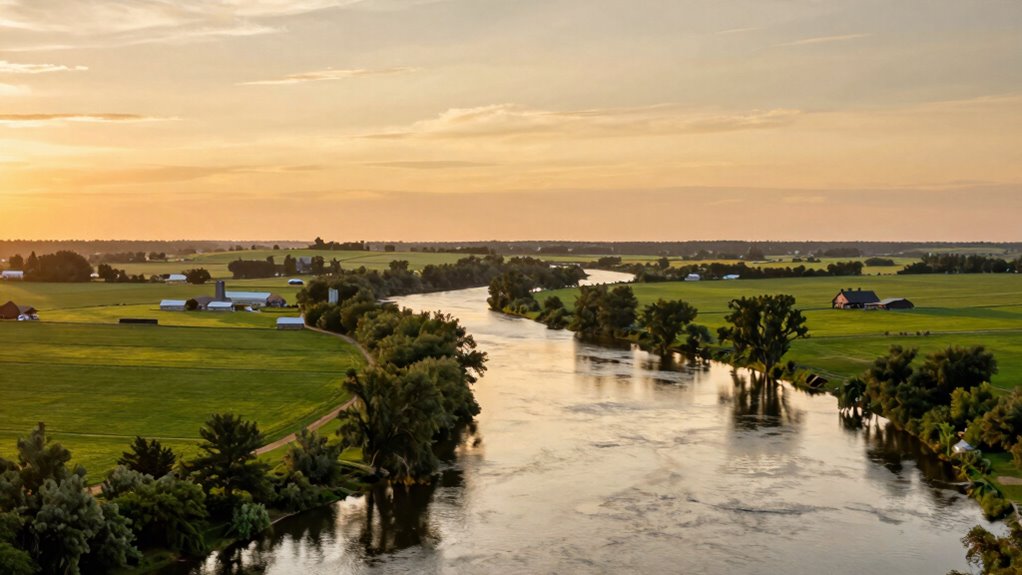
River valleys have played a essential role in shaping the growth of farm towns in the Lower Midwest. These natural corridors provided crucial routes for transportation and trade long before roads and railroads became widespread. As you explore these regions, you’ll notice how the rivers served as highways, connecting farmers to larger markets and enabling the movement of goods with relative ease. This form of river transportation allowed crops, livestock, and supplies to flow efficiently, helping towns expand economically. The easy access to waterways meant farmers could get their products to distant cities faster, fostering commerce and encouraging settlement along these fertile valleys.
However, living near rivers also came with challenges, especially when it came to flood control. Flooding was a constant threat, and it could devastate crops, homes, and infrastructure. Over the years, communities in the Lower Midwest learned to adapt by building levees, dams, and drainage systems to protect their towns. These flood control measures not only minimized damage but also made the river valleys more dependable places to settle and farm. These efforts transformed unpredictable waterways into manageable, controlled channels that supported sustained growth and flood management technologies have played a significant role in this transformation. Additionally, advances in flood management technology have helped communities better predict and respond to flooding events, further stabilizing these vital regions. The development of these flood control systems was driven by a recognition of the importance of waterway safety in maintaining regional stability. Modern flood prevention systems continue to evolve, ensuring communities can adapt to changing environmental conditions.
The presence of reliable waterways also influenced the layout and development of these towns. Settlements often grew along riverbanks, where transportation was most accessible, and farmland stretched outward from these hubs. Over time, bridges and port facilities emerged, further integrating river transportation into daily life and commerce. These features helped towns thrive as regional centers for trade, attracting workers, merchants, and new residents enthusiastic to benefit from the fertile land and accessible waterways. The ongoing maintenance and improvement of these infrastructure components remain crucial for sustaining regional economic health. Moreover, the integration of modern engineering techniques has further enhanced the durability and efficiency of flood control infrastructure.
In essence, the river valleys of the Lower Midwest created a natural foundation for agricultural and commercial success. Their strategic location and navigability fostered economic growth, while flood control efforts turned once-dangerous waterways into assets. As you observe these towns today, you can appreciate how the interplay of natural geography and human ingenuity shaped their development. The rivers remain essential, not just as scenic features, but as the lifelines that sustained and propelled these farm communities forward. The legacy of river transportation and flood control continues to influence the region’s economy and community resilience, preserving the essential role these valleys played in the flourishing of Lower Midwest farm towns.
As an affiliate, we earn on qualifying purchases.
Frequently Asked Questions
How Did River Valleys Influence Settlement Patterns in the Lower Midwest?
River valleys influenced your settlement patterns by providing fertile land and abundant water sources, essential for farming and daily life. You’d find that river valley ecosystems supported diverse plant and animal life, making them ideal for Indigenous settlements initially. As settlers arrived, they continued to settle along these waterways, taking advantage of transportation routes and resources, which shaped the growth and development of towns in the Lower Midwest.
What Crops Were Primarily Grown in These Fertile River Valley Soils?
You’ll find that floodplain agriculture thrived in these fertile river valleys, making soil fertility ideal for crops. Corn and soybeans became the primary staples, benefiting from nutrient-rich soils deposited by regular flooding. Farmers also grew wheat and oats in the region, but corn and soybeans dominated due to their high yield potential. The rich, moist soil and predictable flooding created perfect conditions for these crops to flourish and sustain local communities.
How Did Transportation Along River Routes Impact Local Economies?
You see, transportation along river routes boosted local economies through river commerce and waterway trade routes. As you use boats and barges, goods like crops and manufactured products move quickly to markets, creating jobs and increasing wealth. This efficient waterway trade makes it easier for farmers and businesses to connect, expand, and prosper. The rivers become essential channels, fostering growth and prosperity in the communities that rely on them.
Were There Any Significant Environmental Challenges Related to Farming in River Valleys?
Flood management and soil erosion stand out as key environmental challenges you face in river valleys. While fertile soils boost farming, frequent floods threaten crops and homes. Erosion gradually depletes soil nutrients, making land less productive over time. To protect your farm, you need effective flood control measures like levees and erosion control techniques such as planting cover crops. Balancing these issues is vital for sustainable farming and long-term community health.
How Have Modern Developments Affected These Historic River Valleys?
Modern developments have profoundly impacted river valleys through increased river pollution and enhanced flood management efforts. You might notice pollution from urban runoff and industrial waste affecting water quality, while flood control measures like levees and dams aim to protect towns. These efforts help prevent flooding but can also disrupt natural ecosystems. As a result, balancing development with environmental preservation becomes essential to maintaining the health and sustainability of these historic river valleys.
Conclusion
As you reflect on these river-rich regions, you can see how they sculpted thriving towns through tender tides and treasured tributaries. The gentle glide of water guided growth, gathering grains and goods along lush lanes. These lively lakes and lush lands laid the groundwork for prosperity, proving that nature’s nurturing streams nurtured towns to thrive. So next time you see a river ripple, remember its remarkable role in shaping the thriving tapestry of the Midwest’s farm towns.
Halloween Picks
halloween
As an affiliate, we earn on qualifying purchases.