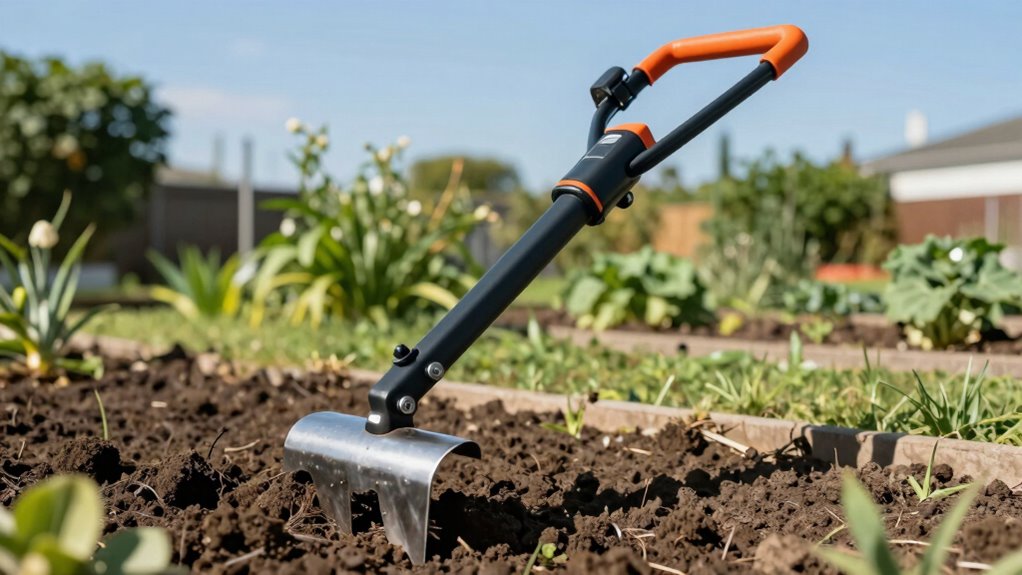

You should store your electric tiller in a dry, sheltered area like a shed or garage to protect it from weather and moisture. Keep it elevated on a stand or hooks to prevent contact with dirt or water, and coil the cord neatly away from hazards. Make sure it’s easily accessible for spring use and protected from theft. For more tips on placement and maintenance, keep exploring these essential guidelines.
Key Takeaways
- Store the tiller in a dry, sheltered area like a shed or garage, elevated on a stand or shelf.
- Keep the power cord coiled neatly and away from high traffic or potential damage zones.
- Place the tiller where it’s easily accessible for spring use, avoiding tight or cluttered spaces.
- Use sturdy hooks or racks to hang the tiller, ensuring tines are off the ground and cords are protected.
- Disconnect the power cord before storage to prevent accidental activation or electrical hazards.

Have you ever wondered where to position your electric tiller to guarantee both safety and ideal performance? Proper placement is vital for maintaining your equipment’s longevity and ensuring safe operation. After each use, you should focus on maintenance tips that keep your tiller in top shape. Start by cleaning off dirt and debris from the tines and motor housing to prevent buildup that could impair performance. Check the power cord for any signs of wear or damage, and store it properly to avoid tangling or accidental damage. Regularly inspecting and tightening bolts and screws can prevent mechanical issues down the line.
When considering storage, it’s essential to find a spot that protects your tiller from the elements. Keep it in a dry, sheltered area, such as a shed or garage, where moisture won’t cause rust or electrical problems. Elevate the tiller off the ground if possible, using a stand or hooks, to prevent contact with dirt or water that could lead to corrosion. Avoid storing the tiller directly on concrete floors for extended periods, as this can trap moisture and accelerate rusting. Instead, place it on a pallet or a shelf. If space is limited, consider hanging the tiller by sturdy hooks, ensuring the tines are not resting on the ground and that the cord is neatly coiled away from moving parts. Proper storage practices are crucial for preventing damage and extending the life of your tiller.
Think about the location’s accessibility. You want your tiller close enough for quick access when spring arrives, but not so exposed that it’s vulnerable to weather or theft. Protecting the cord from exposure to sunlight or extreme temperatures helps prolong its lifespan. When storing, always disconnect the power cord to eliminate electrical hazards and prevent accidental startup. Cover the tiller with a breathable fabric cover to keep dust and dirt off, but avoid plastic covers that can trap moisture and promote corrosion. Additionally, understanding the importance of proper storage practices can help you maintain your tiller in excellent condition for years to come. Regularly inspecting electrical connections and safety features is also vital to ensure they remain in proper working order. Proper maintenance routines can significantly extend the durability and safety of your equipment. Remember that following the manufacturer’s guidelines for lubrication and parts care helps keep the tiller operating smoothly over time.
In terms of maintenance tips, periodically lubricate the moving parts as recommended by the manufacturer. Keep the air vents clear to prevent overheating during use, and ensure the safety switch functions properly. By placing your electric tiller thoughtfully—considering both maintenance tips and storage considerations—you’ll extend its lifespan, keep it safe to operate, and ensure it performs reliably when you need it most. Proper storage not only preserves your investment but also makes your gardening tasks smoother and more enjoyable.

VEVOR 5-Tier Tool Organizer Cart with Charging Station, 8 AC Outlet, Floor Stand Rolling Drill Holder and Tool Battery Storage Rack on Wheels, Garage Floor Rolling Storage Cart for Workshop, Garage
- Charging Station with Multiple Outlets: 8 AC outlets for powering tools
- Spacious and Organized Storage: Large capacity with shelves and hooks
- Easy Mobility with Locking Casters: Smooth rolling and secure locking wheels
As an affiliate, we earn on qualifying purchases.
As an affiliate, we earn on qualifying purchases.
Frequently Asked Questions
Can I Store an Electric Tiller Outdoors Year-Round?
You shouldn’t store your electric tiller outdoors year-round without proper weather protection. Outdoor storage exposes it to rain, snow, and extreme temperatures, which can damage the motor and electrical components. To keep it in good condition, store it in a shed or garage where it’s protected from the elements. If outdoor storage is unavoidable, use a weatherproof cover to shield it from moisture and harsh weather, ensuring it stays safe and functional.
How Do I Prevent Theft of My Electric Tiller?
Think of your electric tiller as a treasure chest needing guard. To prevent theft, you lock it securely in a shed or garage, making it less tempting for prowlers. Use sturdy locks and consider installing security cameras or alarms for extra peace of mind. Tiller security is all about making theft prevention a challenge, so potential thieves move on to easier targets. Keep it protected, and your tiller stays safe from harm.
Is It Safe to Leave an Electric Tiller Plugged in Overnight?
No, it’s not safe to leave an electric tiller plugged in overnight. Always unplug it when not in use to prevent electrical hazards. Proper cord storage and power cord management help avoid tripping or accidental damage. Keep the cord out of walkways and store it neatly after use. This guarantees safety, prolongs the cord’s life, and minimizes risks like overheating or electrical fires. Always follow manufacturer instructions for safe operation.
What Safety Gear Should I Wear When Operating the Tiller?
When operating your electric tiller, you should wear protective gloves to safeguard your hands from debris and sharp blades. Ear protection is essential because tillers can be noisy, and prolonged exposure can harm your hearing. Always make sure your clothing is snug, avoid loose items, and wear sturdy footwear. These safety gear essentials help prevent injuries and make your tilling experience safer and more comfortable.
How Often Should I Inspect the Electric Tiller for Maintenance?
Like a trusty steed in a medieval tale, your electric tiller needs regular care. You should inspect it before each use for loose parts or damage. Follow a routine checks schedule weekly or after heavy use, and keep up with the lubrication schedule to prevent rust and guarantee smooth operation. Regular maintenance helps extend its lifespan and keeps it performing at its best, so don’t skip these essential steps.
Conclusion
To guarantee safety and optimize performance, always place your electric tiller on a flat, stable surface before use. Keep it away from water and children, and double-check that all parts are secure. Turn it off and unplug it when not in use, and store it in a dry, accessible spot. By placing your tiller properly, practicing safety, and maintaining it regularly, you create a safer environment, enhance efficiency, and prolong the life of your equipment.