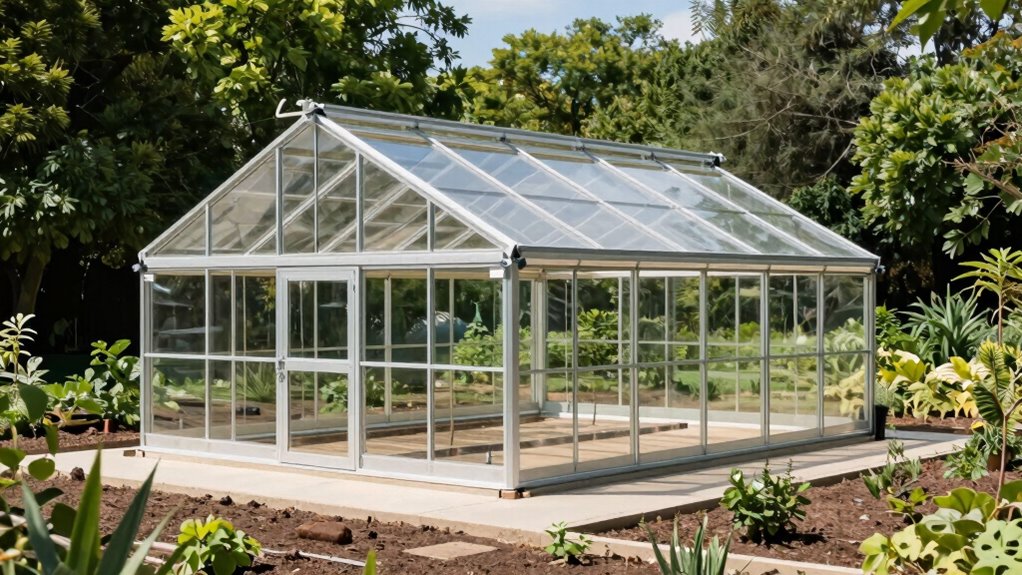

Place your greenhouse kit in a sunny spot with plenty of direct morning sunlight, avoiding shaded areas blocked by trees or structures. Choose a level, well-drained site near water and pathways for easy access and maintenance. Make certain good airflow by positioning near prevailing winds and installing vents or fans. Keep the site clear of weeds and debris to prevent pests. For safer, better results, pay attention to these factors—you’ll find even more helpful tips ahead.

Get furniture and decor delivered free — and shop member deals
- Fast, free delivery on millions of items
- Access to Prime Big Deal Days deals on October 6–7
- Prime Video, Amazon Music and more included
Key Takeaways
- Choose a sunny, shade-free location with maximum morning sunlight exposure.
- Ensure good natural ventilation by placing near prevailing breezes or allowing airflow.
- Select a level, well-drained site away from tall grass, dense shrubs, or unmanaged areas to prevent pests.
- Position the greenhouse on well-drained, elevated soil to avoid waterlogging and pest breeding grounds.
- Place the greenhouse in an accessible area near water sources and pathways for easy maintenance and safety.
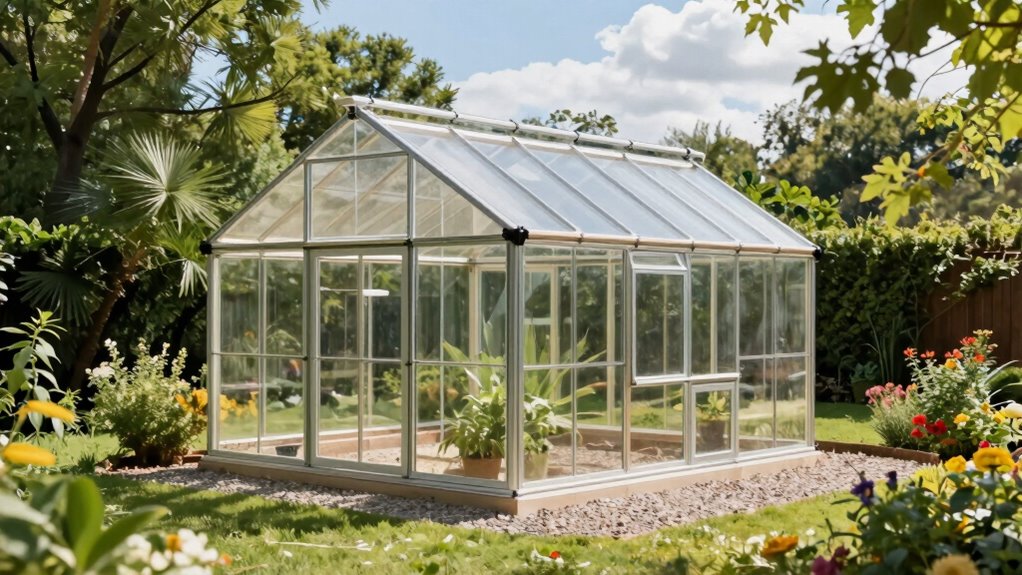
Choosing the right location for your greenhouse kit is essential to ensuring healthy plant growth and easy maintenance. The spot you pick impacts everything from temperature regulation to pest prevention, so it’s worth thinking carefully. Start by observing the sunlight patterns in your yard. Ideally, your greenhouse should receive plenty of direct sunlight, especially in the morning, to promote strong plant development. Avoid shaded areas or spots blocked by large trees or structures, as insufficient sunlight can hinder plant growth and reduce the greenhouse’s overall effectiveness.
Choose a sunny spot free from shade for healthy, thriving greenhouse plants.
Next, consider ventilation options. Good airflow is vital for controlling humidity levels, preventing mold and fungal issues, and maintaining healthy plants. Placing your greenhouse in a location where you can easily install vents or fans is smart. A spot with natural breezes can help, but if natural airflow is limited, you’ll want to incorporate mechanical ventilation. Positioning your greenhouse near a prevailing wind direction can enhance natural ventilation, reducing the need for additional fans and lowering energy costs. Remember, poor air circulation can lead to excess humidity, attracting pests and diseases, so good ventilation isn’t just about comfort—it’s about plant health. Additionally, understanding the role of airflow can help optimize your greenhouse environment for better plant growth. Ensuring proper air circulation can also contribute to maintaining a stable internal temperature, which is crucial for plant health. Proper ventilation is also essential in preventing the buildup of harmful gases and maintaining a healthy atmosphere inside your greenhouse.
Pest prevention is another essential factor in choosing your greenhouse location. You want to avoid placing it near tall grass, dense shrubs, or unmanaged garden areas where pests like insects, rodents, or birds might lurk. A well-chosen site will be away from natural pest reservoirs, making it easier to keep your plants safe. Consider installing physical barriers like screens or mesh around the greenhouse’s vents and doors to minimize pest entry. Also, choosing a location that’s elevated or on well-drained soil can prevent standing water, which attracts pests and creates a breeding ground for insects. Ensuring proper drainage is crucial for maintaining a healthy environment and minimizing pest issues. Good drainage not only protects your plants from waterlogging but also helps prevent the buildup of pests that thrive in damp conditions. In addition, keeping the surrounding area clear of debris and weeds can further reduce pest habitats near your greenhouse.
Accessibility is equally important. You’ll want your greenhouse within easy reach for regular maintenance, watering, and harvesting. Think about proximity to a water source and pathways that allow for convenient movement. A level surface is best for stability and safety, especially during setup and ongoing use. Avoid areas prone to flooding or excessive wind, as these conditions can damage your greenhouse and disrupt plant growth. If you can, select a site that offers some natural shelter from harsh weather, further protecting your plants and reducing stress on the structure.
As an affiliate, we earn on qualifying purchases.
Frequently Asked Questions
How Close Should My Greenhouse Be to My House?
You should place your greenhouse about 10 to 15 feet from your house to optimize garden design and pest prevention. This distance allows easy access, proper sunlight, and airflow, reducing mold and pest issues. Keep it away from large trees or dense shrubs that can block light or harbor pests. Proper placement guarantees your greenhouse performs well and integrates smoothly into your overall garden layout.
What Are the Best Wind Conditions for Placement?
You should place your greenhouse where wind protection is ideal, ideally in a sheltered spot away from prevailing winds. Gentle breezes promote airflow, but strong, gusty winds threaten structural stability. Investigate local wind patterns to find conditions that support airflow without risking damage. A well-sheltered location enhances safety and performance, preventing wind stress on the structure and ensuring your plants thrive in a stable environment.
Can I Place a Greenhouse Under Shaded Trees?
Yes, you can place a greenhouse under shaded trees, but it’s not ideal. Tree shade limits sunlight exposure, which is essential for plant growth inside your greenhouse. You might want to choose a location with partial shade rather than full shade to guarantee your plants get enough light. Consider trimming lower branches or selecting a spot where sunlight filters through, balancing tree shade with necessary sunlight exposure for healthy plant development.
How Does Soil Type Affect Greenhouse Placement?
Imagine your greenhouse nestled on a patch of land where soil drainage is quick, preventing puddles after rain, and soil fertility is rich, fueling lush plant growth. Your placement should favor well-draining soil to avoid waterlogging, which can damage roots. Fertile soil boosts plant health, so choose a site with nutrient-rich earth. Proper soil type guarantees your greenhouse functions effectively, keeping your plants thriving and healthy.
Is There a Preferred Orientation for Maximum Sunlight?
For maximum sunlight, you should orient your greenhouse east-west. This positioning maximizes solar gain throughout the day, providing consistent warmth and light. It also helps with shade avoidance, reducing the risk of overheating or excessive shading from nearby structures or trees. By following this orientation, you guarantee your plants benefit from ideal sunlight exposure, promoting healthy growth and efficient energy use within your greenhouse.
Conclusion
By choosing the right spot for your greenhouse kit, you guarantee it’s safe from harsh weather and gets ideal sunlight, boosting plant growth. Did you know that greenhouses placed in areas with at least six hours of direct sunlight daily can increase plant yields by up to 40%? So, take the time to pick a strategic location—your plants will thank you with healthier, more abundant harvests. Proper placement isn’t just safety; it’s the key to thriving greenhouses.
Halloween Picks
halloween
As an affiliate, we earn on qualifying purchases.