
TL;DR

Get furniture and decor delivered free with Prime
- Fast, free delivery on millions of items
- Prime Video, Amazon Music and more included
- Member-only deals all year
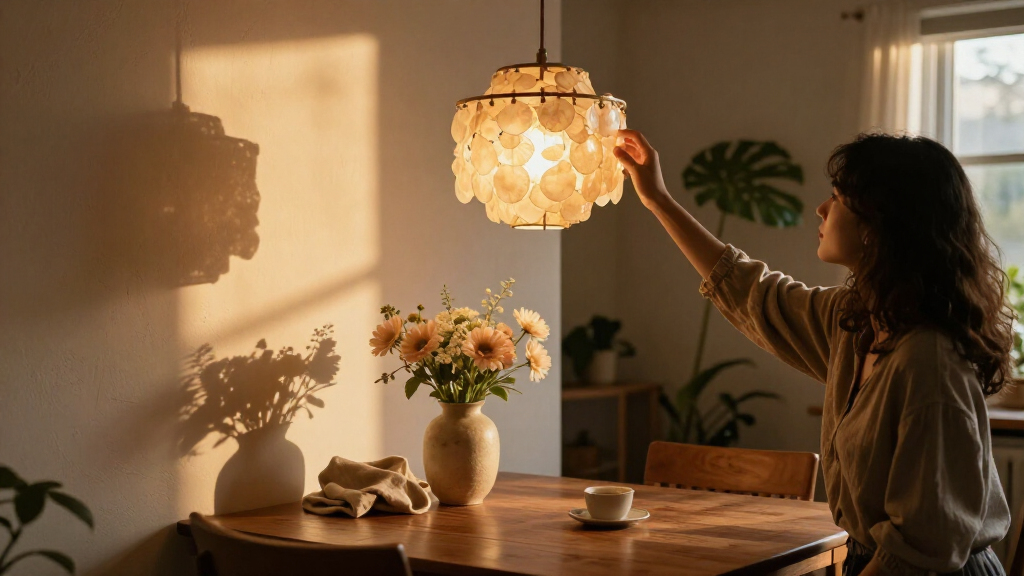
Capiz shell lighting, including designs inspired by Verner Panton’s 1964 Fun series, is appearing again in homes and hotels, according to Livingetc. Designers say its translucent shells diffuse light and add a pearlescent finish, though the report does not quantify how widespread the trend is.
Capiz shell lighting is returning to interior design, with fixtures appearing in homes and hotels, according to a report by Livingetc. The trend brings renewed attention to a material prized by designers for its translucent, pearlescent shells, which soften light and can add texture to a room.
The fixtures draw on a design history that includes Danish designer Verner Panton’s Fun series, first designed in 1964. Its hanging discs catch and reflect light. Similar designs are now available from a range of lighting retailers, Livingetc reports, although it does not name specific shops or provide sales figures.
Capiz shells come from the windowpane oyster, known scientifically as Placuna placenta. The mollusc is found along Southeast Asian coasts and is especially associated with the Philippines, where the shells have been harvested and used for thousands of years, according to the report. Their translucent quality also made them a glass alternative in windowpanes, including in homes and churches.
Designers quoted by Livingetc describe the material as a way to create a gentler, warmer glow than clear glass. Australian designer Greg Natale says shell surfaces refract and diffuse light, while designer Alex Bucklin says the shells soften illumination and can appear to glow when a fixture is on. Those are designers’ descriptions of the effect, not measured comparisons of light output.
A Softer Glow for Modern Rooms
The renewed interest offers homeowners and designers a way to add natural texture and subdued shine through a functional fixture. Capiz pendants and chandeliers can act as focal points while diffusing light, according to the designers cited in the report. That combination may appeal to people seeking interiors that feel warm and layered without relying only on earthy colors, wood or minimalist metal fixtures.
The trend also connects contemporary interiors with the material’s longer use in Southeast Asia. Its current appeal rests partly on visible natural variation and an association with handcraft, qualities designers say contrast with sleek, uniform finishes. The report does not establish how many projects are using capiz or whether consumer demand is rising.
As an affiliate, we earn on qualifying purchases.
From Windowpanes to Pendant Lights
Capiz shells have a longer history in building and decorative use than the 1960s lighting designs that helped bring them into modern interiors. Their thin, translucent structure allowed them to serve as windowpanes before glass was broadly accessible, Livingetc reports. The article identifies the Philippines as a place where shell-covered windows remain in homes and churches.
Panton’s 1964 Fun series used cascading discs to create a shimmering, mobile effect. Today’s capiz fixtures revisit that interaction with light, but the report describes a broader range of contemporary applications, including designer projects and hotel interiors. It also suggests the material can work outside coastal-style rooms, where it has often been associated with seaside decor.
““The shells are translucent rather than transparent, so they soften and diffuse the light instead of giving you the harder, more direct glow you can get through clear glass.””
— Alex Bucklin, founder of Bucklin Design Co., quoted by Livingetc
How Broad Is the Return?
Livingetc describes capiz lighting as returning and expects to see more of it in the coming year, but provides no sales data, survey results or count of projects to show the scale of the trend. It is not clear whether the renewed interest will extend beyond designer-led interiors or how widely the fixtures are being adopted by homeowners.
The report also does not detail sourcing practices, prices, or how contemporary products compare with earlier fixtures. Those details would matter to buyers weighing the material’s environmental and practical considerations alongside its appearance.
More Projects to Watch
Livingetc anticipates further use of capiz shell lighting in the coming year. The clearest indicators of whether interest continues will be its presence in new residential and hotel projects and whether lighting retailers expand their offerings. No specific launches, project dates or sales milestones are identified in the report.
Key Questions
What is capiz shell lighting?
It is lighting made with thin, translucent shells from the windowpane oyster, often arranged as hanging discs or panels around a fixture.
Why are designers using capiz shells?
Designers quoted by Livingetc say the shells diffuse light and add organic texture and a pearlescent sheen. These are their descriptions of the material’s visual effect.
Where do capiz shells come from?
The windowpane oyster occurs along Southeast Asian coasts and is especially associated with the Philippines, according to Livingetc.
Is capiz lighting limited to coastal interiors?
No. Although the material is associated with coastal decor, Livingetc reports that designers are also using it in more varied settings, including homes and hotels.
Source: rss
Halloween Picks
halloween
As an affiliate, we earn on qualifying purchases.