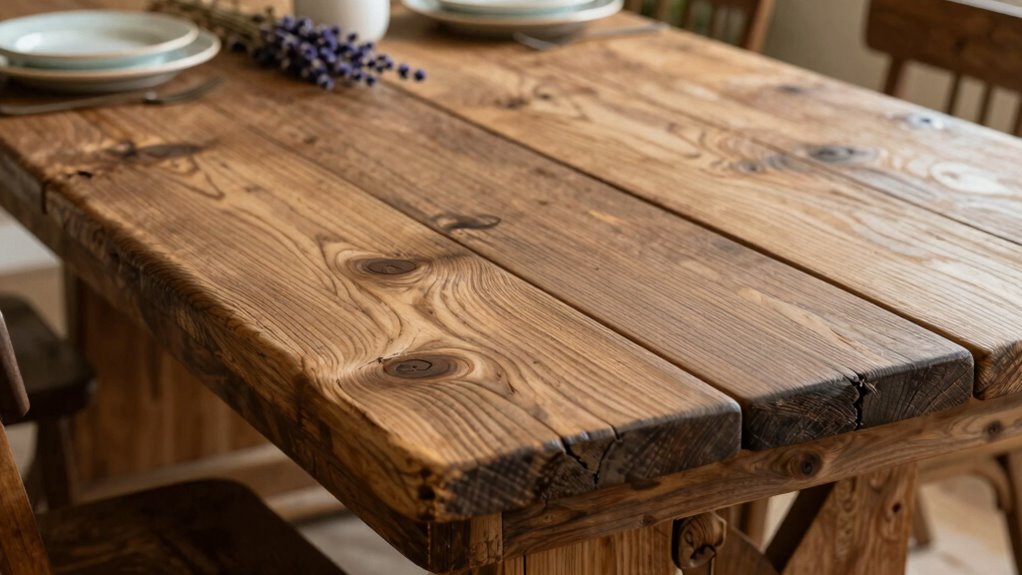

Choosing the right materials is key to ensuring your farmhouse dining table ages beautifully. Reclaimed wood and distressed finishes develop charming patinas over time, adding character and authenticity. Durable options like hardwoods and metal resist scratches and dents, maintaining their appeal. Proper finishes can enhance aging or preserve a specific look. By selecting materials with natural aging qualities, you help your table become a cherished centerpiece that gains personality with each passing year. Keep exploring to learn more.
Key Takeaways
- Reclaimed barn wood and distressed pine develop a rich, authentic patina over time, enhancing farmhouse charm.
- Hardwoods like oak and walnut age gracefully, deepening in color and adding character with proper finishes.
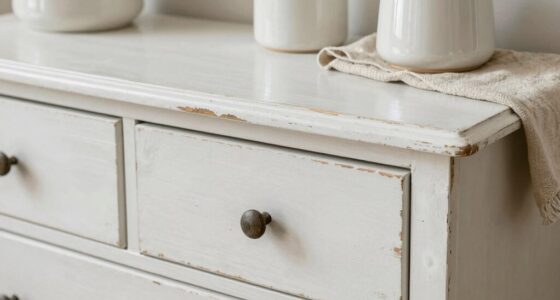
- Weathered or distressed finishes support natural aging, creating a timeless, rustic look that improves with time.
- Sealed surfaces preserve initial appearance but may show scratches; natural finishes tend to age more beautifully.
- Metal-topped tables and engineered woods resist wear, maintaining their aesthetic as they age, combining durability with charm.
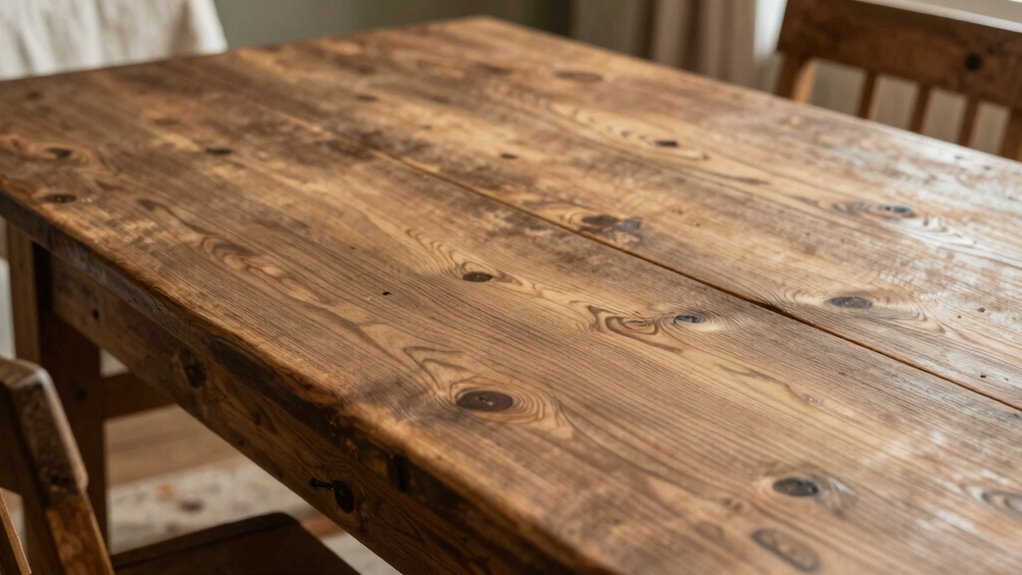
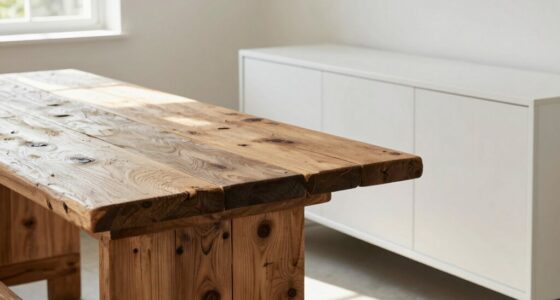
When choosing a farmhouse dining table, understanding the different materials is crucial to finding a piece that suits your style and needs. The material you select influences not only the table’s aesthetic but also its longevity and how well it ages over time. If you’re drawn to rustic charm, wood options like reclaimed barn wood or distressed pine can bring warmth and character to your space. These woods often feature natural imperfections, knots, and variations that develop a beautiful patina with age, making your table uniquely yours. Rustic charm comes from these imperfections, which tell a story and add authenticity to your farmhouse look. Conversely, if you want a table that offers modern durability, think about materials like solid hardwoods, engineered wood, or even metal. These options resist scratches, dents, and wear better than softer woods, ensuring your table remains functional and attractive for years to come. Additionally, some woods naturally develop a weathered appearance that enhances their rustic appeal over time, making them ideal for a farmhouse aesthetic.
Solid hardwoods such as oak, maple, or walnut provide a strong foundation that ages gracefully. They tend to develop a rich, deep patina over time, enhancing their visual appeal. While hardwoods may require some maintenance to prevent staining or warping, their resilience makes them a smart choice for everyday use. Engineered wood, like high-quality plywood or MDF with a veneer finish, offers a more budget-friendly alternative that still provides good stability and resistance to warping. Metal-topped tables, often with wooden or reclaimed bases, combine sleek, contemporary aesthetics with high durability. These materials are less susceptible to moisture damage and scratches, making them ideal for households with kids or frequent entertaining. Additionally, understanding material aging processes can help you select a table that will develop a desirable character over the years. Furthermore, choosing the right finish can influence how the material’s patina develops and ages, adding to its charm.
Another factor to think about is the finish. Tables with a natural or lightly stained surface tend to age beautifully, developing a warm, inviting look as the wood softens and darkens with time. Sealed surfaces, on the other hand, can preserve a particular look longer but might show scratches or wear more quickly if not properly maintained. A well-chosen finish can also influence how the material’s patina develops over time, adding to its charm. Overall, your choice should balance style with practicality. If you love the rustic charm of weathered wood, go for reclaimed or distressed finishes that age gracefully. If your priority is modern durability, opt for sealed hardwood or metal, which will hold up better against daily use. Whichever material you choose, understanding how it ages helps ensure your farmhouse dining table remains a cherished centerpiece for years to come.

DM Furniture Rustic Farmhouse Dinning Table, Reclaimed Solid Wood Kitchen & Dining Room Table for 4-6 People, 59" Wooden Rectangular Kitchen Table with Trestle Base for Dining/Kitchen Room, Walnut
- Style: Rustic farmhouse design with reclaimed wood
- Material: High-quality pine wood for durability
- Size: 59-inch rectangular table for 4-6 people
As an affiliate, we earn on qualifying purchases.
As an affiliate, we earn on qualifying purchases.
Frequently Asked Questions
How Do I Clean and Maintain Different Farmhouse Table Materials?
To clean and maintain your farmhouse table, start by dusting regularly with a soft, damp cloth. For varnish finishes, use a gentle cleaner and avoid harsh chemicals to prevent damage. If you have a marble surface, clean it with a pH-balanced cleaner and wipe up spills immediately to prevent staining. Avoid abrasive pads, and always follow manufacturer instructions to keep your table looking beautiful and well-preserved over time.
Are Certain Materials More Resistant to Scratches and Dents?
Certain materials are more resistant to scratches and dents. Wood finishes like laminate or distressed wood hide minor damage better, and sealed surfaces can withstand daily wear. Metal options, such as steel or aluminum, are highly durable and resist dents and scratches. Choosing these materials means your farmhouse dining table will age gracefully, maintaining its charm longer. Regular cleaning and protective pads can further enhance their resistance and longevity.
Which Materials Are Eco-Friendly and Sustainably Sourced?
Imagine a world where your choices flow seamlessly into a greener future. Recycled wood and bamboo composites stand out as eco-friendly, sustainably sourced options. Recycled wood repurposes old materials, reducing waste, while bamboo grows rapidly, making it a renewable resource. By selecting these materials, you actively contribute to environmental preservation, ensuring your farmhouse dining table ages beautifully and responsibly—proof that style and sustainability can coexist harmoniously.
How Do Temperature and Humidity Affect Various Table Materials?
Temperature effects and humidity impact different table materials differently. Wood expands in high humidity, which can cause warping or cracking, especially with rapid changes. Excessive heat can dry out wood, leading to splitting, while metals may expand or contract with temperature shifts. To keep your farmhouse dining table looking its best, maintain a consistent environment, avoiding extreme temperature and humidity fluctuations that can damage your table over time.
Can I Mix Different Materials in a Farmhouse Dining Table?
Did you know mixing materials can boost your farmhouse table’s durability and style? Yes, you can mix different materials in a farmhouse dining table. Material pairing enhances design versatility, allowing you to combine wood with metal or glass for a unique look. Just make certain the materials complement each other’s textures and finishes. This approach adds character and longevity, making your table both functional and visually appealing over time.
Conclusion
Now that you know the ins and outs of farmhouse dining table materials, you’re better equipped to make a choice that’ll stand the test of time. Remember, patience is a virtue—your table will age beautifully if you give it the right care and attention. Trust your instincts, and don’t rush the process. With the right material and a little love, your farmhouse table will become a cherished centerpiece that only gets better with age.