TL;DR
A home-upcycling guide describes how to turn an empty whiskey bottle into a liquid soap dispenser by fitting it with a compatible pump. The project can reuse a bottle as countertop decor, but label protection, pump fit and safe placement of glass matter.
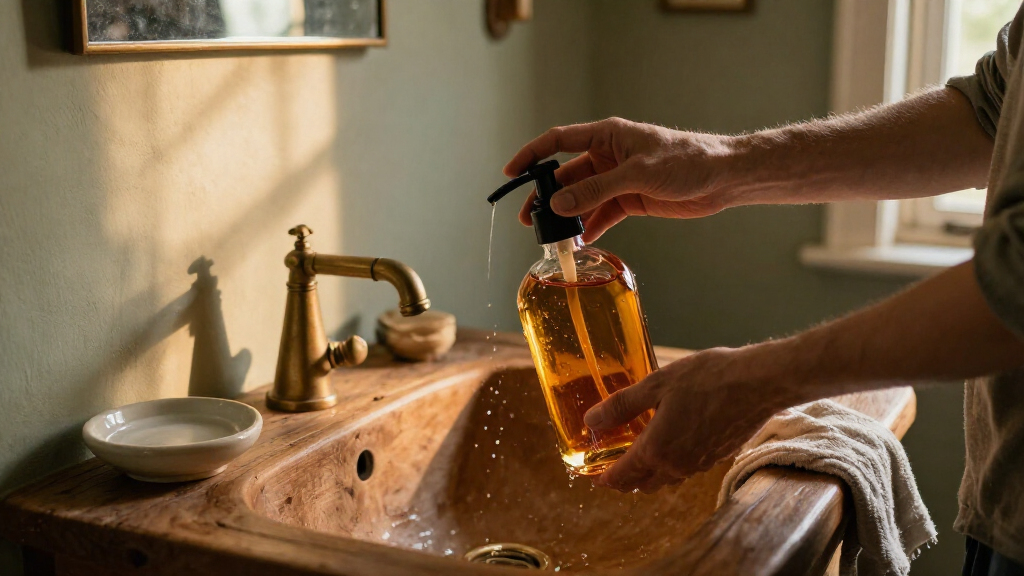
A home-upcycling guide published by Hunker describes how to turn an empty whiskey bottle into a liquid soap dispenser by cleaning the glass and fitting it with a compatible pump. The project offers a way to reuse a bottle as countertop decor, though the guide cautions that large glass containers can break if left unsecured in a wet shower.

Get furniture and decor delivered free with Prime
- Fast, free delivery on millions of items
- Prime Video, Amazon Music and more included
- Member-only deals all year
According to the Hunker guide, the method starts with washing the bottle thoroughly. Anyone keeping the paper label should avoid getting it wet during cleaning, while those removing it can scrub with steel wool or use an adhesive remover such as Goo Gone. To keep a label from being damaged by soap or water, the guide recommends applying several coats of Mod Podge, letting each coat dry before adding another. Masking tape around the label can help keep the coating from running onto the glass.
The pump depends on the bottle’s neck, the guide says. A bottle with a threaded top may fit a standard replacement soap pump, while one with a cork opening may need a pump designed with a stopper. The article lists two product examples and prices: a two-pack of brushed nickel replacement pumps for about $12 on Amazon, and a five-pack of cork-stopper pumps for about $10 on Amazon. Prices and availability may change.
Before filling the bottle, the guide advises testing the pump and checking that its plastic tube reaches near the bottom. If the tube is too long, it can be trimmed with scissors; if it is too short, the guide says a tube from a cleaning spray bottle may be adapted. A funnel can reduce spills when adding soap. The article also suggests using the bottle for other liquids, including dish soap, lotion, conditioner or shampoo, and notes that the visible soap color can be part of the display.
Turn a Whiskey Bottle Into a Soap Dispenser
Reuse an empty glass bottle as a refillable countertop dispenser. The right pump fit, label care and safe placement make the project more practical.
Choose the right pump
Check the bottle opening before buying hardware.
- May fit a standard replacement pump.
- Test the fit before filling.
- May need a pump designed with a stopper.
- Check that the tube reaches near the bottom.
Prepare the bottle
Protect the label if you want to keep it.
Keep a paper label dry, or remove it with steel wool or adhesive remover.
Apply several coats of Mod Podge, letting each coat dry; masking tape can keep coating off the glass.
Check the pump and tube, trim an overly long tube, then use a funnel to add soap.
Make it your own
The bottle can add character while serving as a refillable household dispenser.
Show the original label
Seal it against moisture for a recognizable bottle design.
Change the finish
Remove the label for a simpler look, or paint and decorate the bottle.
Try other liquids
The guide suggests dish soap, lotion, conditioner or shampoo; check pump instructions first.
Place it safely
Glass is best on a stable counter, away from edges and busy areas.
- Secure the bottle where it is unlikely to be knocked over.
- Avoid leaving a large glass bottle unsecured in a wet shower.
- Check that the filled dispenser works properly.
A Second Use for Glass Bottles
The Hunker guide presents the idea as a combination of reuse and household styling: an empty bottle becomes a refillable dispenser rather than going straight into recycling or waste. It may also let people coordinate a countertop with existing decor while avoiding a disposable-looking plastic soap bottle. The article describes the project as a low-cost option, although the total cost depends on whether a suitable pump is already available and on the bottle and soap chosen.
Practical details shape whether the result works well. As the guide explains, a pump that does not match the bottle opening, or a tube that does not reach the liquid, can make the dispenser inconvenient. A paper label left unsealed may be damaged by moisture. The article also cautions that while the bottle may suit a stable kitchen or bathroom counter, glass in a slippery shower area poses a breakage risk, especially if it falls near bare feet.
Products Worth Considering

Bose TV Speaker (2nd Gen) Compact Soundbar with Bluetooth and HDMI-ARC, Black

Dyson Ball Animal 2 Upright Corded Vacuum Cleaner, Fuchsia

Dyson Gen5 Outsize Cordless Vacuum
As an affiliate, we earn on qualifying purchases.
Choosing a Bottle and Pump
The Hunker guide says the project is not limited to whiskey bottles. Other glass containers, including jam jars, can be reused if a suitable dispenser top can be fitted. A bottle’s neck and stopper determine what hardware is needed, so the article recommends checking the opening before buying a pump to help avoid a mismatch.
The guide describes several ways to change the look. Labels can remain visible for a playful, recognizable bottle design, or be removed for a simpler glass finish. It also points to a YouTube example: Our Upcycled Life painted a Crown Royal bottle white and added a vinyl phrase. That is an example of a possible finish, not a requirement for the basic dispenser project.
Fit, Durability and Safe Placement
The Hunker guide does not report testing results or establish how long a homemade dispenser, label coating or pump will last with regular use. Compatibility will vary by bottle opening and pump design, and the listed retail prices may no longer be current. The article also does not specify whether every type of soap or cleaner is suitable for every pump; readers should check product instructions before filling a dispenser with a different liquid.
The guide makes no claim that the project is safer or more durable than a purpose-made dispenser. In particular, it warns that glass can break if knocked over and advises against leaving a large bottle unsecured in a wet shower. A stable surface away from edges and high-traffic areas is a safer placement choice.
Check the Opening Before Filling
Based on the steps in the Hunker guide, the practical next move is to inspect the bottle neck, then choose a screw-on or cork-style pump that fits. Test the pump and tube with the empty bottle before adding soap; trim an overly long tube if needed, and use a funnel to fill the container. If preserving the label, keep it dry while washing the bottle and let each protective coat dry fully.
After filling, place the dispenser on a stable counter and check that it dispenses properly. The guide provides no follow-up test or performance data, so durability and day-to-day convenience will depend on the individual bottle, pump and placement.
Source: Hunker
Key Questions
Can any whiskey bottle be used as a soap dispenser?
Not automatically. The Hunker guide says to check the bottle opening: threaded bottles may accept a standard screw-on pump, while a cork-style opening may require a pump with a stopper. Test the fit before adding soap.
How can I keep the whiskey label from getting damaged?
The Hunker guide advises keeping the label dry while washing the bottle, then applying several coats of Mod Podge and allowing each coat to dry. Masking tape around the label can help prevent the coating from spreading.
What if the pump tube is the wrong length?
The guide says to trim an overly long plastic tube with scissors. If it is too short, it suggests adapting a tube from a cleaning spray bottle, though the fit should be checked before use.
Is a glass bottle safe to keep in the shower?
The Hunker guide warns that a large glass bottle in a wet, slippery shower could break if it falls. Keep it in a secure position, or use a safer location away from bare feet.
Source: hunker.com