
To prevent costly mistakes, size your chicken coop carefully by providing at least 3 to 4 square feet per bird inside and 10 square feet outside in the run. Make sure each hen has about 8 to 10 inches of perch space and a nesting box for every 3 to 4 hens. Proper space reduces stress, fights, and disease risk, keeping your flock healthy and productive. Keep going to discover more tips for the perfect coop setup.
Key Takeaways
- Calculate at least 3-4 sq ft per bird inside the coop to prevent overcrowding and health issues.
- Provide 10 sq ft per bird in the outdoor run for natural movement and reduced stress.
- Allocate 8-10 inches of perch space per hen to ensure comfortable roosting and prevent pecking.
- Use one nesting box per 3-4 hens to promote cleanliness and reduce laying disputes.
- Properly sizing the coop and run minimizes the need for costly upgrades and maintains flock productivity.

Choosing the right size for your chicken coop is crucial to guarantee your hens stay healthy, comfortable, and productive. A well-sized coop ensures that each bird has enough space to move, rest, and lay eggs without stress or overcrowding. When planning your coop, one of the most critical considerations is providing sufficient roosting space. Chickens naturally prefer to perch at night, and overcrowding on roosts can lead to pecking, stress, and even injuries. To prevent this, allocate at least 8 to 10 inches of perch space per bird, ensuring they can comfortably rest without being forced into close quarters. This not only keeps your chickens comfortable but also reduces the risk of disease transmission caused by cramped conditions. Proper ventilation and cleanliness are also essential for maintaining a healthy environment, helping to prevent respiratory issues and other health problems.
In addition to roosting space, you need to think about the nesting boxes. These are where hens lay eggs and require proper sizing to keep your chickens happy and productive. Each nesting box should be about 12 inches square, with one box for every 3 to 4 hens. If you plan to keep a larger flock, adding extra boxes can help prevent hens from fighting over space or avoiding laying altogether. Proper nesting boxes also contribute to cleaner eggs; when hens have adequate privacy, they’re less likely to lay eggs in unsuitable spots or in the bedding of their roosts. Ensuring that these boxes are easy to access and clean will promote hygiene and make egg collection much more manageable. Additionally, providing adequate ventilation can help reduce moisture buildup and keep your coop fresh, further supporting your flock’s health.
Beyond roosts and nesting boxes, the overall size of the coop must accommodate the number of chickens you plan to keep. A general rule is at least 3 to 4 square feet per bird inside the coop and 10 square feet per bird in an outdoor run. This space allows hens to move freely, stretch their wings, and engage in natural behaviors, which are essential for their well-being. Providing ample living space can significantly improve your flock’s health and reduce stress-related issues. When you skimp on space, chickens become stressed, which can lead to health problems and decreased egg production. Overcrowding also increases the likelihood of aggressive behaviors and spreads diseases more quickly. By choosing a coop size that respects these guidelines, you’re investing in your flock’s health and productivity, avoiding costly upgrades or replacements in the future.
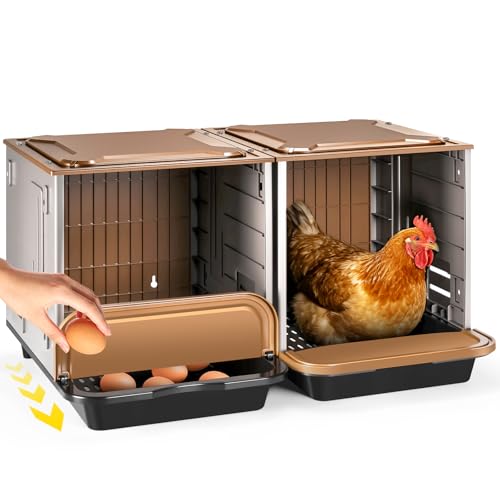
Chicken Nesting Box, 2 Compartment Nesting Boxes for Chickens, Large Chicken Laying Boxes for Egg Collection & Hen on Nest, Roll Away Nesting Boxes Chicken (Extra Large)
- Number of Nesting Boxes: Includes 2 nesting boxes
- Comfortable Egg Laying Environment: Provides safe, private space for hens
- Easy Egg Collection: Sloped design allows eggs to roll away
As an affiliate, we earn on qualifying purchases.
As an affiliate, we earn on qualifying purchases.
Frequently Asked Questions
How Do I Calculate the Right Coop Size for My Flock?
To calculate the right coop size, consider your flock’s number and space needs. Allow at least 3-4 sq ft per bird inside the coop for comfort and easy feeding strategies. Make certain the coop is predator-proof with secure locks and sturdy materials. Adequate space reduces stress and prevents overcrowding, which is essential for health and safety. Regularly evaluate your flock’s growth to adjust the size as needed, guaranteeing protection and ample room.
What Are the Best Materials for a Durable Chicken Coop?
You should choose durable materials like cedar or pressure-treated wood for your chicken coop, as they withstand weather and pests. Incorporate proper ventilation options to keep air fresh and prevent moisture buildup. When planning, consider nest box placement that promotes easy access and airflow. These choices guarantee your coop remains sturdy, healthy, and comfortable for your flock while reducing maintenance costs.
How Often Should I Clean and Maintain the Coop?
You should clean your coop at least once a week to prevent buildup of manure and pests. Investigating the theory that more frequent cleaning improves chicken health proves true—regular maintenance minimizes disease risks. Follow a consistent cleaning schedule and use proper maintenance tips, like replacing bedding and disinfecting surfaces. This routine keeps your flock healthy, reduces odors, and prolongs the coop’s lifespan, ensuring a safe environment for your chickens.
Can I Build a Coop That’s Expandable Later?
Yes, you can build a coop with an expandable design for future expansion. Plan for additional space and structural support now, so you can easily add on later without major renovations. Use modular panels or attach extensions to your current structure. By considering future expansion, you guarantee your coop can grow with your flock, saving you money and effort down the line while maintaining a comfortable environment for your chickens.
What Are Common Mistakes When Sizing a Chicken Coop?
You might think small is fine, but ignoring your chickens’ feeding habits and predator protection can backfire. Common mistakes include sizing the coop too tight, which stresses birds and hampers feeding. Underestimating space needs leaves your flock vulnerable to predators. Always plan for ample space, considering their activity and feeding habits. A well-sized coop guarantees warmth, safety, and comfort, preventing costly expansions or repairs later.
Conclusion
Now that you know the secrets to selecting the perfect coop size, you’re armed with the blueprint for a thriving flock. Think of your coop as a cozy nest, where each chicken finds room to stretch and flourish—avoiding the cramped, crowded chaos that leads to trouble. With the right space, you’ll watch your chickens blossom and your investment grow like a well-tended garden, fruitful and full of promise. Happy coop building!