Breadfruit groves and canoe crops are essential to maintaining cultural traditions, ecological balance, and local economies in tropical communities. You can support sustainable farming by practicing techniques like selective pruning, composting, and intercropping, which protect the land and promote biodiversity. Saving seeds and nurturing traditional methods help preserve genetic diversity and cultural heritage. To discover more about these practices and their importance, keep exploring how these systems sustain communities for generations.
Key Takeaways
- Breadfruit groves serve as staple food sources and support local economies through trade and consumption.
- Canoe crops often include breadfruit, cultivated in traditional agroforestry systems to promote biodiversity.
- These groves are managed using sustainable practices like pruning and organic pest control to preserve ecological balance.
- Seed saving and genetic diversity in breadfruit cultivation enhance resilience against pests and climate changes.
- Preserving traditional techniques in managing breadfruit and canoe crops sustains cultural heritage and ecological health.

Breadfruit groves have long played a critical role in many tropical communities, serving as a reliable food source and a foundation for local economies. When you work with these groves, you’re engaging in a tradition rooted in sustainable farming practices that have been passed down through generations. These practices emphasize harmony with the environment, ensuring that the land remains productive for years to come. By using traditional cultivation techniques, you help preserve the cultural heritage of your community while promoting ecological balance. These methods include selective pruning, composting, and careful pest management, all aimed at maintaining healthy, resilient trees without relying heavily on chemical inputs. Such techniques not only support the sustainability of your farm but also enhance the quality of the breadfruit harvest, which is essential for local consumption and trade.
As you tend to the grove, you’ll notice that traditional cultivation techniques often involve minimal disturbance to the soil, allowing natural nutrient cycles to flourish. This approach reduces soil erosion and promotes biodiversity, which is indispensable for the long-term health of your farm. The use of organic matter, such as compost and mulch, enriches the soil naturally, providing essential nutrients for the breadfruit trees. You also might incorporate intercropping—planting other crops alongside breadfruit—to maximize land use and diversify income sources. This practice not only boosts your farm’s resilience but also contributes to a balanced ecosystem, making pests less problematic and reducing the need for chemical pesticides. Additionally, soil conservation techniques help maintain land fertility and prevent degradation over time.
Sustainable farming with breadfruit groves goes beyond just planting and harvesting. It involves ongoing management that respects the land and the community’s needs. You’ll find that traditional techniques often include collecting and saving seeds for future planting, ensuring genetic diversity and adaptability to changing conditions. This seed-saving practice supports a resilient, self-sufficient farm that can withstand pests and climate variability. By sticking to these time-tested methods, you’re also helping to safeguard the cultural identity of your community’s agriculture, passing down valuable knowledge that keeps the tradition alive.
In essence, working with breadfruit groves through sustainable farming and traditional cultivation techniques allows you to cultivate more than just a crop—you nurture a way of life. It’s about balancing productivity with environmental stewardship, ensuring that future generations can continue to benefit from these essential groves. This approach not only sustains local economies but also preserves the cultural and ecological fabric that makes your community unique.
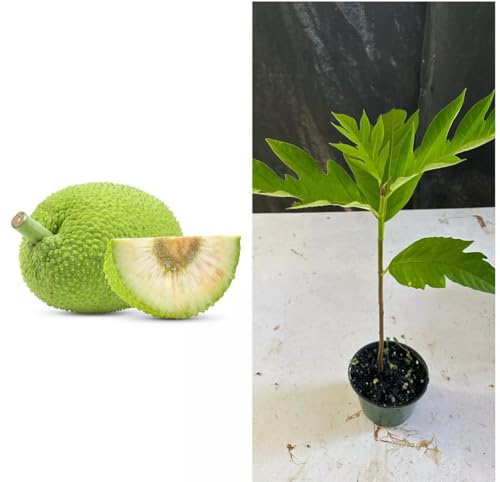
Breadfruit Plant, Breadfruit (Artocarpus altilis) Tropical Live Fruit Tree, Tropical Live Fruit Seedling, Green 10inch-1ft
Plant seedling
As an affiliate, we earn on qualifying purchases.
As an affiliate, we earn on qualifying purchases.
Frequently Asked Questions
How Do Breadfruit Groves Impact Local Ecosystems?
Breadfruit groves positively impact local ecosystems by enriching the soil and enhancing biodiversity. As you maintain these groves, you help improve soil health through organic matter and nitrogen fixation, which benefits other plants. Additionally, these groves support a variety of wildlife, fostering biodiversity. By promoting sustainable practices, you guarantee the ecosystem remains balanced, vibrant, and resilient, making breadfruit groves a valuable part of the environment.
What Are Traditional Methods for Canoe Crop Cultivation?
Think of traditional canoe crop cultivation as a dance, where you carefully select the right spots for planting, much like ancient farmers did. You practice traditional planting by hand, using simple tools and knowledge passed down through generations. Crop rotation plays a crucial role, ensuring soil stays fertile and pests stay at bay. This method keeps the land healthy, much like a well-orchestrated symphony, sustaining your community’s food supply over time.
Are Breadfruit Groves Sustainable Long-Term?
Yes, breadfruit groves are sustainable long-term when you adopt agroforestry practices that promote healthy soil and biodiversity. By integrating pest management strategies, you can effectively control pests without harmful chemicals, ensuring the longevity of your grove. Regular maintenance and diversified planting help prevent disease spread and improve resilience. With these practices, your breadfruit grove can provide sustainable yields for years, supporting local communities and ecosystems alike.
How Do Climate Changes Affect Canoe Crop Productivity?
Climate change can harm canoe crop productivity by disrupting local weather patterns, leading to unpredictable rainfall and temperature fluctuations. These changes weaken your crop’s climate resilience, making them more vulnerable to droughts or floods. As a result, your crop yield may decrease over time, affecting food security and income. To protect your canoe crops, you should adopt adaptive farming practices that enhance resilience against climate variability.
What Are Modern Innovations in Breadfruit Farming?
You’d think breadfruit farming’s stuck in the Stone Age, but modern innovations say otherwise. Genetic modification helps create drought-resistant, pest-tolerant breadfruits, while precision agriculture guarantees you use just the right amount of water and nutrients. These tech-savvy methods boost yields and sustainability, making breadfruit farming more efficient and resilient. So, embrace the future, because your breadfruit grove deserves a high-tech upgrade, not just good old farming luck.

Stainless Steel Fruit Tree Peeler Stripper Scissor Branches Cutter Garden Hand grafting Tools Tree Pruning Shears with 4 Blades of Different Shapes
4 DIFFERENT SHAPES OF BLADES : Our tree branches cutter is equipped with 4 different shapes of blades,…
As an affiliate, we earn on qualifying purchases.
As an affiliate, we earn on qualifying purchases.
Conclusion
As you walk through these lush breadfruit groves and glimpse the vibrant canoe crops, remember you’re witnessing more than just food—you’re witnessing a legacy rooted in resilience and tradition. Like the steady heartbeat of an island’s soul, these crops sustain communities and connect generations. Embrace their story, and let it remind you that nature’s bounty isn’t just nourishment, but a testament to perseverance and cultural identity. Isn’t it extraordinary how such simple plants shape entire lives?
composting kits for tropical farms
As an affiliate, we earn on qualifying purchases.
As an affiliate, we earn on qualifying purchases.

INTENSIVE GARDENING: Your Step by Step To Intensive Gardening
As an affiliate, we earn on qualifying purchases.
As an affiliate, we earn on qualifying purchases.