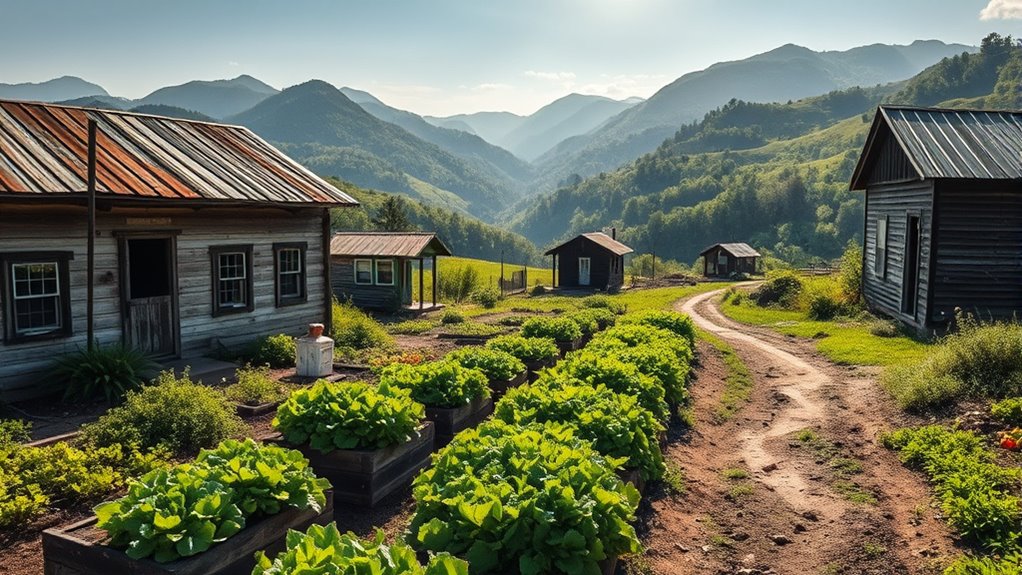

In West Virginia, communities have transformed from coal camps into vibrant, self-sufficient villages rooted in resilience and tradition. You’ll see families preserving food, gardening, and supporting local markets, reflecting a deep connection to land and history. These stories highlight a spirit of hard work, brotherhood, and adaptability that keeps culture alive. If you keep exploring, you’ll discover even more inspiring ways West Virginia’s past and present continue to shape its communities.
Key Takeaways
- West Virginia’s transition from coal camps to self-sufficient communities reflects resilience and adaptation.
- Cultural traditions of food preservation and farming sustain community identity post-coal industry decline.
- Stories emphasize values of hard work, brotherhood, and self-reliance rooted in coal mining history.
- Modern farmers markets and community gatherings preserve Appalachian heritage and foster social bonds.
- Land stewardship and gardening symbolize resilience and continuity of cultural heritage in contemporary WV.

West Virginia’s history is a legacy to resilience and change, transforming from bustling coal camps into vibrant communities centered around homegrown food and self-sufficiency. As you explore this journey, you’ll see how the state’s coal mining past shaped its communities and how those roots now influence modern traditions. Mine safety was always a top priority for miners risking their lives underground. Over the years, safety measures improved, but the core value of protecting workers remains a crucial part of Appalachian traditions. These practices weren’t just about avoiding accidents; they fostered a sense of brotherhood and shared responsibility that still echoes today. Many families passed down safety knowledge through generations, emphasizing caution and community support. You might notice that these traditions continue to influence how people approach everyday life, from farming to local gatherings.
West Virginia’s coal mining roots foster community, safety, brotherhood, and resilience that continue to shape modern traditions and daily life.
The progression from coal camps to self-sufficient communities didn’t happen overnight. As coal mining declined, residents turned their focus toward cultivating small farms, gardens, and local markets. This shift reflects a deep-rooted Appalachian value of self-reliance and tradition. You’ll find that many families maintain these practices, growing their own vegetables, raising livestock, and preserving foods. These efforts are more than just a way to feed families—they’re a way to preserve culture and heritage. The skills learned from generations of farming and food preservation keep Appalachian traditions alive, connecting people to their history and to each other. Additionally, the importance of food preservation plays a vital role in sustaining these communities through seasonal changes.
Community gatherings, food festivals, and farmers markets now serve as modern expressions of these enduring values. You may notice that stories from elders about times past—when coal was king—often include lessons about resilience, hard work, and the importance of community support. These stories aren’t just history; they’re lessons that continue to shape how people face challenges today. The spirit of Appalachian resilience persists, reminding everyone that even after the decline of coal, the community’s strength lies in its ability to adapt and thrive through traditions rooted in self-sufficiency.
Today, you can see this blend of history and tradition all across West Virginia. From the remnants of old mining towns to lively farmers markets, the echoes of Appalachian culture remain strong. You’re invited to witness how these communities honor their past while forging new pathways rooted in self-reliance, community, and a shared love for their land. This ongoing transformation from coal camps to kitchen gardens exemplifies the enduring spirit of West Virginia—resilient, adaptable, and proud of its rich heritage.

Small Garden Tools – 3 Pcs Mini Garden Tools Set with Small Trowel, Mini Shovel & Hand Rake Made of Rust-Resistant Iron & Solid Wood – Indoor Gardening Tools Set for Succulent, Bonsai & Pot Plants
Complete Mini Gardening Tools Set: This 3-piece garden tool set includes small shovels for gardening, a hand trowel,…
As an affiliate, we earn on qualifying purchases.
As an affiliate, we earn on qualifying purchases.
Frequently Asked Questions
What Inspired the Transition From Coal Camps to Kitchen Gardens?
You’re inspired to shift from mining memories to cultural shifts that promote sustainability and community well-being. This shift reflects a desire to reclaim land, foster local food production, and create healthier environments. You see kitchen gardens as a way to reconnect with tradition, empower families, and transform former coal camp landscapes. This change symbolizes hope, resilience, and a commitment to a more sustainable future for West Virginia communities.
How Have Community Traditions Evolved Over Generations?
You’ll find that community traditions have deepened over generations, with 85% of families passing down recipes and stories. You might hear family recipes shared at gatherings or oral histories told during storytelling nights, preserving local history. These traditions have evolved from coal camp days to modern garden-sharing, strengthening bonds. You’re part of a living history that adapts while honoring the past, keeping community spirit vibrant and enduring.
What Are the Biggest Challenges in Preserving Local Stories?
You face challenges in preserving local stories, especially because oral history often fades with time and younger generations may not record traditions. Limited resources and changing values make cultural preservation difficult, but you can actively engage community members in sharing stories and documenting them. By prioritizing oral history and valuing these narratives, you help guarantee that local culture persists and evolves for future generations.
How Do Modern Gardens Reflect Historical Coal Camp Influences?
They say, “A picture is worth a thousand words,” but modern gardens also tell stories. You’ll notice that contemporary gardens reflect coal heritage through native plants, old tools, and design elements inspired by mining communities. These gardens serve as living symbols of cultural preservation, honoring the history of coal camps while adapting to today’s needs. They keep the past alive, reminding us that roots run deep in every patch of soil.
What Role Do Storytelling Events Play in Community Bonding?
Storytelling events and oral history play a vital role in community bonding by sharing personal experiences and preserving local culture. When you participate in these events, you actively connect with others, fostering a sense of belonging. They encourage dialogue, understanding, and respect among community members, strengthening social ties. By passing down stories, you help keep traditions alive, making your community more resilient and united around shared history and values.

Canning Kit, Canning Supplies Starter Kit, Food Grade Stainless Steel Canning Set for Beginner,Canning Essential Tools for Water Bath & Pressure Canner, Canning Accessories Equipment for Pot, Black
All-in-one Canning Supplies Kit consists of all essential tools:Stainless stell Jam Ladle perfect for serving and pouring,Canning Funnel…
As an affiliate, we earn on qualifying purchases.
As an affiliate, we earn on qualifying purchases.
Conclusion
Now, here you are, witnessing how West Virginia’s stories shift from smoky coal camps to lush kitchen gardens. Ironically, what once thrived on coal’s dark shadow now blooms in the sunlight, a demonstration of resilience and change. You realize that while industries fade, the true roots—family, community, and hope—still grow strong. It’s a surprising reminder: sometimes, the deepest transformation comes from turning the hardest times into the most fruitful beginnings.

Blue Ridge Mountain Gardening: Four Principles You Must Know for Gardening in the Southern Appalachian Mountains
As an affiliate, we earn on qualifying purchases.
As an affiliate, we earn on qualifying purchases.
Constructive Playthings Wood Marketplace Stall with Counter, Playroom Furniture for Home & School, Lemonade Stand for Kids, Display Grocery Store or Farmer’s Market Foods, Toddler Toys, 3 Years & Up
QUALITY MATERIAL: Numerous solid wood shelves and a chalkboard marquee make this market stall the perfect setting for…
As an affiliate, we earn on qualifying purchases.
As an affiliate, we earn on qualifying purchases.