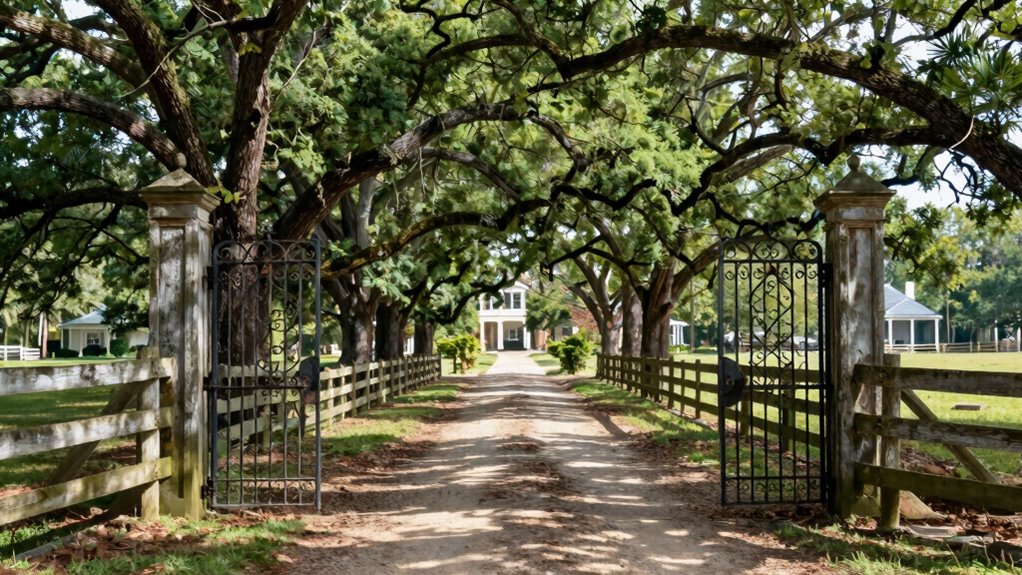

Fence lines, lane trees, and gates do more than mark boundaries; they tell stories of Southern heritage and history. You’ll notice how they reflect regional craftsmanship, social status, and land use through craftsmanship with wrought iron, wood, and stone. These features often serve as natural gateways, with ancient trees shaping the landscape. Preserved or restored, they embody regional character and legacy. Keep exploring to uncover more about their significance and what they reveal about Southern communities.
Key Takeaways
- Fence lines, lane trees, and gates serve as historical markers reflecting regional heritage and land use patterns.
- They symbolize social status, property ownership, and community identity across Southern landscapes.
- Architectural styles like wrought iron gates and ornate wooden fences showcase local craftsmanship and regional aesthetics.
- Lane trees, often ancient oaks or magnolias, create natural gateways and enhance landscape character.
- Preservation of these features maintains the cultural legacy and regional authenticity of Southern properties.
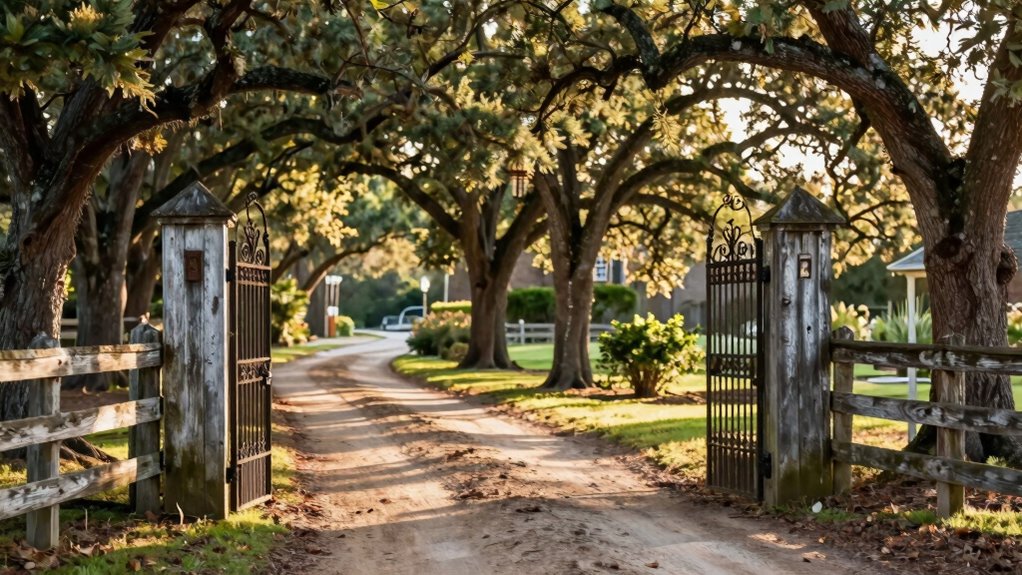
In the South, fence lines, lane trees, and gates serve as more than just boundaries—they tell stories of heritage and history. When you walk along these features, you’re traversing a living record of the region’s past. These elements weren’t just functional; they embodied the social, economic, and architectural values of the communities that built them. The historical significance of fence lines, in particular, reveals much about land use, inheritance patterns, and social distinctions. For generations, they defined property ownership, often passing from one family to another, creating a tangible link to ancestors. Gates and lane trees also played a ceremonial role, signaling hospitality or social status, especially in plantation-era landscapes. As you observe these markers, you recognize their importance beyond mere demarcation—they are emblematic of identity and legacy.
Architectural styles of gates and fences reflect regional influences and the craftsmanship of their time. You might notice wrought iron gates with intricate scrollwork, showcasing the artistry of local blacksmiths. Wooden fences, often constructed from pine or cedar, reveal utilitarian design but sometimes include ornate detailing or craftsmanship that hints at affluence. Stone walls, common in older estates, speak to durability and the wealth of their owners. Lane trees, often ancient oaks or magnolias, serve as natural gateways that have stood for centuries, their sprawling branches forming canopies that provide shade and a sense of grandeur. These trees, often planted deliberately at property entrances, have their own architectural style—grand, stately, and resilient—becoming landmarks themselves. Over time, many of these trees and fences have been preserved or restored, maintaining the aesthetic and historical integrity of the landscape. Additionally, understanding the color accuracy of traditional materials and natural elements can deepen appreciation for the authenticity of these features. Moreover, preservation efforts contribute to maintaining the regional character and heritage significance of these landscapes. Recognizing the artisan craftsmanship involved in these features highlights the skill and artistry that defined regional design.
You can also appreciate how the architectural styles of gates and fences blend functionality with artistry. For example, a wrought iron gate with elaborate scrollwork not only marks the entrance but also demonstrates the craftsmanship and design sensibilities of the period. Wooden fences with turned posts and decorative caps reveal a focus on detail, often reflecting the wealth and taste of the landowner. These features are more than visual markers; they embody the regional identity and social fabric of the South. As you explore these boundary markers, you’re witnessing a blend of history, craftsmanship, and regional character. They remind you that behind every fence line, gate, or lane tree lies a story—one of legacy, style, and the enduring spirit of Southern heritage.
wrought iron gate with scrollwork
As an affiliate, we earn on qualifying purchases.
As an affiliate, we earn on qualifying purchases.
Frequently Asked Questions
How Did Fence Design Vary Across Different Southern States?
You’ll notice fence designs vary across southern states due to regional craftsmanship and fence symbolism. In some areas, you see simple wooden pickets reflecting practicality, while others feature ornate wrought-iron fences symbolizing status. These differences showcase local materials and cultural influences, emphasizing community identity. Regional craftsmanship influences fence styles, making each state’s fences distinct—whether functional or decorative—highlighting the diverse ways southern communities mark boundaries and express their heritage.
Were Lane Trees Used for Practical or Aesthetic Purposes?
Lane trees served both practical and aesthetic purposes, acting like living gateways that frame your drive. You see, they weren’t just about beauty; they provided shade and shelter, offering environmental benefits that cooled and protected. Their ornamental purposes made your property inviting, while their strategic placement helped define boundaries. These trees grew into silent guardians, blending function with art, shaping the Southern landscape into a lush, living corridor that’s both beautiful and beneficial.
What Materials Were Commonly Used for Gates in Historic Southern Properties?
You’ll find that historic southern property gates often featured materials like ornamental iron and wooden paddles. Ornamental iron added elegance and durability, making the gates both functional and decorative. Wooden paddles, on the other hand, provided a rustic, traditional look and were easier to customize. Combining these materials, owners created gates that balanced aesthetic appeal with practicality, reflecting the region’s charm and craftsmanship of the period.
How Did Property Boundaries Influence Community Relationships?
Boundary symbolism shaped community cohesion, shaping how you connect with neighbors and define shared spaces. Property boundaries create clear divisions yet foster a sense of identity, belonging, and respect. They serve as physical markers of trust and responsibility, influencing social interactions and neighborliness. When boundaries are respected, they strengthen community bonds; when ignored, they can lead to disputes. Ultimately, boundaries influence how you relate to others within your local landscape, shaping community harmony.
Are Any of These Historic Fences or Gates Still in Use Today?
Yes, some of these historic fences and gates are still in use today. You might see them incorporated into modern restoration projects or preserved as garden ornamentation. These structures often serve as charming reminders of the past, blending old craftsmanship with contemporary landscaping. By maintaining these fences and gates, you keep the historic charm alive while enhancing your property’s aesthetic appeal, connecting tradition with today’s design trends.
Conclusion
As you walk along these fence lines, lane trees, and gates, you’re crossing through time’s quiet whisper. Each post and branch whispers stories of southern charm, like guardians of memories standing sentinel. The land breathes history through its woven lines and leafy arches, inviting you to slow down and listen. In this tapestry of nature and tradition, you find a living portrait—a gentle reminder that history is etched in every fence and gate, waiting for you to discover.