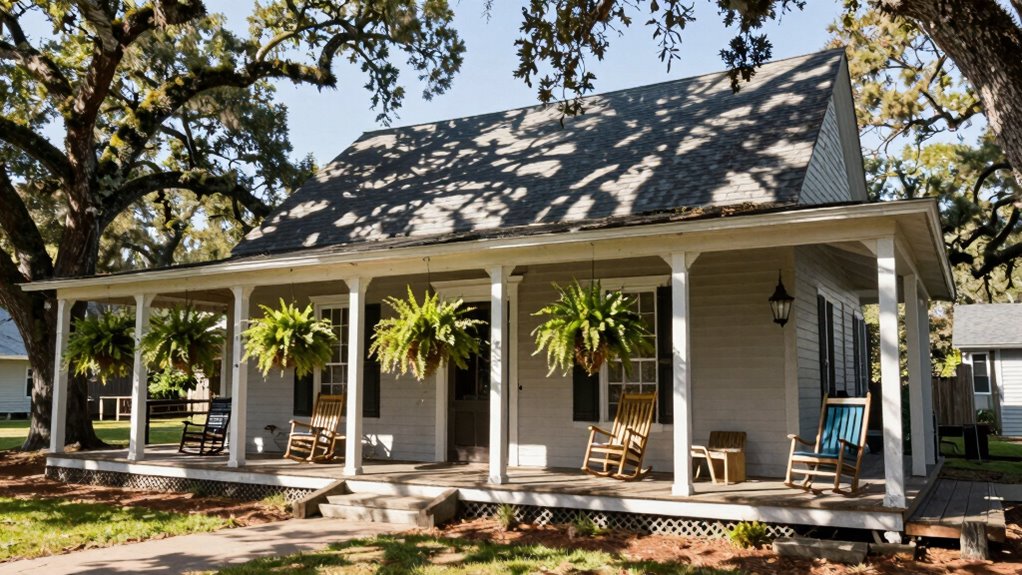

Deep porches in Southern farmhouses were essential because they provide much-needed shade and a cool outdoor space to protect your family from the intense heat. They also serve as a gathering spot for neighbors, fostering social bonds and community. These porches reflect regional craftsmanship and adapt to the climate, blending practicality with tradition. By keeping the inside cool and encouraging outdoor connections, deep porches embody resilience and Southern hospitality—more interesting details await those who keep exploring.

Get furniture and decor delivered free — and shop member deals
- Fast, free delivery on millions of items
- Access to Prime Big Deal Days deals on October 6–7
- Prime Video, Amazon Music and more included
Key Takeaways
- Deep porches provided essential shaded outdoor space to stay cool in the hot Southern climate.
- They offered a practical area for socializing, fostering community and neighborly interactions.
- Their design helped protect families from intense sun and heat, improving comfort and health.
- Regional craftsmanship and materials made porches durable and suited to local environmental conditions.
- They symbolized hospitality and Southern identity, serving as a space for relaxation and social bonding.
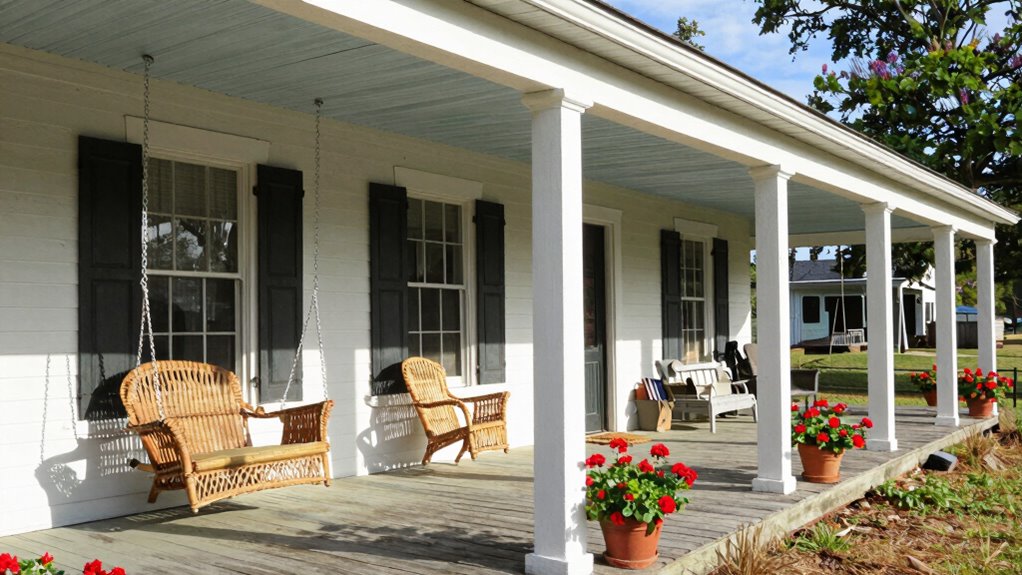
Have you ever wondered why porches are such a defining feature of Southern farmhouses? It’s because these structures are more than just architectural elements—they embody a rich history shaped by both practical needs and cultural values. Over time, the architectural evolution of porches in the South has prioritized comfort, community, and tradition. Originally, deep porches served as shaded outdoor living spaces that protected families from the scorching sun while offering a cool retreat during hot summer days. As construction methods improved and materials became more accessible, porches grew larger and more elaborate, reflecting a desire to create welcoming environments that extended the home’s social space outward. Their size and design weren’t arbitrary; they were deliberate choices meant to accommodate gatherings, foster neighborly interactions, and provide a shaded shelter from the intense Southern heat. Additionally, the regional climate played a significant role in shaping the practicality and design of these porches, making them an essential feature in Southern homes. These porches also became a space where regional craftsmanship was displayed, showcasing local skills and materials.
The cultural significance of these deep porches runs deep in Southern history. They’re more than just architectural features—they’re symbols of hospitality and community. A porch invites neighbors to stop by, share stories, and enjoy the outdoors without leaving the comfort of home. This sense of openness and friendliness has been passed down through generations, shaping Southern identity. People didn’t just use porches for leisure—they used them as the heart of social life, where daily conversations and meaningful connections happened under the shade of sprawling trees or beneath the ceiling fans that often hung overhead. The design of these porches also reflects a respect for tradition, blending practicality with aesthetic appeal. They often feature intricate woodwork, rocking chairs, and hanging plants, all reinforcing the idea that home is a sanctuary for relaxation and social bonding. Additionally, the architectural evolution of porches demonstrates how regional climate and cultural preferences influenced their size and style, making them a distinctive feature of Southern architecture. This evolution showcases the adaptability and resilience of Southern design, ensuring these structures remain relevant and functional through changing times. The design elements of these porches often incorporate regional craftsmanship and local materials, further emphasizing their cultural importance.
In many ways, the deep porch is a reflection of Southern resilience and adaptability. It grew out of necessity but became a cherished cultural symbol. As the architectural evolution of the region progressed, the porch remained a constant, a space where history, community, and comfort intersect. It’s a place where the boundary between inside and outside blurs, encouraging connection and leisure. Additionally, the shaded outdoor space provided by deep porches helped families stay cool and comfortable during the hot seasons, demonstrating their practical importance. Whether you realize it or not, every deep porch tells a story—of a warm climate, a hospitable culture, and a way of life rooted in tradition and shared experiences. That’s why, in Southern farmhouses, these porches aren’t just an architectural choice; they’re an enduring emblem of the region’s heart and soul.
outdoor rocking chairs for porch
As an affiliate, we earn on qualifying purchases.
As an affiliate, we earn on qualifying purchases.
Frequently Asked Questions
How Did Porch Designs Evolve Over Time in Southern Farmhouses?
You’ll notice porch designs evolved from simple, functional structures to more ornate, welcoming spaces. Over time, porch ornamentation like intricate woodwork and decorative trim became popular, reflecting personal style. You also see a focus on porch privacy, with screens and partial enclosures added for comfort. These changes show how southern farmhouses adapted their porches, balancing aesthetic appeal with practicality for social gatherings and relaxation.
Were There Specific Materials Preferred for Porch Construction in the South?
Imagine the porch as the soul of your southern home, quietly reflecting its character. You prefer porch construction materials like wood and brick, echoing southern architectural preferences for durability and charm. Wood, often cedar or pine, offers warmth and ease of customization, while brick provides resilience against the elements. These materials symbolize tradition and resilience, embodying the spirit of southern farmhouses that are built to withstand time and weather.
How Did Porches Influence Social Interactions on Southern Farms?
You find that porches fostered social interactions on southern farms by creating inviting spaces for conversation and community. You follow front porch etiquette, like greeting neighbors and hosting gatherings, which strengthened bonds. Porch decoration trends also reflect personality and hospitality, making your space welcoming. These deep porches became essential for daily life, offering a comfortable spot to connect with neighbors while enjoying the outdoors.
Did Climate Differences Affect Porch Size and Style Across Regions?
Yes, climate differences dramatically shaped porch sizes and styles across regions. You notice that in the South, climate adaptation led to deep, shaded porches perfect for cooling and socializing. In contrast, northern regions favored smaller, less shaded porches suited for colder weather. These regional variations reflect how homeowners tailored their porches to survive and thrive in their unique environments, creating distinct architectural identities that tell a story of climate-driven design choices.
What Are Modern Adaptations of Traditional Southern Farmhouse Porches?
Modern adaptations of traditional southern farmhouse porches include adding cozy porch swing traditions and integrating outdoor kitchen trends. You might find yourself relaxing on a swing, enjoying the breeze, or cooking meals outside to embrace outdoor living. These updates blend classic charm with contemporary convenience, making your porch a perfect space for gatherings and relaxation while preserving the timeless southern aesthetic.
Conclusion
As you step onto the deep porch of a Southern farmhouse, you’re not just crossing a threshold—you’re entering a sanctuary where history whispers through the gentle swing of a porch swing and the warm sun paints stories on weathered wood. These porches are more than mere extensions; they’re the heartbeat of community, patience, and resilience. In their shade, life slows, and every breeze carries the timeless melody of southern life, weaving stories into the fabric of your soul.
Fall Picks
fall essentials
As an affiliate, we earn on qualifying purchases.