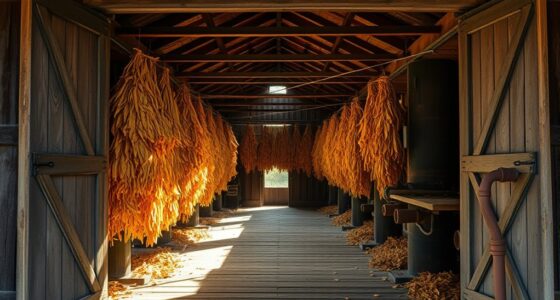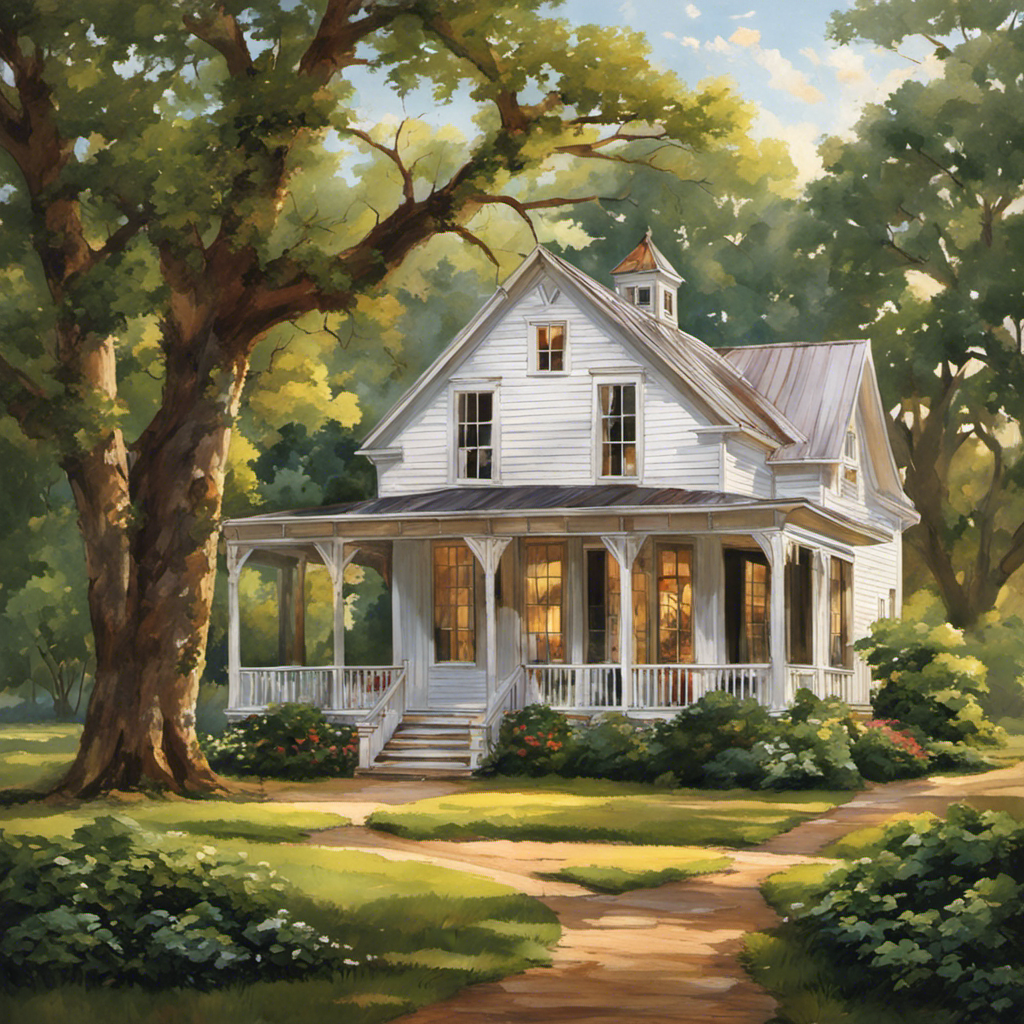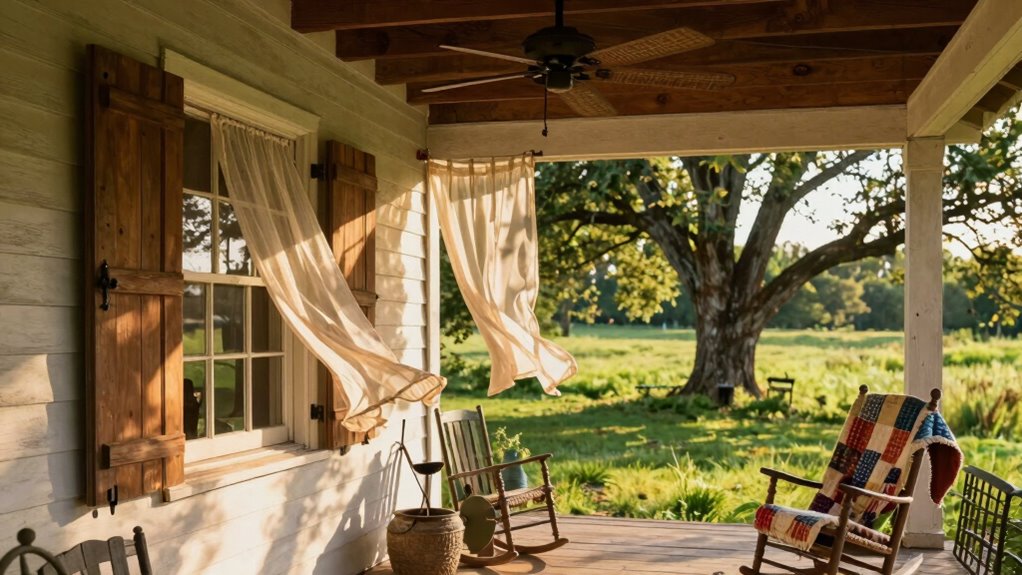

Southern farm families designed their homes to optimize airflow throughout the year. They used high ceilings, wide porches, and strategically placed windows that could be opened or closed seasonally. Cross-ventilation and transom vents helped release warm air in summer, while closing windows kept warmth in during winter. They also modified door and window positions based on changing weather. By understanding these clever techniques, you’ll uncover how they created comfortable, energy-efficient homes all year long.

Get furniture and decor delivered free with Prime
- Fast, free delivery on millions of items
- Prime Video, Amazon Music and more included
- Member-only deals all year
Key Takeaways
- They opened windows and doors seasonally to promote cross-ventilation and regulate indoor temperatures.
- High ceilings and transom windows allowed warm air to rise and escape during hot summers.
- Wide porches provided shaded outdoor spaces, reducing indoor heat gain.
- Adjusting window and door placements seasonally optimized airflow and comfort.
- Use of natural materials like brick and wood enhanced insulation and breathability year-round.
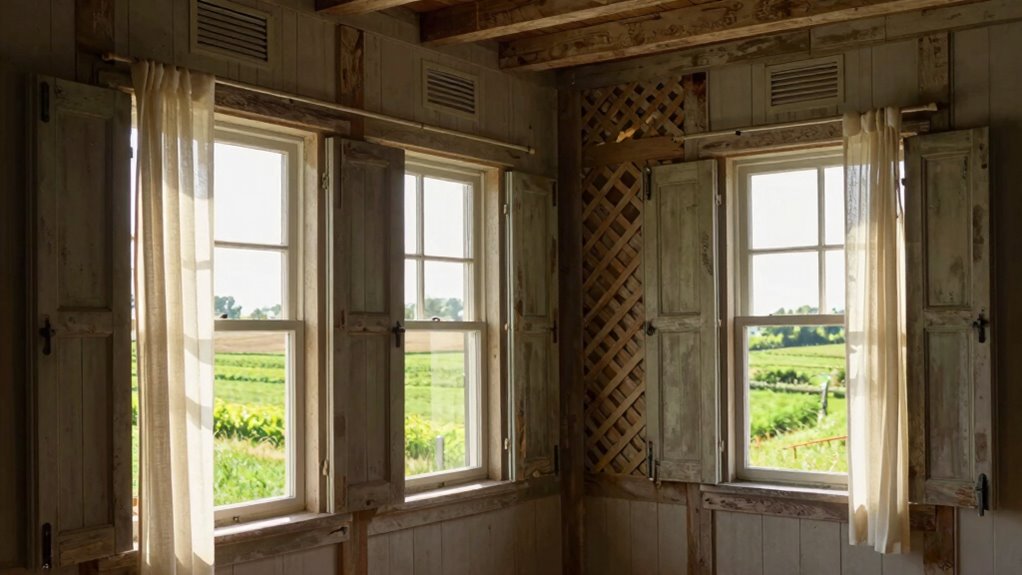
Farm homes often face the challenge of maintaining comfortable temperatures throughout the year, especially in areas with extreme seasonal changes. You might notice that historic architecture plays a significant role in how these homes adapt to different weather conditions. Many of these structures were built with natural ventilation in mind, using design features that promote airflow without relying on modern climate control systems. These features include high ceilings, wide porches, and strategically placed windows that can be opened or closed depending on the season. Such architectural elements help you take advantage of prevailing breezes and natural drafts, creating a cooler environment during hot months and trapping warmth during colder seasons. Additionally, residents often used seasonal adjustments to modify window and door positions, further optimizing airflow based on the weather. Incorporating ventilation techniques has also been essential in maintaining indoor comfort across seasons. You’ll find that ventilation techniques are central to the way Southern farm families have historically managed indoor climate. For example, cross-ventilation is a common method, where windows or vents on opposite sides of a room are opened to allow air to flow freely through the space. This technique works best when outdoor temperatures are milder, and you can adjust window positions to maximize airflow while minimizing drafts. Additionally, some homes feature transom windows or vents near the ceiling, which help release rising warm air during summer while preventing heat loss in winter. These small but effective modifications are rooted in the practical knowledge passed down through generations, often linked to the region’s historic architecture. Recognizing how passive cooling methods contribute to energy efficiency offers insight into sustainable design principles that are still relevant today. Using natural materials like local brick and wood not only enhances insulation but also improves breathability, supporting airflow and indoor comfort. You might also notice how the layout of these homes often emphasizes natural airflow, facilitating the movement of fresh air through open spaces and reducing reliance on artificial cooling or heating methods. Over time, farm families learned to adapt their homes by incorporating these ventilation techniques, making them more comfortable year-round. They understood how to harness the environment rather than fight it, often refurbishing or modifying historic structures to improve airflow. Recognizing these traditional design principles reveals the clever ways in which these houses were tailored to their environment. By embracing these traditional principles, you can better appreciate the ingenuity behind historic farm homes and how they continue to serve as models for sustainable living.
As an affiliate, we earn on qualifying purchases.
Frequently Asked Questions
How Did Farm Families Determine Optimal Airflow Patterns?
You determine ideal airflow patterns by observing natural ventilation and using wind barriers. Farm families monitor how air moves through their spaces, noting breezes and stagnation points. They strategically position wind barriers like trees or fences to channel airflow effectively, enhancing comfort and reducing heat. By understanding prevailing winds and adjusting barriers accordingly, you create a well-ventilated environment that stays comfortable throughout the year.
Were There Any Traditional Materials Used for Airflow Adaptations?
Did you know that many farm families relied on traditional materials like clay, wood, and thatch for airflow adaptations? These materials were essential in creating natural ventilation through airflow techniques such as vents, open windows, and strategically placed gaps. They helped regulate indoor temperatures and keep spaces cool without modern air conditioning. Using local, accessible materials, families crafted effective solutions that responded to their climate and resources.
How Did Airflow Adaptations Impact Daily Farm Chores?
You find that natural ventilation and seasonal adjustments considerably ease your daily farm chores. During hot months, you open windows and vents to promote airflow, keeping interiors cool without extra fuss. In colder seasons, you seal openings or use strategic shading to maintain warmth. These airflow adaptations reduce your reliance on artificial cooling or heating, making chores more comfortable and energy-efficient year-round.
Did Airflow Modifications Vary by Farm Size or Crop Type?
Yes, airflow modifications varied by farm size and crop type. Larger farms often used advanced farm equipment to enhance airflow, ensuring better crop yield and healthier plants. Smaller farms relied on simpler methods like natural ventilation, tailored to specific crops. These adaptations helped maintain consistent airflow, reduce humidity, and improve overall productivity, regardless of farm size. Your understanding of these differences highlights how farmers maximize conditions for ideal crop growth.
Were There Community Collaborations in Developing These Airflow Solutions?
Think of the community efforts as a tapestry woven with local innovations, each thread representing a family’s unique approach. Yes, these families often collaborated to develop airflow solutions, sharing ideas and experimenting together. Their collective ingenuity transformed simple spaces into breezy havens, proving that when neighbors work hand-in-hand, they create solutions that breathe new life into farmhouses year-round. Their shared efforts truly illustrate the power of community in innovation.
Conclusion
As you reflect on these old farm homes, you see how their clever designs brought comfort amid hardship. The cool breezes in summer stand in stark contrast to the biting cold of winter, yet both are met with resilience and ingenuity. These adaptations remind you that even in the toughest seasons, human spirit and resourcefulness can create a sanctuary. Your appreciation deepens for their quiet strength, a demonstration of enduring hope in every gust of wind.
Evergreen bestsellers Picks
bestsellers
As an affiliate, we earn on qualifying purchases.