
Shelterbelts started as simple barriers to protect crops, livestock, and land from harsh weather and predators. Over time, they evolved into essential survival tools that support wildlife, prevent soil erosion, and improve microclimates. These natural barriers help conserve soil, boost ecological health, and even combat climate change through carbon storage. By integrating shelterbelts into land management, you create resilient ecosystems. Keep exploring how these versatile structures continue to strengthen ecosystems and sustainable practices worldwide.
Key Takeaways
- Shelterbelts initially protected crops and livestock from harsh weather and predators, essential for survival in difficult environments.
- Over time, they evolved to provide wildlife habitats, supporting biodiversity and ecological resilience.
- They help prevent soil erosion, maintain land fertility, and combat desertification, crucial for sustainable agriculture.
- Shelterbelts moderate microclimates, reduce temperature extremes, and improve air quality, aiding crop and community resilience.
- Their multifunctional role enhances ecosystem health, supporting long-term survival beyond simple land protection.
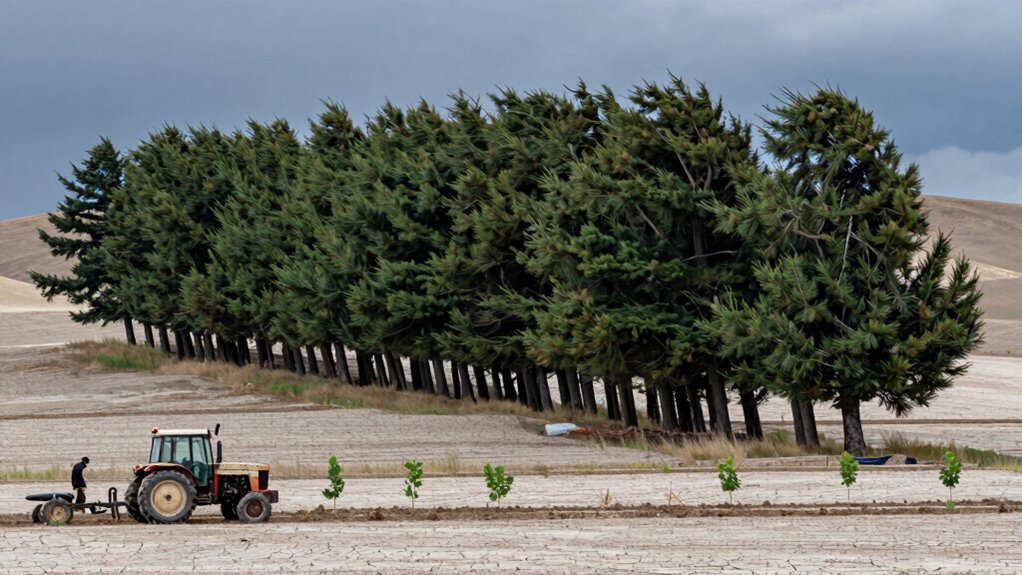
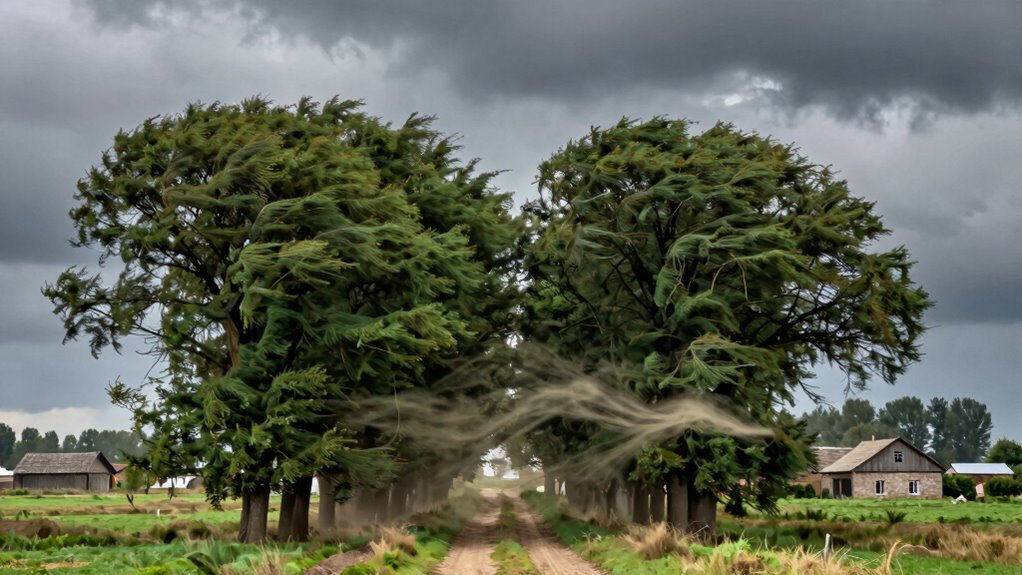
Shelterbelts have long been indispensable tools for survival, especially in harsh environments where protection from wind, weather, and predators can make the difference between life and death. Originally, they were planted as simple barriers to shield crops and livestock from the relentless forces of nature. But over time, their role has expanded far beyond mere landscaping; they’ve become critical for maintaining wildlife habitats and conserving soil. When you plant a shelterbelt, you’re not just creating a windbreak—you’re fostering an environment that supports diverse species and protects the land’s health.
Shelterbelts protect land, support wildlife, and conserve soil for a resilient, thriving environment.
In these dense rows of trees and shrubs, wildlife finds refuge. Birds, insects, and small mammals use shelterbelts for nesting, feeding, and shelter from predators. You might notice songbirds flitting through the branches or rabbits darting into the underbrush. These habitats help sustain local biodiversity, especially in areas where natural ecosystems have been disrupted. As you nurture these shelterbelts, you create essential corridors that connect fragmented habitats, allowing wildlife to move freely and thrive. This not only benefits the animals but also helps maintain ecological balance, which is fundamental for the resilience of the entire landscape.
Beyond supporting wildlife, shelterbelts are imperative for soil conservation. In open landscapes, wind can strip away valuable topsoil, leading to erosion and reduced land productivity. When you establish a well-placed shelterbelt, you reduce wind speed at the ground level, which greatly diminishes soil loss. This protection preserves the land’s fertility, ensuring that crops grow healthier and more sustainably. Over time, the shelterbelt acts as a natural barrier against soil erosion, allowing the land to retain moisture and nutrients. This process is especially important in areas vulnerable to desertification or frequent droughts. By planting shelterbelts, you’re actively working to preserve the soil’s integrity, making the land more resilient against environmental pressures. Additionally, understanding the importance of ecological balance helps emphasize the role of shelterbelts in supporting overall ecosystem health. Properly managed shelterbelts can also contribute to climate change mitigation by sequestering carbon in biomass and soil. As research advances, the ability of shelterbelts to capture carbon becomes increasingly recognized as vital for climate resilience.
Moreover, shelterbelts contribute to a more stable microclimate. They can moderate temperature extremes, reduce frost risk, and improve air quality. These benefits help farmers and landowners sustain agricultural productivity while simultaneously supporting local ecosystems. Additionally, tracking gear can be used to monitor wildlife movement within these habitats, providing valuable data for conservation efforts. As you see, shelterbelts serve as multifunctional tools—protecting crops, supporting wildlife, and conserving soil—making them far more than just a landscape feature. They become a cornerstone of sustainable land management, ensuring that communities and ecosystems can endure and flourish amid changing environmental conditions. In essence, planting and maintaining shelterbelts transforms your land into a resilient, thriving environment that sustains life on many levels.

As an affiliate, we earn on qualifying purchases.
Frequently Asked Questions
How Do Shelterbelts Improve Soil Health Over Time?
Shelterbelts improve soil health over time by enhancing soil nutrients and boosting microbial activity. As they reduce wind erosion, they prevent nutrient loss, allowing nutrients to accumulate and enrich the soil. The plants in shelterbelts create a favorable environment for microbes, which break down organic matter and release essential nutrients. This process promotes healthier soil, leading to better crop yields and a more resilient farming system.
Can Shelterbelts Reduce Wind Erosion in Extreme Weather?
Yes, shelterbelts greatly reduce wind erosion during extreme weather. Their windbreak effectiveness depends on proper shelterbelt maintenance, like timely pruning and planting dense, healthy trees. When maintained correctly, shelterbelts slow wind speed, protect soil, and prevent erosion, especially during storms or droughts. Regular upkeep ensures they remain effective over time, making them an essential tool for safeguarding land against the destructive power of extreme weather conditions.
What Types of Trees Are Best for Shelterbelts in Different Climates?
Imagine a windstorm approaching, and your shelterbelt standing strong. You choose tree species carefully, tailoring your selection to your climate. In cold regions, hardy pines and spruces thrive, providing windbreaks and refuge. In warmer areas, fast-growing conifers or hardy deciduous trees like oaks excel. Your climate adaptation strategies guarantee the right tree species shield your land, offering resilience against extreme weather and transforming your shelterbelt into a crucial survival tool.
How Do Shelterbelts Affect Local Wildlife Habitats?
Shelterbelts positively impact local wildlife habitats by creating essential wildlife corridors that connect fragmented areas, allowing animals to move safely and find food or mates. They also enhance habitat diversity, offering shelter and nesting sites for various species. As you plant and maintain shelterbelts, you support healthier ecosystems, helping wildlife thrive amidst changing climates and human activity. Your efforts contribute considerably to sustaining local biodiversity and ecological balance.
Are Shelterbelts Cost-Effective for Small Farms?
Yes, shelterbelts are cost-effective for small farms because the economic benefits outweigh maintenance costs. While some worry about initial expenses, shelterbelts reduce wind erosion, lower heating costs, and protect crops, leading to higher yields and savings over time. The long-term gains in productivity and environmental health make shelterbelts a smart investment, providing farmers with both economic benefits and a sustainable, natural shield against harsh weather conditions.
Conclusion
You might think shelterbelts are just for scenery or property value, but they’re much more than that. They’re essential survival tools that protect you from harsh weather, soil erosion, and even help conserve water. So, next time you see a row of trees, remember—they’re working hard to keep you safe and resilient. Embracing shelterbelts isn’t just about aesthetics; it’s about securing your future and thriving against nature’s challenges.