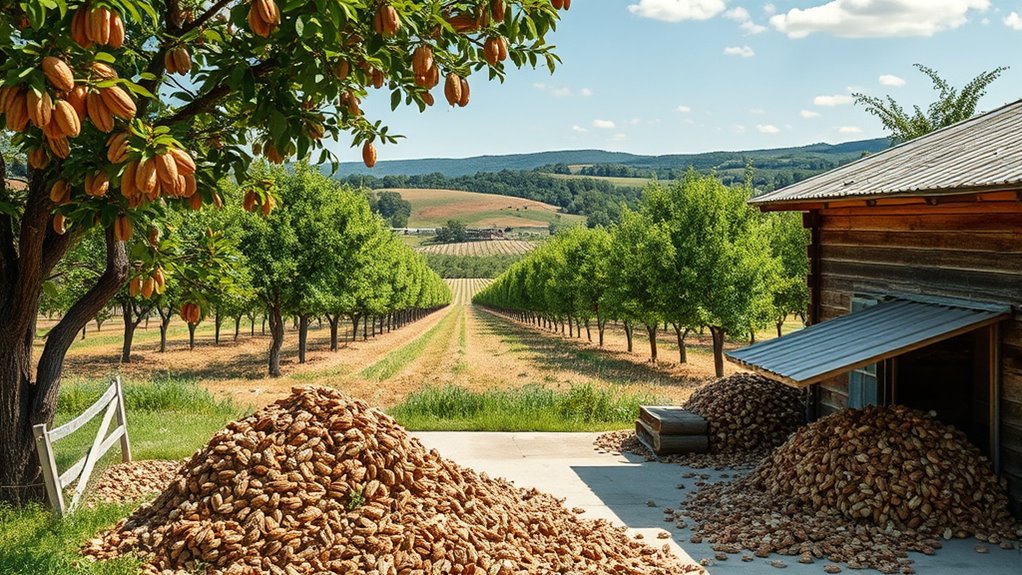

Pecan orchards and shelling houses work together to produce high-quality nuts efficiently. In orchards, choosing the right varieties, managing pests, and harvesting at the right time help guarantee healthy trees and good yields. After harvest, nuts are cleaned, hulled, and dried before being sent to shelling houses, where equipment speeds up processing and preserves nut quality. If you want to understand how proper practices boost production and quality, there’s more to explore below.
Key Takeaways
- Proper orchard management ensures healthy trees and optimal nut production for high-quality harvests.
- Harvest timing and techniques, like hull splitting and mechanical shakers, are crucial for nut quality.
- Prompt hull removal and drying preserve pecan flavor and prevent spoilage before shelling.
- Mechanical de-hullers and shelling equipment streamline processing in shelling houses for efficiency.
- Maintaining equipment and infrastructure supports smooth transition from orchard harvest to shelling operations.
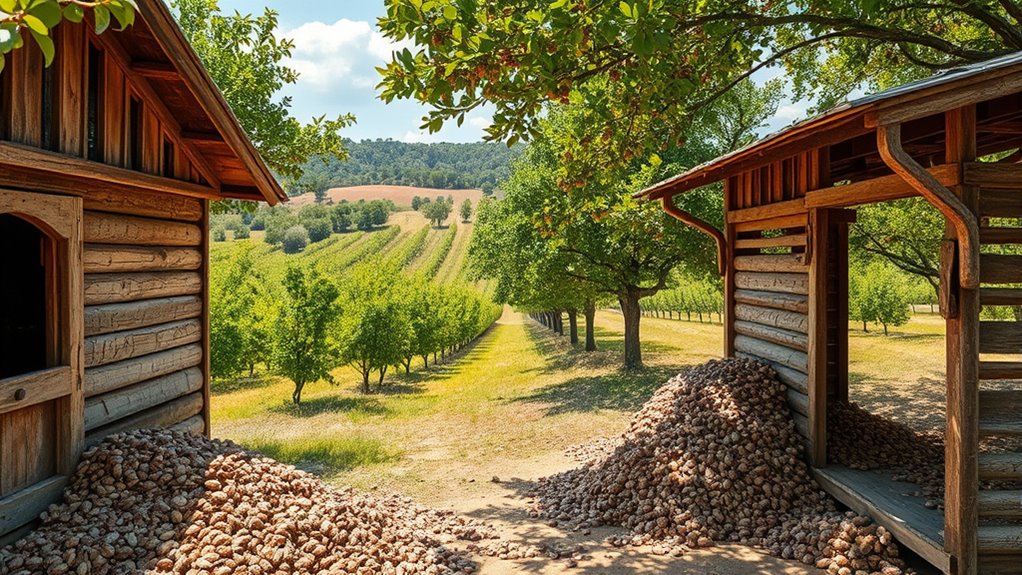
Pecan orchards and shelling houses have long been central to the agricultural landscape, offering a glimpse into the region’s rich farming traditions. If you’re involved in pecan cultivation, understanding the nuances of harvesting techniques and orchard management is essential for a successful harvest. Your goal is to maximize yield while maintaining the health and longevity of your trees. Proper orchard management begins with selecting the right variety suited to your climate and soil conditions. Regular pruning encourages strong branch development, which not only supports healthy growth but also makes harvesting easier. You need to monitor soil nutrients and implement fertilization schedules that promote consistent nut production. Integrated pest management also plays a critical role in orchard management, helping you control pests and diseases without harming the environment.
Selecting the right pecan variety and proper orchard management ensures healthy trees and a successful harvest.
As harvest time approaches, your focus shifts to harvesting techniques that ensure the nuts are collected efficiently and without damage. Pecan harvesting typically occurs when the hulls split open naturally, signaling that the nuts are mature. You might use mechanical shakers to loosen the nuts from the branches, especially in larger orchards, which saves time and labor. For smaller operations, hand-picking remains effective, giving you more control over the process and reducing the risk of damage to the nuts. Once the nuts are gathered, you need to promptly remove the hulls to prevent mold and decay. This often involves mechanical de-hullers or manual removal, depending on your scale. After harvesting, proper handling and drying are essential; pecans must be dried to a specific moisture content to guarantee quality and prevent spoilage.
Efficient orchard management also involves planning your harvest schedule to avoid overlapping with adverse weather conditions, which can compromise the nuts’ quality. You should keep detailed records of your harvests and pest control measures, so you can refine your techniques over time. This ongoing process helps improve yield and nut quality year after year. Additionally, maintaining equipment and regularly inspecting your orchard ensures that you’re prepared for each harvest season. A well-managed orchard not only produces better pecans but also extends the productive lifespan of your trees.
In essence, mastering harvesting techniques and orchard management is indispensable to thriving in the pecan industry. By paying close attention to tree health, timing your harvest precisely, and using the right tools, you set yourself up for a successful season. Your commitment to these practices ensures that your pecans reach the shelling houses in prime condition, preserving their flavor and value for consumers. With dedication and the right knowledge, you can turn your pecan orchard into a productive, sustainable operation that honors the region’s farming heritage.

Nutcrackers for Nuts, Nut Crackers for Pecans, Heavy Duty Nut Cracking Tools, Adjustable Pecan Cracker Sheller, HOFHTD Pecan Nut Cracker Opener Tool for Walnuts Pecans Hazelnuts Almonds Brazil Nuts
Multifunction: Heavy duty nut cracker can easily crack almost all kinds of nuts including pecan, walnut, hazelnuts, almonds,…
As an affiliate, we earn on qualifying purchases.
As an affiliate, we earn on qualifying purchases.
Frequently Asked Questions
How Are Pecan Varieties Selected for Orchards?
You select pecan varieties by considering factors like climate, soil, and disease resistance to guarantee successful growth. Pecan varietal selection involves choosing types that suit your local conditions and market demand. To maximize orchard diversification, you plant a mix of varieties that ripen at different times, spreading out harvests and reducing risks. This approach helps you optimize yield, quality, and profitability over time.
What Is the Best Time to Visit a Pecan Orchard?
They say “timing is everything,” so the best time to visit a pecan orchard is during the harvesting season, usually in late fall. This is when the nuts are falling from the trees, and you can see the full bounty. Visiting during this period offers a prime timing to witness the harvest process, enjoy fresh pecans, and experience the orchard’s vibrant environment at its peak.
How Do Shelling Houses Ensure Nut Quality?
Shelling houses guarantee nut quality through strict quality control measures and precise nut grading processes. You’ll see them carefully inspect each pecan for size, shell integrity, and kernel condition. They also remove damaged or inferior nuts, maintaining high standards. This attention to detail guarantees that only top-quality pecans reach consumers, preserving flavor and freshness. By implementing these practices, shelling houses consistently deliver premium nuts that meet industry and customer expectations.
Are Pecan Orchards Sustainable and Eco-Friendly?
Imagine you’re in the 21st century, where pecan orchards are increasingly sustainable and eco-friendly. You can help reduce environmental impact by supporting farms that prioritize water conservation and use eco-conscious practices. Many growers now adopt drip irrigation and integrated pest management, conserving resources and protecting ecosystems. So, yes, pecan orchards are becoming more sustainable, allowing you to enjoy your favorite nuts while minimizing your ecological footprint.
What Career Opportunities Exist in Pecan Shelling Facilities?
You can pursue pecan sheller careers, working directly on the production line or in quality control. Shelling plant management offers opportunities to oversee operations, improve efficiency, and guarantee safety standards. You might also find roles in equipment maintenance, packaging, or logistics within the facility. With experience, you could advance to supervisory or managerial positions, contributing to the plant’s success while developing valuable skills in food processing and operations management.

Mechanical Heavy Duty Nut Cracker Walnut Pecan Hazelnut Sheller with Storage Tray by inDomit
Unique design, mechanical nut cracker simple practical and substantial
As an affiliate, we earn on qualifying purchases.
As an affiliate, we earn on qualifying purchases.
Conclusion
Just like the legendary pioneers who tamed the wild West, you now hold the key to preserving the legacy of pecan orchards and shelling houses. These traditions, like the great stories of old, connect us to nature’s bounty and human perseverance. By supporting local farms and embracing this heritage, you become part of a timeless journey—one that echoes the spirit of explorers forging new paths. Keep the story alive, and let the nuts of tomorrow be your legacy today.

Geesta 2/3/4-Tier Upgraded Collapsible Cooling Rack with Adjustable 3 Setting Design Stackable Roasting Cooking Drying Wire Cooling Rack for Cookies Baking Gifts for Women
【Collapsible 4 tier Cooling Rack】 Features a sturdy construction with a collapsible & adjustable design. Geesta wire cooling…
As an affiliate, we earn on qualifying purchases.
As an affiliate, we earn on qualifying purchases.

GARDEN WEASEL Medium Nut Gatherer Roller – Nut Collector Tool for Pecans, Hickory Nuts, Golf Balls and More – Yard Picker Upper with Durable Steel Cage and Ergonomic Handle – Newest Model
NO BENDING REQUIRED Easily collect pecans, hickory nuts, golf balls, and other objects sized 3/4" to 2" with…
As an affiliate, we earn on qualifying purchases.
As an affiliate, we earn on qualifying purchases.