To make your outdoor shed last longer, regularly inspect and repair exterior surfaces, especially after harsh weather. Keep the exterior in good condition by sealing gaps, applying weather-resistant paint, and fixing damage promptly. Organize your interior to reduce clutter and pests, and maintain the surrounding yard by removing debris and weeds. Consistent upkeep and pest prevention will extend your shed’s lifespan, and with more tips, you can keep it in top shape for years to come.

Get furniture and decor delivered free — and shop member deals
- Fast, free delivery on millions of items
- Access to Prime Big Deal Days deals on October 6–7
- Prime Video, Amazon Music and more included
Key Takeaways
- Conduct regular inspections and prompt repairs to prevent structural damage and water infiltration.
- Maintain exterior surfaces with weather-resistant coatings and seal gaps to protect against the elements.
- Keep the surrounding yard clear of debris, weeds, and tall grass to reduce pest habitats.
- Organize interior storage to minimize clutter and identify pest signs early.
- Apply ongoing pest prevention measures, including sealing entry points and using natural repellents.

Maintaining your outdoor storage shed is crucial to guarantee it remains functional and lasts for years to come. A well-kept shed supports garden organization, making it easier to find tools and supplies when you need them. Regular maintenance also plays a key role in pest prevention, keeping rodents, insects, and other unwanted visitors at bay. When you take proactive steps, you protect your investment and ensure your outdoor space stays tidy and pest-free.
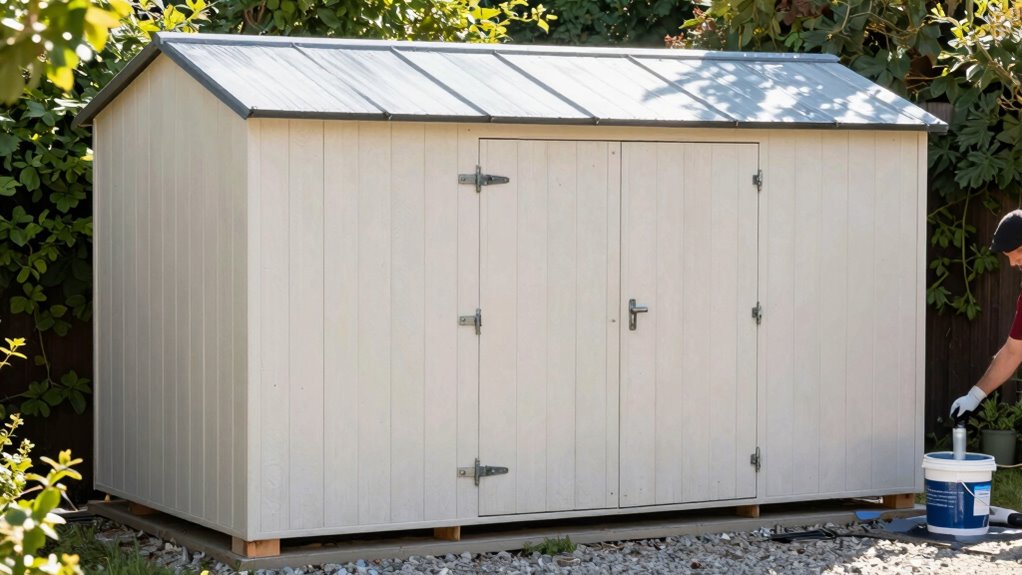
Start by inspecting your shed periodically, especially after harsh weather. Look for any signs of damage to the roof, walls, or foundation, and repair them promptly to prevent leaks and structural issues. Keeping your shed’s exterior in good condition helps preserve its integrity and prevents pests from entering through gaps or cracks. A fresh coat of weather-resistant paint or stain can add an extra layer of protection against the elements, extending the life of the shed. Additionally, understanding pest behavior can help you develop more effective prevention strategies.
Regularly inspect and repair your shed’s exterior to prevent damage and keep pests out.
Inside, prioritize garden organization to keep clutter under control. Use shelves, hooks, and storage bins to neatly arrange your tools, pots, and fertilizers. When everything has a designated spot, you minimize clutter that pests can hide in. Proper organization also makes it easier to spot any signs of pest activity early, such as chewed wires, droppings, or nests. Clear out old or unused items regularly to reduce clutter and eliminate potential hiding spots for pests. Furthermore, proper storage techniques can reduce the likelihood of attracting pests and pests’ nesting opportunities. Regularly cleaning and inspecting stored items can also help detect early signs of pest activity before infestations become severe.
Pest prevention is a continuous process. Keep the area around your shed clear of debris, tall grass, and weeds, which can harbor pests and attract rodents. Elevate storage items off the ground, especially wood or paper products, to prevent pests from nesting. Consider installing door sweeps and sealing any gaps around windows and vents to block entry points. Using natural repellents like peppermint oil or installing traps can further deter unwanted creatures. Routine checks and maintenance can significantly lower the chances of infestations developing. Incorporating outdoor environmental management can improve the effectiveness of pest prevention efforts around your shed.
As an affiliate, we earn on qualifying purchases.
Frequently Asked Questions
How Often Should I Repaint My Shed?
You should repaint your shed every 3 to 5 years, depending on paint quality and weather exposure. High-quality paint lasts longer and resists peeling. Before repainting, thoroughly prepare the surface by cleaning, scraping off loose paint, and sanding rough areas. This guarantees the new coat adheres well and provides lasting protection. Regular repainting with quality paint and proper surface prep keeps your shed looking great and extends its lifespan.
What Are Signs of Structural Damage to Watch For?
Like a vigilant guardian, you should watch for cracks, sagging, or warped walls that whisper of trouble. Check the foundation regularly for shifts or unevenness, and inspect the roof for signs of leaks or loose shingles. These are clues to underlying damage. Pay attention to doors that stick or windows that won’t close properly, signaling possible structural issues. Addressing these early keeps your shed sturdy and standing strong.
Can I Install Solar Lighting Inside My Shed?
Yes, you can install solar lighting inside your shed. First, make sure your solar panels are well-maintained, checking for dirt or debris that could reduce efficiency. Use indoor lighting options like LED fixtures compatible with solar power. Regular solar panel maintenance guarantees peak energy collection, providing reliable illumination. This way, you save on electricity bills and enjoy a well-lit shed without worrying about wiring or power sources.
How Do I Prevent Pests From Entering?
You can prevent pests from entering by sealing entry points and using pest deterrents. Visualize tiny gaps around doors, windows, or vents—these are invitations for unwanted guests. Carefully seal these openings with weatherproof caulk or foam. Add pest deterrent strips or traps near potential entry spots. Regularly inspect your shed for new gaps or signs of pests, keeping your storage space secure and pest-free.
What’s the Best Way to Store Seasonal Items?
To store seasonal items effectively, you should use weatherproofing techniques like sealing gaps and adding a waterproof roof to protect against moisture. Keep your items organized with labeled bins and shelving, making sure fragile items are cushioned. Regularly inspect your shed for leaks or pests, and adjust your storage methods as needed. This approach guarantees your seasonal items stay dry, safe, and easy to access year-round.
Conclusion
By sticking to this maintenance routine, you’ll guarantee your outdoor shed endures the test of time, much like the timeless castles of old. Regular inspections, cleaning, and quick repairs act as your trusted allies against the elements and wear. Remember, neglect is the arch-nemesis of longevity; don’t let your shed become a forgotten relic. With consistent care, your shed will serve you faithfully, standing strong for years to come — a true fortress of your outdoor endeavors.
Fall Picks
fall essentials
As an affiliate, we earn on qualifying purchases.