TL;DR

Get furniture and decor delivered free with Prime
- Fast, free delivery on millions of items
- Prime Video, Amazon Music and more included
- Member-only deals all year
A Hunker report describes a YouTube project by DIY with Andrew that turns one reclaimed wood pallet into a patio lounge chair. The build involves dismantling, sanding, cutting and assembling the wood; a follow-up video provides measurements after viewers asked for more detail.
A DIY with Andrew video shows how to turn one reclaimed wood pallet into a patio lounge chair, according to a report by Hunker, with a similar pallet upcycling project offering another way to reuse reclaimed wood. The project offers a way to reuse pallet boards for outdoor seating, though the build requires tools and careful measuring, and Hunker says a second video supplies dimensions that viewers wanted clarified.
The build starts with taking apart the pallet using a pry bar and hammer, then removing nails. The boards are sanded, measured and cut with a jigsaw before being assembled with a drill and wood screws. Hunker describes the project as not especially demanding but not quick, and says the main costs may be screws and sandpaper if the builder already owns the tools and can source pallets at no charge.
In the version described, the chair has four seat slats and three backrest slats. Andrew cuts notches in the seat slats so they fit around the armrests and uses a speed square to set the back supports. Hunker estimates from the video that the back appears to recline by about 15 degrees; that angle is an interpretation of the footage, not a measurement confirmed by Andrew in the first video.
Hunker says viewers who wanted more build information prompted a second YouTube video with exact measurements for the chair pieces. It advises recording those dimensions before starting, rather than relying only on the quicker original demonstration. The report also says the video does not show a paint or stain finish and recommends weatherproofing reclaimed wood for outdoor use.
A Low-Cost Route to Outdoor Seating
The project is relevant to people seeking inexpensive patio furniture or a use for spare pallets. If the wood and tools are already available, the materials needed to assemble the chair may be limited, according to Hunker. That does not mean every build will be free: access to suitable pallets, replacement hardware, sanding supplies and finishing products can add costs.
Reusing pallet boards also makes the chair’s condition and preparation part of the project, not an afterthought. Hunker notes that pallet wood can be porous and prone to cracking, and recommends a protective finish for outdoor exposure. A chair’s comfort and strength will depend on the wood, the cuts and the assembly; the source does not report testing the finished chair for load capacity or long-term durability.
Products Worth Considering
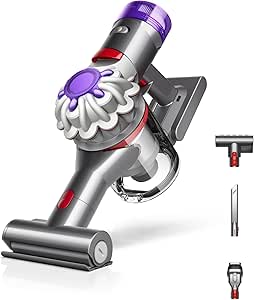
Dyson Car+Boat Cordless Handheld Vacuum

Philips Hue Festavia 130-Foot Indoor/Outdoor Smart String Lights, 500 LEDs

Dyson V8 Cyclone Cordless Vacuum
As an affiliate, we earn on qualifying purchases.
From Video Demonstration to Measured Plans
The source report presents the chair as one project in a broader pattern of DIY pallet reuse. It says Andrew appears to have access to a pile of pallets and may be making several chairs, but that is an inference from the footage rather than a confirmed production plan.
The first video moves through disassembly, sanding, cutting and assembly quickly. Hunker says the lack of detailed measurements led viewers to ask for more guidance, after which a second video gave exact dimensions. The report suggests a recline angle of roughly 10 to 15 degrees for a lounge chair, while identifying the 15-degree estimate for Andrew’s build as its own reading of the video. Those are recommendations and estimates, not verified specifications for every chair.
“This project is not demanding and only requires a few tools.”
— Hunker, describing the project
Build Costs and Durability Remain Unknown
The report does not provide a total project cost, build time, chair weight limit or independent durability testing. Its suggestion that the chairs could cost nearly nothing assumes free pallets and that the builder already has the listed tools; the source does not establish that those conditions apply to every reader.
It is also unclear what kind of pallets Andrew uses or how they were treated before being discarded. The source does not provide guidance on identifying pallet wood that is appropriate for furniture, nor does it confirm the exact back angle in the first video. The follow-up video is described as supplying measurements, but the report does not reproduce all of them in its text.
Check Measurements Before Cutting
Anyone following the project should consult the follow-up video for piece dimensions before cutting boards, as Hunker says it was made in response to requests for exact measurements. Builders will also need to inspect their materials, remove nails, sand rough surfaces and choose an outdoor finish suited to the chair’s exposure. The source does not announce a further video or a confirmed schedule for additional builds.
Key Questions
How many pallets does the chair use?
Hunker says Andrew’s chair is built from one old wood pallet, though the report does not specify whether every pallet will yield the same usable amount of lumber.
What tools are needed for the build?
The report lists a pry bar, hammer, sander, tape measure, jigsaw and drill, along with wood screws. It says the pallet must be dismantled, sanded, cut and assembled.
Where can builders find the chair measurements?
Hunker says a second DIY with Andrew video provides exact measurements after viewers asked for more detail. The report advises noting them before beginning the cuts.
Does the chair need weather protection?
Hunker recommends weatherproofing the wood because reclaimed pallet boards can be porous and prone to cracking. It mentions a topcoat that needs periodic reapplication or a penetrating marine-grade sealer, without testing either option on this chair.
Is the project completely free?
Not necessarily. Hunker’s near-free estimate assumes the builder has tools and can obtain pallets at no cost. Screws, sandpaper and a protective finish may add expenses if they are not already on hand.
Source: hunker.com