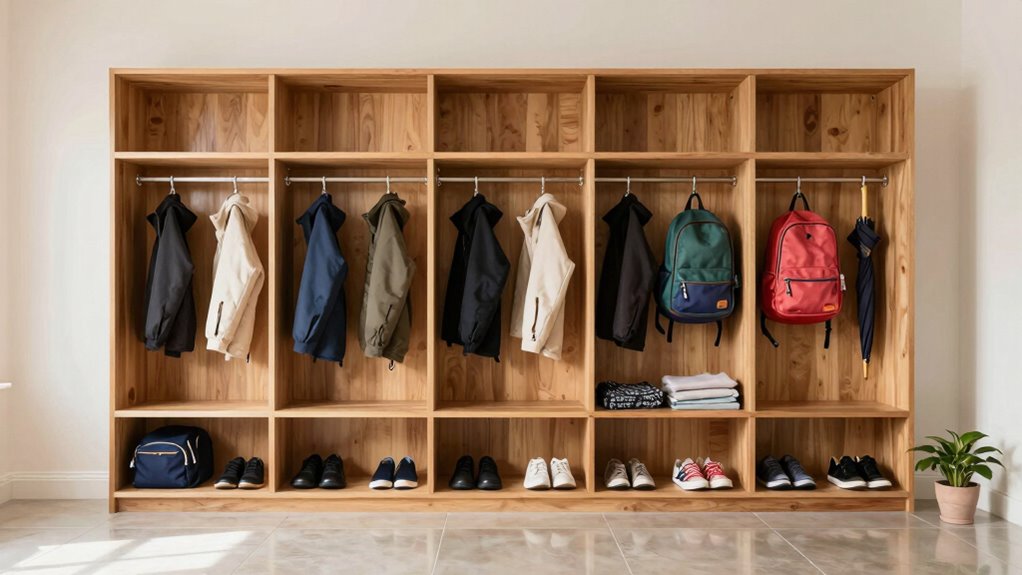

To keep chaos down in your mudroom, prioritize a smart layout that promotes smooth traffic flow and organized storage. Use hooks, cubbies, and shelves to maximize vertical space and keep items off the floor. Position entry points to naturally direct movement toward main storage, and keep pathways clear. Incorporate good lighting for visibility and safety, especially near storage zones. If you want to discover more tips, you’ll find helpful ideas to create a functional, clutter-free mudroom.
Key Takeaways
- Design designated zones for each activity to prevent clutter and confusion.
- Use vertical storage solutions like hooks and shelves to maximize space and reduce mess.
- Ensure clear, unobstructed pathways for smooth traffic flow and easy access.
- Incorporate proper lighting to enhance visibility and reduce clutter perception.
- Position storage near entrances for quick access and efficient organization.
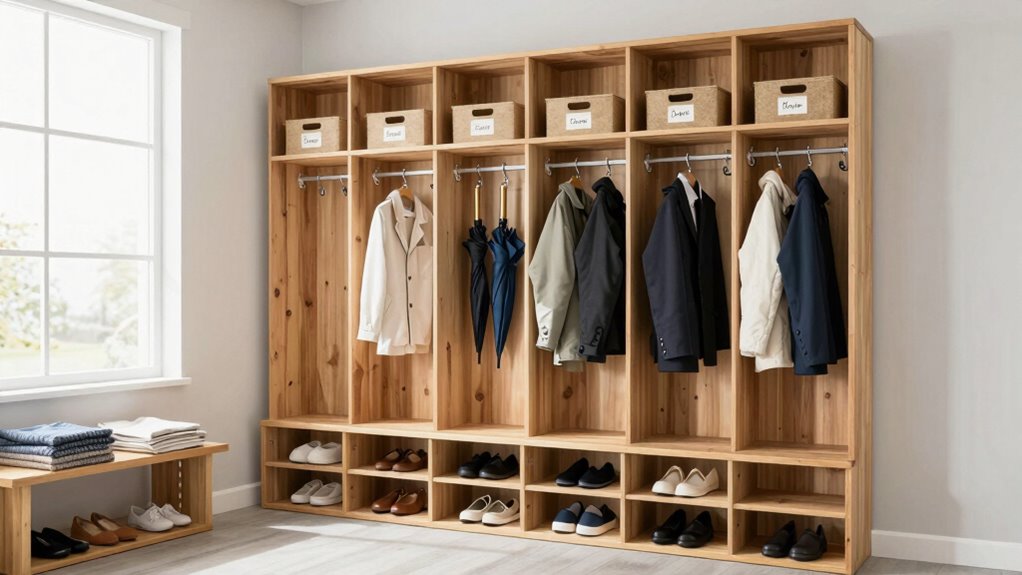
A well-designed mudroom can transform a chaotic entryway into an organized, functional space. When you focus on effective storage solutions, you make it easier to keep shoes, coats, and accessories tidy, preventing clutter from spreading into your home. Incorporate a variety of hooks, cubbies, and shelves to maximize the use of vertical space. For example, wall-mounted hooks allow you to hang jackets and bags without taking up floor area, while cubbies can hold shoes and smaller items. Using labeled bins or baskets within these storage units helps you quickly find what you need and maintain order. By thoughtfully selecting storage options, you create a dedicated area that minimizes clutter and keeps everything accessible. Additionally, choosing durable and versatile materials for your storage solutions can enhance durability and ensure longevity in a high-traffic space. Considering materials suitable for high-traffic areas can further extend the lifespan of your mudroom storage. Incorporating sustainable and eco-friendly options aligns with natural pools and other environmentally conscious backyard features.
Equally important is managing traffic flow within your mudroom. You want to design the space so that it’s easy to move in and out without bottlenecks or congestion. Position your main entry point in a way that directs traffic naturally toward the primary storage zones. Keep pathways clear of obstructions to allow smooth movement, especially during busy mornings or when multiple family members are entering or leaving simultaneously. Avoid placing large furniture or storage units in high-traffic zones that could impede quick access or create bottlenecks. Instead, opt for low-profile storage that fits seamlessly into the space, guiding traffic efficiently from the door to the rest of your home. Incorporating smart layout principles can further enhance overall functionality.
Lighting is another key element that influences traffic flow and usability. Well-placed lighting ensures visibility, allowing you to find your belongings quickly and safely. Use a combination of overhead lights and task lighting near storage areas to brighten dark corners and illuminate key zones. Good lighting discourages clutter buildup since you can easily see where everything belongs, making cleanup more straightforward. Additionally, considering the horsepower of electric dirt bikes in your planning can inspire creative ways to incorporate energy-efficient LED lighting solutions, ensuring your mudroom remains bright and welcoming without increasing energy costs. Proper lighting design can also add a layer of safety, especially for children or elderly family members navigating the space.
mudroom wall hooks and cubbies
As an affiliate, we earn on qualifying purchases.
As an affiliate, we earn on qualifying purchases.
Frequently Asked Questions
How Much Space Do I Need for a Functional Mudroom?
You should aim for at least 30 to 50 square feet for a functional mudroom. This space allows for effective storage solutions like hooks, cubbies, and benches, helping with space optimization. Consider vertical storage to maximize limited areas and keep clutter at bay. With the right layout, you’ll create a practical, organized mudroom that keeps chaos down and makes daily routines smoother.
Can a Mudroom Be Added to an Existing Small Entryway?
Yes, you can add a mudroom to a small entryway. To maximize space, use decorative wall hooks for coats and bags, keeping things organized and stylish. Incorporate compact shoe racks to store footwear without cluttering the area. Choose multi-functional furniture, like a small bench with storage, to create a practical mudroom that fits seamlessly into your existing entryway, keeping chaos at bay while adding a welcoming touch.
What Are Affordable Materials for Mudroom Benches and Storage?
Think of your mudroom as a canvas waiting for a budget-friendly masterpiece. Recycled wood offers a warm, rustic charm without draining your wallet, perfect for benches and hooks. Combine it with budget shelving options like plastic or metal units, which are durable and easy to maintain. This eco-conscious and cost-effective approach transforms your entryway into a functional, inviting space without sacrificing style or breaking the bank.
How Do I Customize a Mudroom for Multiple Family Members?
To customize a mudroom for multiple family members, focus on personalized storage options like individual hooks, cubbies, or labeled bins. This creates a family-friendly design that keeps everyone’s belongings organized. You can add adjustable shelves or seating to accommodate different heights and needs. Incorporate message boards or hooks for each person, making it easier for everyone to access their stuff quickly and maintain order effortlessly.
What Safety Features Should I Include in a Mudroom?
Safety first, and don’t put all your eggs in one basket. You should include childproofing essentials like outlet covers, corner guards, and secure storage for cleaning supplies. Ventilation improvements prevent musty smells and mold, creating a healthier space. Install non-slip mats and guarantee proper lighting to avoid accidents. Regularly check for hazards and keep emergency contacts handy. These steps keep your mudroom safe, functional, and a welcoming entryway for everyone.
overhead and task lighting for mudroom
As an affiliate, we earn on qualifying purchases.
As an affiliate, we earn on qualifying purchases.
Conclusion
Stick to these mudroom rules, and chaos will stay at bay. But what if one detail slips through the cracks? Will your organized space hold up, or will it unravel when you least expect it? The key is to stay vigilant, to keep refining your setup as your family grows and needs evolve. Because in the end, a well-designed mudroom isn’t just about order—it’s about creating a sanctuary where every item has its place, waiting for the next busy day.
storage bins and baskets for mudroom
As an affiliate, we earn on qualifying purchases.
As an affiliate, we earn on qualifying purchases.
slim low-profile mudroom storage furniture
As an affiliate, we earn on qualifying purchases.
As an affiliate, we earn on qualifying purchases.