
Mountain smokehouses and salt cures are essential for preserving meat and fish in rugged areas prone to wildfires. You’ll want to build smokehouses from fire-resistant materials, positioned safely away from fire risks, with features like thick walls, vents, and sloped roofs. By hanging or stacking food inside and controlling smoke with a steady fire, you can keep your supplies safe and flavorful. Keep exploring to discover more about these traditional techniques that adapt perfectly to mountain life.
Key Takeaways
- Mountain smokehouses use fire-resistant materials like stone and brick, strategically located to minimize wildfire risk.
- Proper interior design with racks and adjustable vents ensures efficient smoking and preservation of meats and fish.
- Salt curing extends shelf life and is often combined with smoking for enhanced flavor and preservation in remote regions.
- Construction on higher ground and clearing surrounding debris protect smokehouses from wildfires and environmental threats.
- Traditional methods maintain food security in rugged mountain environments, balancing safety, flavor, and preservation techniques.
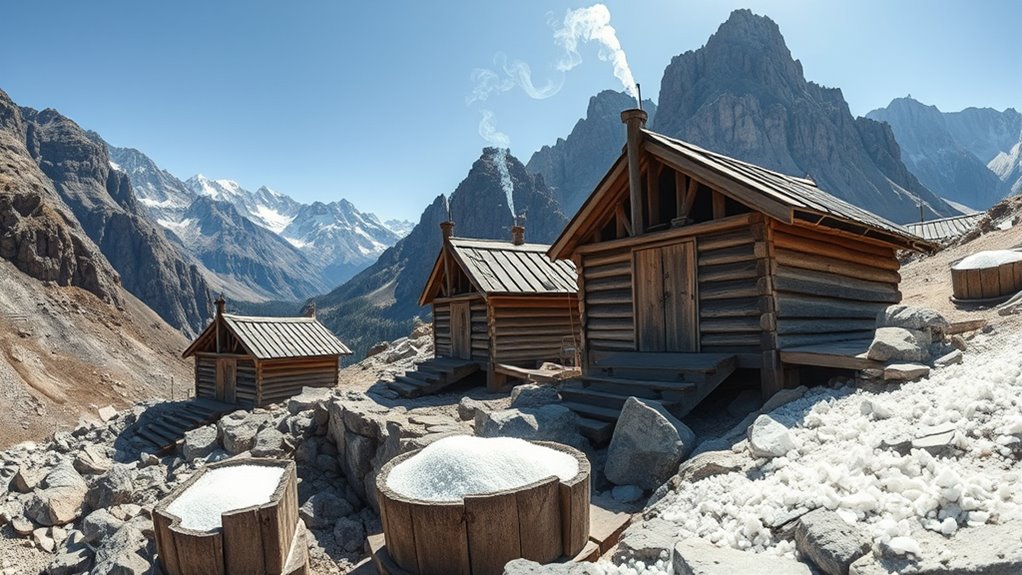
Nestled in the rugged mountain landscapes, smokehouses and salt cures have long been essential methods for preserving meat and fish. These traditional techniques allow you to extend the shelf life of your harvest without relying on modern refrigeration, which can be scarce or impractical in remote mountain regions. When it comes to wildfire preservation, knowing how to properly build and maintain a smokehouse is crucial. Wildfires can threaten your supplies, so understanding how to minimize risk while still effectively curing your meats is vital. Building a smokehouse with fire-resistant materials like stone or brick can help protect it from sparks and embers. Positioning your smokehouse on higher ground or away from dense forests reduces the likelihood of wildfire damage. Regularly clearing the surrounding area of dry brush and debris further minimizes risk, ensuring your preserved foods remain safe even during wildfire seasons.
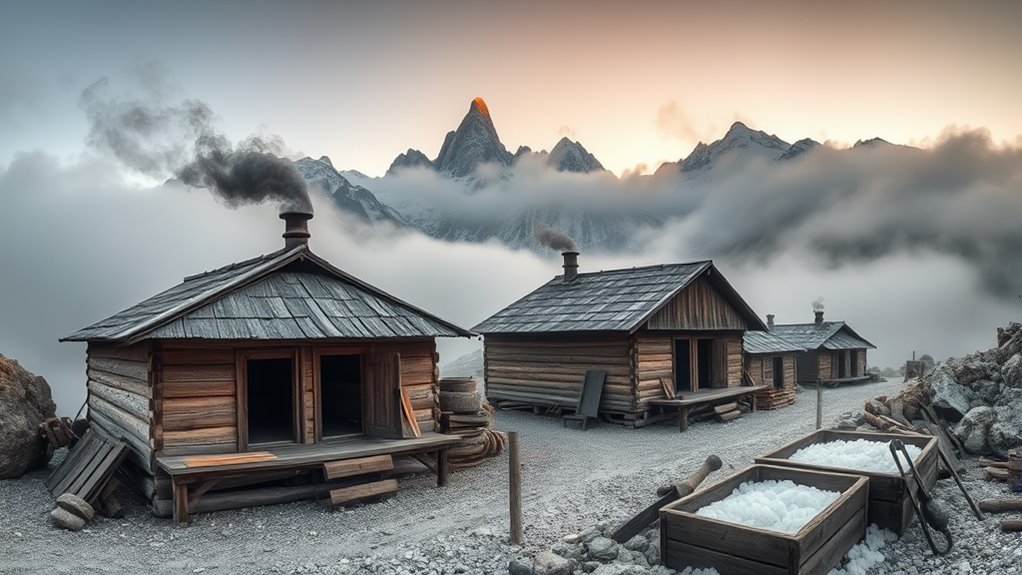
The architecture of a smokehouse is more than just a shelter; it’s a carefully designed structure optimized for efficient smoking and curing. Typically, you’ll find that traditional mountain smokehouses are built with thick walls to retain heat and smoke, which is essential for proper preservation. Ventilation is another key element—small, adjustable vents allow you to control airflow, ensuring the smoke circulates evenly around the meat or fish. This not only enhances flavor but also prevents mold and spoilage. The door placement and interior layout are designed for easy access and efficient hanging or stacking of your cured goods. In some regions, you’ll notice that smokehouses are built with a sloped roof to facilitate rain runoff, protecting your supplies from moisture. The design also considers the local climate, ensuring the interior remains at a steady temperature suitable for smoking without the need for electricity or complex machinery.
Inside your mountain smokehouse, you’ll want to set up racks or hooks for hanging meat, fish, or sausages. The smoke source—traditionally a wood fire—must be carefully managed to produce a consistent, gentle smoke that penetrates the curing product without overcooking it. The architecture supports this process by allowing smoke to fill the space uniformly. As you learn and adapt, you’ll discover that the combination of wildfire-aware construction and thoughtful smokehouse architecture can safeguard your food supplies against environmental threats while producing flavorful, preserved meats. This harmony of design and tradition ensures you can maintain your mountain lifestyle, even in the face of nature’s unpredictability.

RIDALIYA Garden Dump Cart, Heavy-Duty Utility Wagon with 900 lb Capacity, 5 Cu Ft Bed, 10" Pneumatic Tires, 180° Pivot Steering for Yard, Lawn, and Beach Use
Built Tough for Bigger Loads: With a sturdy dump bed measuring 37" x 20", this cart offers a...
As an affiliate, we earn on qualifying purchases.
Frequently Asked Questions
What Are the Health Benefits of Traditional Mountain Curing Methods?
Traditional mountain curing methods offer you unique health benefits by preserving food naturally, which helps retain their traditional flavor and nutritional benefits. These methods often involve minimal processing, avoiding artificial additives and preservatives. As a result, you get meat and fish with rich, authentic taste and higher nutrient content. Plus, the natural curing process can enhance your diet with wholesome, flavorful options that support better health and well-being.
How Do Mountain Smokehouses Differ From Modern Curing Facilities?
You’ll notice that mountain smokehouses differ from modern curing facilities by using wood fire and natural air circulation to smoke and preserve meat. This traditional method relies on slow, gentle smoking that enhances flavor and maintains quality. Modern facilities often use controlled environments with artificial airflow and chemicals. Your experience with a mountain smokehouse involves a more authentic, rustic process that emphasizes natural techniques, creating unique taste profiles.
Are There Specific Regional Variations in Salt Curing Techniques?
Imagine a Victorian gentleman, pondering regional traditions, as you explore salt curing variations. You’ll find that techniques differ across areas, influenced by local climate, salt quality, and cultural preferences. These regional differences shape unique flavor profiles, from the sweet, aromatic notes in the Mediterranean to the robust, salty taste in Northern Europe. So, yes, salt curing techniques vary widely, creating a rich tapestry of flavors influenced by local customs and environment.
What Are the Environmental Impacts of Traditional Smokehouse Operations?
Traditional smokehouse operations can impact the environment by contributing to air pollution from smoke emissions, which can affect local air quality. You might also cause habitat disruption if smokehouses are built in sensitive areas, disturbing wildlife and plant life. To minimize these effects, consider using cleaner-burning fuels and selecting locations that don’t interfere with local ecosystems, helping to balance traditional practices with environmental preservation.
How Long Can Salt-Cured Products Be Stored Safely?
Salt-cured products can last an eternity if stored properly, but generally, their shelf life ranges from several months up to a year or more. You need to pay close attention to storage conditions—keep them in a cool, dry, airtight environment to prevent spoilage. If you follow these guidelines, your salt-cured goodies will stay fresh and safe, making your stash almost legendary in longevity.

RIDALIYA Garden Dump Cart, Heavy-Duty Utility Wagon with 600 lb Capacity, 4 Cu Ft Bed, 10" Pneumatic Tires, 180° Pivot Steering for Yard, Lawn, and Beach Use
High Load Capacity: With a durable dump bed measuring 37" x 20", this cart supports up to 600...
As an affiliate, we earn on qualifying purchases.
Conclusion
So, next time you think smoked meats or salt cures are outdated, remember they’ve been perfected in mountain smokehouses for generations. Sure, it might seem old-fashioned, but that’s part of their charm—and their flavor. Give it a try yourself; you might just discover a richer, more authentic taste you won’t find in store-bought options. Embrace tradition, and enjoy the delicious difference it makes.

BILT HARD Poly Garden Dump Cart 600 lbs with No Flat Tires, Quick Release, 4 Cu Ft Dump Wagon Heavy Duty for Yard, Outdoor
Heavy Duty Cart: 36.5-inch x 20-inch wide heavy-duty, rust-proof poly bed and 10-inch NO-FLAT tires, this garden dump...
As an affiliate, we earn on qualifying purchases.

Heavy Duty Garden Dump Cart, 800 Lbs Capacity Poly Utility Cart with 10in Pneumatic Tires & Rotating Handle for Yard, Garden, Lawn
1. Heavy-Duty Construction & 900 Lbs Large Capacity for All Heavy Hauling This heavy-duty garden dump cart features...
As an affiliate, we earn on qualifying purchases.