In the Missouri Bootheel, cotton farming became the backbone of the economy, and sharecropping was the main system used to grow it. As a sharecropper, you’d work on land owned by someone else, often relying on credit that kept you in debt. This cycle of dependency and inequality shaped the social and economic landscape for generations. To learn how this history still influences the region today, keep exploring its complex legacy.
Key Takeaways
- The Missouri Bootheel’s fertile soil and climate made it a prime region for cotton farming.
- Sharecropping became the dominant system, with landowners controlling land and sharecroppers working it.
- Sharecroppers relied on credit, leading to debt cycles that kept them economically dependent.
- Landowners held significant power, often manipulating agreements to their advantage, perpetuating inequality.
- Cotton and sharecropping significantly shaped the region’s economic history and social dynamics.
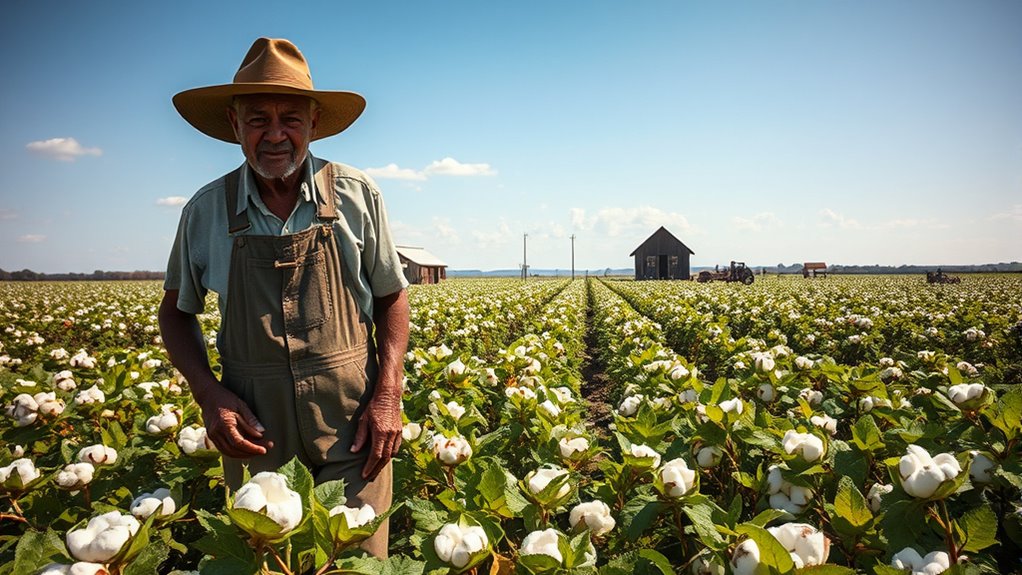
The Missouri Bootheel, a region known for its rich cotton fields, played a significant role in the history of sharecropping during the late 19th and early 20th centuries. As you explore this area’s past, you’ll see how cotton farming became the backbone of its economy, shaping the lives of many local residents. The sharecropping system emerged as a common way for landowners and laborers to work together, but it often kept tenants in a cycle of debt and poverty. This system allowed landowners to retain control over their land while providing laborers with a plot to farm, in exchange for a share of the crop.
In the Bootheel, cotton farming thrived because the climate and soil conditions were ideal for growing the crop. Landowners would rent out sections of their fields to sharecroppers, who, in turn, would plant, tend, and harvest the cotton. The sharecropping system was supposed to be mutually beneficial—sharecroppers could farm the land without owning it, and landowners could ensure their fields were cultivated efficiently. However, the reality was often harsher. Sharecroppers frequently relied on credit from local merchants to buy supplies, which led to mounting debt. When the harvest was finally in, a significant portion of the crop went to pay off these debts, leaving little for the sharecroppers to keep.
Cotton thrived in the Bootheel, but sharecroppers often faced debt and hardship despite the system’s promise of mutual benefit.
This cycle of debt kept many sharecroppers bound to their landlords, with little hope of improving their economic situation. You might notice that the system created a form of economic dependency, where tenants had limited control over their work and income. Landowners held significant power, setting the terms of the sharecropping agreements and sometimes manipulating the system to their advantage. Despite these hardships, cotton remained a essential crop for the region, and sharecropping persisted because it provided a way for landowners to maximize their production while offering employment to local laborers.
As you examine the history of the Bootheel, you’ll see how the sharecropping system shaped social relationships and economic patterns for generations. It was a system that, while offering opportunities for some, often perpetuated inequality and exploitation. The legacy of cotton farming and sharecropping in the Missouri Bootheel reflects a complex history of labor, economy, and race relations that continues to influence the region today. Understanding this history helps you appreciate the resilience of those who worked the land and the ongoing struggles for economic justice in cotton-producing communities.
Top picks for "missouri bootheel cotton"
Open Amazon search results for this keyword.
As an affiliate, we earn on qualifying purchases.
Frequently Asked Questions
How Did Sharecropping Impact African American Families in the Bootheel?
Sharecropping affected African American families by trapping them in a cycle of exploitation, making it hard to escape poverty. You see, many sharecroppers faced exploitation, with landowners controlling crops and income. Despite this, African American families showed resilience, finding ways to survive and maintain their communities. Their strength helped them endure hardships, even as sharecropping limited economic progress. This resilience kept hope alive amid ongoing exploitation and inequality.
What Were the Economic Advantages for Landowners Using Sharecropping?
Imagine a farmer holding the reins of a horse, controlling its every move. As a landowner, you benefit from sharecropping because it boosts your profits—you get a share of the harvest without the costs of maintenance or risk. This system gives you crop control, ensuring you maximize landowner profits while relying on tenants to do the work. It’s a strategic way to secure steady income with minimal effort.
How Did Cotton Prices Fluctuate During the Peak Sharecropping Era?
During the peak sharecropping era, cotton prices fluctuated considerably, impacting your income. The cotton market fluctuations caused prices to rise and fall unpredictably, making sharecropping pricing unstable. You might have faced periods of high earnings when prices surged, but also tough times when prices dropped. These fluctuations kept your income uncertain, emphasizing the volatile relationship between cotton market trends and sharecropping economics.
Were There Any Notable Legal Disputes Related to Sharecropping Contracts?
A stitch in time saves nine, and that’s true for sharecropping legalities. You might have noticed notable contract disputes, especially when landowners and sharecroppers disagreed over crop shares or labor terms. These disagreements often led to legal disputes, highlighting the importance of clear, fair agreements. If you’re involved, make sure to understand your rights and obligations to avoid costly conflicts down the line.
How Did Sharecropping Influence Community Relations in the Bootheel Region?
You notice that sharecropping shaped tenant dynamics and affected community trust in the Bootheel region. As tenant farmers relied on landowners, relationships often became strained, leading to suspicion and resentment. This system created divisions, making it hard to build strong, cooperative communities. Your awareness of these dynamics shows how economic dependence can influence social bonds, ultimately shaping the region’s social fabric and community cohesion.
Conclusion
You see, the history of cotton and sharecropping in Missouri’s Bootheel is like a tangled web, trapping generations in cycles of hardship. Though progress has been made, the roots of that past still linger, shaping the present. Understanding this story helps you realize how deeply history influences today’s struggles. By unraveling these threads, you can help weave a future where opportunity isn’t just a distant dream but a clear path forward.