
With the midnight sun, your daily chores extend into the night, blurring traditional schedules. You’ll find yourself gardening, cleaning, and outdoor tasks happening late into the extended daylight hours, often guided by natural light rather than the clock. Parks and public spaces stay lively, and social activities shift to anytime that suits the light. To adapt, you might use blackout curtains or adjust your routines, and there’s more to discover about how these changes shape daily life.

Get furniture and decor delivered free with Prime
- Fast, free delivery on millions of items
- Prime Video, Amazon Music and more included
- Member-only deals all year
Key Takeaways
- Outdoor chores like gardening and mowing are scheduled late into the night due to continuous daylight.
- Routine activities shift to match extended daylight hours, often starting earlier or ending later than traditional schedules.
- Household tasks are adapted with blackout curtains or specific lighting to facilitate sleep despite constant brightness.
- Community events and social gatherings are held during late hours, leveraging the endless daylight for extended activities.
- Daily chores become more flexible, with schedules guided by natural light rather than conventional time markers.

As the sun refuses to set during the summer months, your daily routines undergo a remarkable transformation, blurring the lines between day and night. This phenomenon, known as the midnight sun, forces you to adapt your schedule and rethink how you approach everyday chores. Cultural adaptations become essential as communities develop new ways to synchronize life with the extended daylight hours. Houses are often built with lighter window coverings or blinds that can block out the relentless brightness, helping you create a semblance of night for sleep. In these regions, seasonal routines shift dramatically; your usual work hours and leisure activities are extended or moved to different times of the day to make the most of the continuous daylight.
You find yourself adjusting meal times, too. Breakfasts might be served in the early morning, when the sun is just beginning to rise, while dinners are scheduled late in the evening, under a sky that remains vividly illuminated. This shifting rhythm isn’t just about convenience; it’s a cultural adaptation that helps you maintain some semblance of normalcy amidst the unnatural light. The extended daylight impacts sleep patterns, prompting you to create blackout curtains or sleep masks to establish a dark environment. You learn to listen to your body’s cues, sometimes taking short naps during the day to compensate for disrupted sleep cycles caused by the persistent brightness. Incorporating sleep environment adjustments can help improve your rest during these unusual conditions. Additionally, understanding the importance of light pollution management can help maintain healthier sleep patterns and reduce environmental impact.
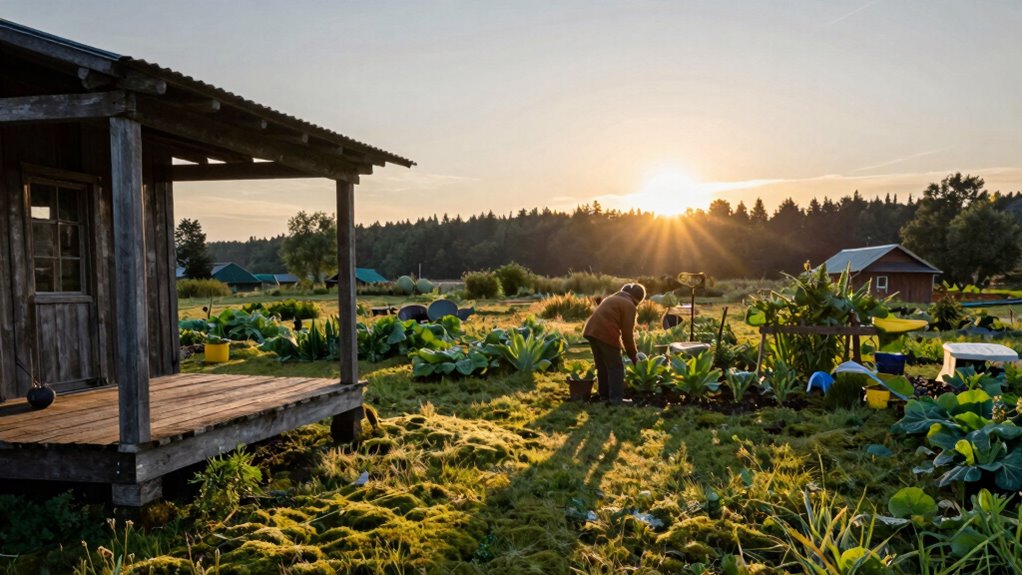
Your outdoor chores and recreational activities also change. Mowing the lawn, gardening, or running errands often extend into late hours because the sun’s presence makes it feel like daytime. Parks and public spaces stay lively late into the night, transforming into bustling hubs of activity. This shift influences your social interactions, encouraging gatherings and festivals that take advantage of the extended hours of sunlight. You might notice that your sense of time becomes more fluid; routines are less anchored to the traditional 9-to-5, and instead, you adapt to a natural rhythm dictated by the sun’s constant presence. Additionally, understanding the importance of color temperature adjustments can help optimize your indoor lighting to better mimic natural conditions and improve sleep quality. Recognizing the role of natural light exposure can also support better circadian rhythm regulation during these periods.
In essence, living under the midnight sun reshapes your daily chore rhythms by blending cultural adaptations with seasonal routines. It challenges you to find balance in a landscape where the concept of night is almost nonexistent. Your perception of time shifts, and so do your habits—embracing a lifestyle that’s synchronized with the unending daylight. It’s a unique experience that demands flexibility, creativity, and a deep connection to the environment’s natural cycles, making each day feel like a new chapter in a continuous, luminous story.
As an affiliate, we earn on qualifying purchases.
Frequently Asked Questions
How Do Residents Adjust Sleep Schedules During the Midnight Sun?
During the midnight sun, you adjust your sleep schedule by creating a dark, quiet environment to combat sleep disruption. You might use blackout curtains or sleep masks to simulate night and stick to a routine, going to bed and waking up at consistent times. Routine adaptation helps your body get used to the extended daylight, reducing sleep disturbances and maintaining your overall health despite the unusual sunlight hours.
What Impact Does the Midnight Sun Have on Mental Health?
The midnight sun can profoundly impact your mental health by causing mood fluctuations and sleep disruption. As you experience extended daylight hours, your body struggles to adjust, leading to difficulty falling asleep or maintaining restful sleep. These changes can increase stress and irritability, making it harder to manage daily tasks. To counteract this, you might need to establish strict sleep routines and seek strategies to maintain mental well-being during continuous daylight.
Are There Cultural Traditions Related to Daily Chores During the Midnight Sun?
You might find that during the midnight sun, traditional chore timings shift, coinciding with midnight sun celebrations that honor nature’s unique cycle. These festivals often highlight cultural traditions, emphasizing communal work and shared routines under endless daylight. It’s as if the perpetual light inspires a harmony between daily chores and cultural rituals, reminding you that even routine tasks can become meaningful moments rooted in tradition and the natural rhythm of the environment.
How Does Daylight Affect Energy Consumption for Household Chores?
Daylight considerably impacts your energy consumption for household chores. During extended daylight hours, you can save energy by scheduling chores like laundry or cleaning during the day, following energy-saving tips that leverage natural light. Chore timing becomes essential—performing tasks when sunlight is abundant reduces reliance on artificial lighting and appliances, helping you cut down electricity costs and make the most of the midnight sun’s extended daylight.
Do Animals Change Their Routines With the Midnight Sun?
You might say, “When the sun never sets, the early bird doesn’t always catch the worm.” Animals often adjust their routines during the midnight sun to avoid circadian disruption, leading to changes in animal migration and feeding habits. They become more active during the extended daylight, which can shift their natural patterns. These adaptations help them thrive despite the prolonged daylight hours, proving that nature’s resilience is truly remarkable.
Conclusion
You might think these shifting chore rhythms are just about adjusting schedules, but they reveal something deeper—how nature’s rhythms influence your life and mindset. Embracing these changes can help you find harmony and resilience, even when routines are disrupted. Instead of resisting the midnight sun’s effects, lean into them; they remind you that change is inevitable, and adapting can lead to greater balance and insight. Embrace the rhythm, and let it transform your perspective.
Fall Picks
fall essentials
As an affiliate, we earn on qualifying purchases.