
To help your pellet stove last longer, regularly check and maintain key components. Use high-quality fuel and store it properly to prevent moisture and buildup. Clean the burn pot, ash pan, and glass frequently, and inspect the venting system to guarantee proper airflow. Follow the manufacturer’s maintenance schedule for internal parts like the auger and motor. Staying diligent with these steps preserves efficiency and safety—keep going to discover even more tips for keeping your stove in top shape.

Get furniture and decor delivered free with Prime
- Fast, free delivery on millions of items
- Prime Video, Amazon Music and more included
- Member-only deals all year
Key Takeaways
- Regularly clean ash and soot from the burn pot, heat exchange surfaces, and glass panels.
- Inspect and clean vent pipes and exhaust systems to ensure proper airflow and safety.
- Use high-quality, dry pellets stored in a well-ventilated area to prevent fuel-related issues.
- Check internal components like the auger and motor periodically for wear or obstructions.
- Follow the manufacturer’s maintenance schedule for inspections, cleaning, and timely repairs.
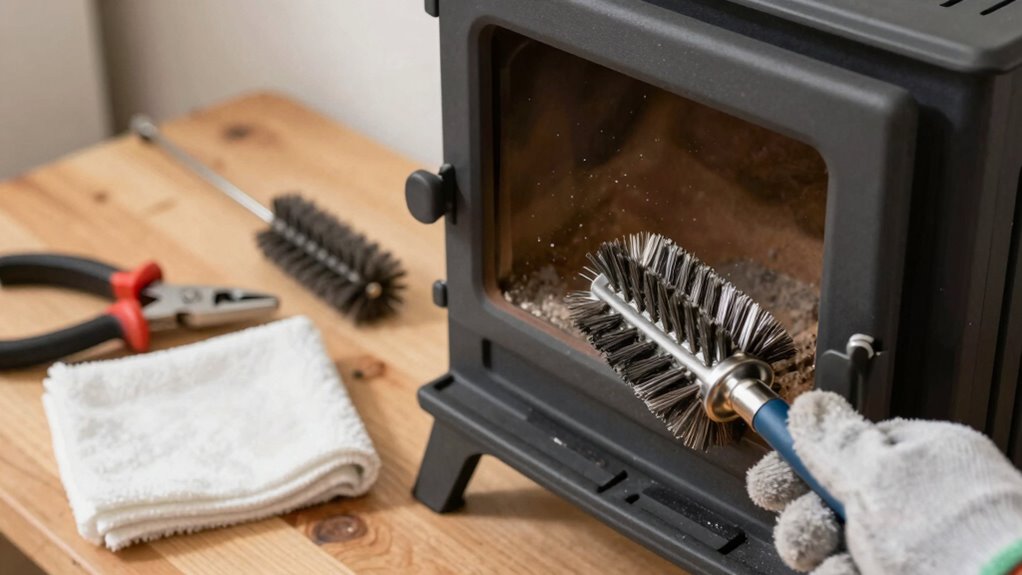
Maintaining your pellet stove regularly is crucial to guarantee it runs efficiently and safely throughout the heating season. One of the most critical aspects of upkeep is paying attention to fuel quality. Using high-quality pellets ensures your stove operates smoothly, produces consistent heat, and minimizes ash buildup. Poor-quality fuel often contains fillers or excessive moisture, which can cause clogging and reduce combustion efficiency. When you choose reputable brands, you help maintain ideal burn conditions, which in turn prolongs the life of your stove. Always store pellets in a dry, well-ventilated area to prevent degradation, and avoid using damp or moldy pellets, as they can damage the internal components and increase the risk of inefficient combustion.
Regularly maintaining your pellet stove and using high-quality fuel ensures safe, efficient, and long-lasting performance.
Equally important is maintaining good ventilation efficiency. Your pellet stove relies on proper airflow to burn fuel completely and safely. Over time, dust, ash, and soot can accumulate in the venting system, hindering airflow and reducing the stove’s overall performance. Regularly inspect and clean the vent pipes to remove blockages or buildup, ensuring that exhaust gases escape freely. Proper ventilation not only improves the stove’s efficiency but also reduces the risk of dangerous carbon monoxide buildup inside your home. When cleaning the vent system, follow the manufacturer’s guidelines carefully, and consider hiring a professional if you’re unsure how to do it safely. Additionally, understanding pellet fuel storage can help you maintain optimal fuel quality and stove performance over time. Proper storage practices prevent moisture absorption, which is crucial because moisture content in fuel can lead to inefficient combustion and increased ash production. Regularly checking the fuel’s moisture level with a moisture meter can help you select the best pellets for burning. Maintaining a clean venting system also supports the overall stove safety by reducing the risk of dangerous buildup.
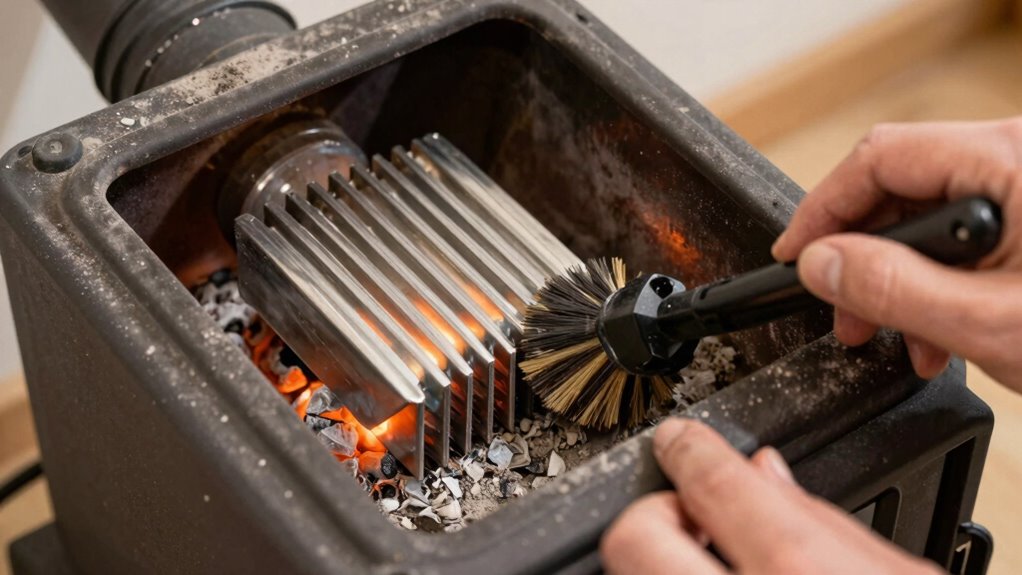
In addition to fuel quality and ventilation, you should keep the internal components of your pellet stove clean. Regularly remove ash from the burn pot and ash pan, as excessive ash can impede proper combustion and cause overheating. Cleaning the heat exchange surfaces and glass panels prevents soot buildup, which can diminish heat transfer and reduce efficiency. Check the auger and motor periodically for signs of wear or obstruction, as these parts are critical for consistent pellet feed and operation. Performing these routine checks and cleanings will prevent unnecessary breakdowns and extend the lifespan of your stove. Additionally, proper stove maintenance practices can significantly contribute to the longevity and reliable performance of your unit.
Lastly, always follow the maintenance schedule outlined in your stove’s manual. Routine inspections, cleaning, and timely repairs ensure your pellet stove remains in peak condition season after season. By focusing on fuel quality, maintaining ventilation efficiency, and keeping internal components clean, you’re setting yourself up for a warm, safe, and long-lasting heating solution. Proper upkeep not only maximizes your stove’s performance but also saves you money in the long run by avoiding costly repairs and premature replacements.
As an affiliate, we earn on qualifying purchases.
Frequently Asked Questions
How Often Should I Replace the Pellet Stove’s Gaskets?
You should replace your pellet stove’s gaskets every 1 to 3 years, depending on gasket materials and usage. Regular inspections for wear, cracks, or leaks help determine when to replace. If you notice decreased efficiency or ash escaping, it’s time for a new gasket. Proper gasket replacement maintains airtight seals, improves efficiency, and prolongs your stove’s lifespan. Keep an eye on these signs to guarantee peak performance.
Can I Use Any Type of Ash Remover?
You shouldn’t use just any ash remover for your pellet stove. Stick to products specifically designed for ash removal in stoves, as they’re safer and more effective. Incorporate ash removal into your regular maintenance schedule to keep your stove running efficiently. Using the right remover prevents buildup and guarantees smooth operation, helping your pellet stove last longer. Always follow the manufacturer’s instructions for the best results.
What’s the Best Way to Store Extra Pellets?
Think of your extra pellets as precious seeds; store them carefully. For pellet storage, keep your extra pellets in a dry, airtight container to prevent moisture and spoilage. Avoid storing near heat or humidity. Use extra pellet tips like stacking them off the ground and away from direct sunlight. Proper pellet storage guarantees your stove runs smoothly and extends its lifespan, making your heating experience reliable and efficient.
Are There Signs My Pellet Stove Needs Professional Servicing?
If you notice unusual smoke, persistent odors, or your stove isn’t heating properly, it’s time for professional servicing. These signs could compromise pellet stove safety and indicate a need for a thorough maintenance checklist. Regular inspections help prevent costly repairs and keep your stove running efficiently. Don’t ignore these warning signs—prompt professional service ensures safety, extends your stove’s lifespan, and maintains peak performance.
How Do I Troubleshoot Inconsistent Heating?
To troubleshoot inconsistent heating, start by checking for blockages or buildup in the burn pot and air vents. Make certain the pellet supply is steady and the stove’s temperature settings are correct. Follow efficiency tips like cleaning the glass and inspecting the auger. Always observe safety precautions—turn off the stove before cleaning or adjusting parts. Regular maintenance and proper operation help maintain consistent warmth and extend your stove’s lifespan.
Conclusion
By sticking to this maintenance routine, you’ll keep your pellet stove running smoothly, much like a well-oiled machine. Regular cleaning and inspections prevent buildup and costly repairs, ensuring your stove heats efficiently for years to come. Think of it as tending a garden—you’ll enjoy the lush, consistent warmth without the weeds of frustration. With a little effort, your pellet stove will be a reliable, cozy companion season after season.
Halloween Picks
halloween
As an affiliate, we earn on qualifying purchases.