
TL;DR
Apple and Amazon have introduced new smart displays: the $299 HomeView and the $499.99 Echo Show 16. A Verge hands-on report says both pair more capable hardware with features for shared household use, but full testing has not yet confirmed how well they work day to day.
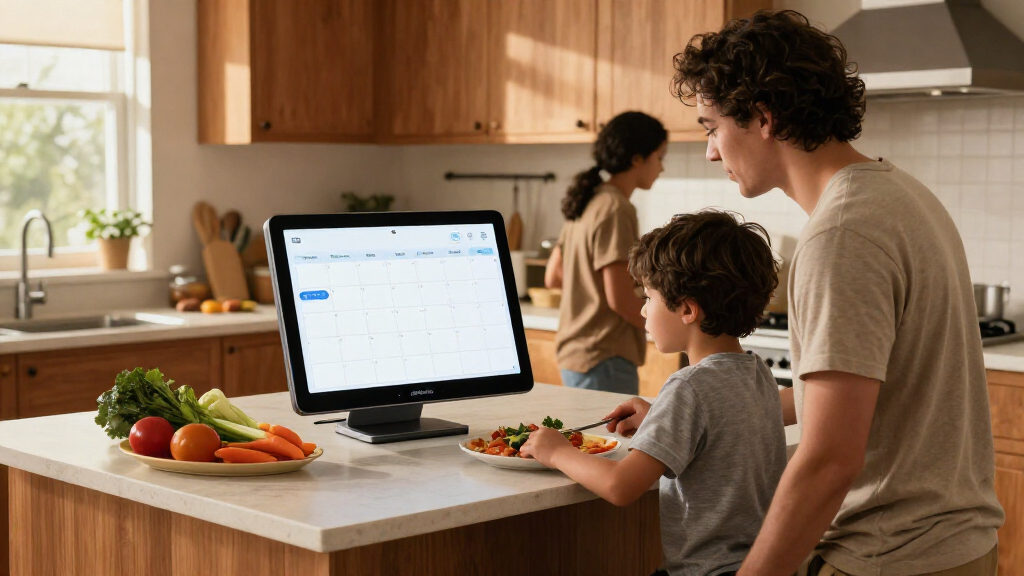
Apple and Amazon have launched new smart displays—the $299 HomeView and $499.99 Echo Show 16—with more capable hardware and features aimed at shared household use. After brief hands-on time, The Verge’s reviewer said they could work as a family’s central screen for calendars, smart-home controls and door-camera views, while cautioning that proper testing is still needed.

Get furniture and decor delivered free with Prime
- Fast, free delivery on millions of items
- Prime Video, Amazon Music and more included
- Member-only deals all year
The products address a familiar weakness in smart displays: earlier models often combined limited processing power with software that tried to cover many tasks without doing them especially well. The Verge report describes Apple’s HomeView as using an A18 chip and a Liquid Retina display. Amazon’s Echo Show 16 has a MediaTek processor and the Nanomatte display used in its new Alexa Tablet.
The intended role is not to replace a laptop or serve as a place for homework and bill paying. Instead, both devices are presented as shared, always-available screens for practical household information and controls: checking a calendar, managing meal plans, adjusting lights or seeing who is at the door. The reviewer said both appeared to offer easy access without a PIN or a screensaver that must first be dismissed.
The companies take different approaches to shared use. Amazon’s device is designed to work as a household screen without a phone, though the report says a phone can help with setup. HomeView is more closely tied to the iPhone, and some functions rely on the phone or on recognizing its user. The source report is based on a brief preview, not a full review, so these observations are early impressions rather than conclusions about reliability or everyday performance.
A communal screen could make household information easier for more than one person to access, rather than leaving calendars, shopping lists and plans on a single family member’s phone. The report connects that need to the growth of connected-home devices, which can make a central interface useful for checking a door camera or changing lights and temperature.
That proposition comes with a substantial price difference from earlier entry-level smart displays. The report compares the new models with the $85 Echo Show 5 and $99 Nest Hub in 2023: HomeView costs about three times as much as those examples, while the Echo Show 16 is priced at $499.99. Buyers will need to judge whether the stronger hardware and household features justify the added cost; the hands-on report does not establish that they do.
The distinction between a screen built around a person and one built around a household may also shape who finds each product useful. HomeView’s iPhone connection could provide personal context, while Amazon’s design emphasizes household functions and devices such as Ring cameras. Neither approach has yet been shown in the source to work equally well for every household or for people using different phone platforms.
Products Worth Considering

TCL 75-Inch Class 4-Series 4K UHD HDR Smart Google TV (75S446, 2022)

Samsung 48-Inch S90F OLED 4K Smart TV (2025)

Sonos One (Gen 2) Voice-Controlled Smart Speaker, White
As an affiliate, we earn on qualifying purchases.
Why Smart Displays Are Being Reworked
The Verge reviewer wrote an obituary for the smart-display category three years ago, arguing that the available products were underpowered and attempted too much. The reviewer also set out features needed for a better version: more capable hardware, support for shared use, and an always-available interface that could be operated quickly.
Other household screens have tried to fill part of that role. The report points to the popularity of Skylight Calendar devices as evidence of interest in communal household displays. It also describes limitations with tablets: shared-user support can be limited, and portable devices may be taken away from their intended place or left without charge.
The reviewer had considered Google’s Pixel Tablet, which combines tablet and smart-display functions, a possible next step. The report says its detachable screen and limited smart-home support proved problematic in the reviewer’s home, and that Google reportedly canceled a successor 18 months later. That account provides context for the new launches, but does not establish why Google made its decision.
““the family computer””
— The Verge reviewer
Everyday Performance Still Untested
The source report does not provide a full review of either product. It remains unclear how responsive the interfaces are over sustained use, how reliably the devices handle multiple household members, or whether their features work as smoothly outside a controlled demonstration.
HomeView’s dependence on an iPhone for some functions may limit what household members can do without a compatible phone nearby. The report also describes demonstrations involving personal information and home sensing, but does not establish the scope of data collection, privacy controls, or how those features perform in ordinary use. Amazon’s household-focused functions likewise have not been independently assessed in the cited hands-on account.
Price and value are also unsettled. The report identifies the products’ prices and compares them with older, cheaper devices, but provides no long-term testing or evidence that the new models’ added features justify the difference for typical buyers.
Full Reviews Will Test the Promise
The next key step is sustained, independent testing of both displays. A full review can assess whether the screens remain easy to use in a busy home, whether household calendars and controls are genuinely accessible to different users, and whether voice, touch and camera features work reliably.
For shoppers, the practical choice will depend on how much the household relies on iPhones, Amazon and Ring devices, and whether a fixed shared display would replace or complement existing phones, tablets or calendars. Until more testing is available, the products’ family-computer role remains a promising early assessment, not a demonstrated result.
Key Questions
What are the HomeView and Echo Show 16?
They are new smart displays from Apple and Amazon, respectively. The report presents them as shared household screens for calendars, smart-home controls and other everyday information.
How much do the two devices cost?
The source lists Apple’s HomeView at $299 and Amazon’s Echo Show 16 at $499.99.
What is the main difference between their approaches?
The report says Amazon’s Echo Show 16 is designed to work as a household device without requiring a phone, although a phone can help with setup. HomeView is more closely linked to the iPhone, and some features depend on a phone or user recognition.
Have the devices been fully tested?
No. The source is based on brief hands-on time. The reviewer said proper testing is still needed, so claims about long-term performance and value remain unconfirmed.
Source: theverge.com