
In Hawai‘i, cattle branding and drives are longstanding traditions dating back to the 19th century, serving as practical tools for identifying ownership, preventing theft, and managing herds across vast ranch lands. These symbols often reflect family heritage, community pride, and regional history through simple yet bold designs. Cattle drives remain a social event that reinforces bonds among ranchers. To discover how these practices continue to shape Hawaiian ranching culture today, you can explore further.
Key Takeaways
- Ranch brands in Hawai‘i date back to the 19th century, serving as practical marks of cattle ownership and family identity.
- Brands often feature initials, symbols, or geographic motifs, reflecting heritage and community pride.
- Cattle drives were essential for moving herds and fostering social bonds among ranchers in remote areas.
- Branding symbols embody cultural symbolism, resilience, and deep land connections passed through generations.
- Today, ranch brands remain a vital part of Hawai‘i’s ranching tradition, connecting modern practices to historical roots.
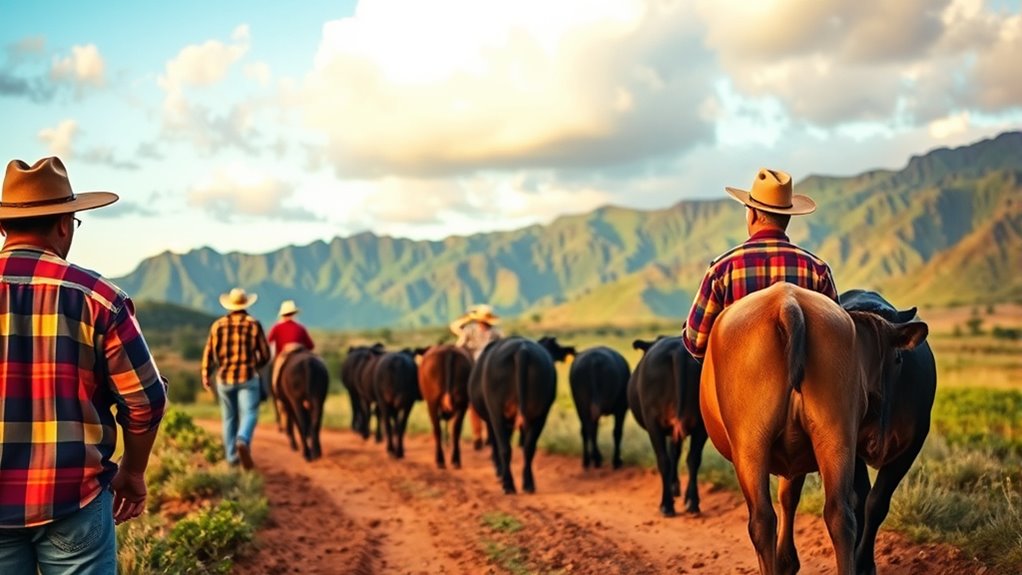
Hawai‘i’s ranching history is rich with stories of cattle drives and distinctive ranch brands that symbolize the islands’ unique agricultural heritage. As you explore this history, you’ll discover that cattle branding played a vital role in shaping the Hawaiian ranching culture. The cattle branding history in Hawai‘i dates back to the 19th century when ranchers began marking their herds to establish ownership and prevent theft. Unlike mainland branding, which often involved complex symbols, Hawaiian ranchers favored simple, bold designs that could be easily recognized from a distance. This practical approach reflected the rugged environment and the need for quick identification during cattle drives across expansive ranchlands.
You’ll notice that these ranch brands became more than just marks; they evolved into symbols of identity and pride for local ranching families. Each brand carries a story—sometimes reflecting the founder’s initials, the ranch’s geographic features, or other meaningful motifs. Over time, these symbols became ingrained in the Hawaiian ranching culture, representing tradition and community. Many ranches still proudly display their brands on fences, gates, and even on their cattle, maintaining a tangible connection to the past. The art of cattle branding in Hawai‘i has been passed down through generations, preserving a sense of continuity amid modern changes in agriculture.
Additionally, cattle branding is an example of visual symbolism that communicates heritage and family legacy in the ranching community. Cattle drives in Hawai‘i were essential to moving herds from remote pastures to markets or processing facilities. These drives weren’t just logistical tasks; they were communal events that reinforced the bonds among ranchers and cowboys. During these cattle drives, branding was often reaffirmed or reapplied, especially if animals had been mixed or if brands had faded over time. The process required skill, patience, and a deep understanding of each brand’s significance. You’ll find that many ranchers still honor these traditions today, conducting branding with care and respect for the symbols’ history.
In Hawai‘i, cattle branding isn’t just about marking livestock; it’s a proud expression of the islands’ ranching culture. The stories behind each brand tell of resilience, family legacy, and a deep connection to the land. As you explore the history of cattle branding in Hawai‘i, you’ll understand how these symbols have become woven into the fabric of local life—marking more than cattle, but also a way of life rooted in the islands’ unique agricultural journey.

Premium 2" Stainless Steel 0-9 Number Branding Iron Set with 2 Changeable 10" Handle – Leave Your Mark on Wood and Leather (0-9 2in /2 Wood Handles)
Versatile and High-Quality: Our branding iron features a 2" stainless steel design that allows you to leave a…
As an affiliate, we earn on qualifying purchases.
As an affiliate, we earn on qualifying purchases.
Frequently Asked Questions
How Do Ranch Brands Differ Across Hawaiian Islands?
You’ll notice that ranch brands differ across Hawaiian islands through unique branding patterns and island-specific symbols. Each island often has distinct symbols or designs reflecting local culture or history, making each brand easily identifiable. These patterns are carefully chosen, so cattle can be traced back to their ranches. By observing the branding, you can tell which island a herd originates from and appreciate the regional diversity in Hawaiian ranching traditions.
What Breeds of Cattle Are Most Common in Hawaiian Ranches?
You’ll find Hawaiian cattle breeds like Corriente, which are hardy and well-adapted to the islands’ unique landscape. These breeds contribute to the rich cattle genetic diversity that thrives here. You might also see Angus and Hereford cattle, valued for their quality beef. The variety of breeds showcases the harmonious blend of tradition and adaptation, allowing you to appreciate the resilience and diversity that define Hawaiian ranching.
Are Cattle Drives Still Active in Hawai‘I Today?
Cattle drives are mostly a thing of the past in Hawai‘i today, but you can still experience modern ranch tourism that highlights the island’s cattle heritage. Many ranches offer activities like cattle branding demonstrations and guided tours, giving you a glimpse into traditional techniques. While actual cattle drives aren’t common anymore, these experiences keep the ranching history alive and let you participate in authentic Hawaiian ranch life.
How Do Hawaiian Cattle Drives Compare to Mainland Practices?
Imagine cattle drives as rivers flowing through a lush landscape; in Hawai‘i, they’re more like gentle streams guiding cattle along carefully planned paths. You’ll find that Hawaiian cattle handling techniques emphasize sustainability and respect for the land, with grazing management practices tailored to island ecosystems. Compared to mainland methods, which often focus on scale and speed, Hawaiian drives prioritize harmony with nature, making each cattle movement a mindful dance rather than a race.
What Is the Historical Significance of Ranch Brands in Hawaiian Culture?
You see, ranch brands hold deep cultural significance in Hawaiian history. They symbolize more than cattle ownership; they embody cultural identity and tradition. The branding symbolism reflects family heritage and community pride, connecting past and present generations. As you observe these marks, you recognize their role in preserving Hawaiian ranching history, reinforcing cultural bonds, and honoring the land and people who have maintained this heritage through generations.

America's Great Road Trips: California, Hawaii, Alaska, Montana, Idaho & Wyoming, Washington
As an affiliate, we earn on qualifying purchases.
As an affiliate, we earn on qualifying purchases.
Conclusion
Just as the Old West legends rode into history, Hawai‘i’s ranch brands and cattle drives echo that adventurous spirit. You now see how these traditions shaped the islands’ rugged identity, much like the cowboy’s mark on the frontier. Remember, every brand tells a story, every cattle drive a chapter—reminding us that even in paradise, the wild spirit of the west lives on. So, embrace that legacy and keep the adventure alive in your own way.

Shimeyao Paint Branding Irons for Livestock Marker Pig Cattle Cow Sheep Numbers 0-8 for Livestock Marking Accessories Lab Research
Comprehensive Number Templates for Versatile Marking: the Paint Branding Irons set comes with 9 number templates, each measuring…
As an affiliate, we earn on qualifying purchases.
As an affiliate, we earn on qualifying purchases.

Cattle Banding Tool, 1pc Large Expander Plier with 24pcs Large Rings Kit, Bull Banding Tools for Farm Ranch Calves Sheep Goats and Other Big Livestock
These Cattle Banding Tools are designed for humane method of banding bull calves from 250 to 750 lbs….
As an affiliate, we earn on qualifying purchases.
As an affiliate, we earn on qualifying purchases.